Amino Acrylate Oligomer Manufacturer & High-Performance UV Resin Products

Industrial White-Paper Guide: Mitigating Oxygen Inhibition, Accelerating UV LED Surface Curing, and Driving Global Supply Chain Innovation for Inks, Coatings, & Adhesives.

Featured Amino & Specialty Acrylate Oligomers

Explore our primary industrial UV curable resins optimized for rapid line speeds, superior chemical resistance, low odor, and non-yellowing performance.

Buy 2406 UV Resin: Low Odor Solution for Rapid Paper and Plastic Varnishes Manufacturers, Supplier
Buy 2406 UV Resin: Low Odor Solution for Rapid Paper and Plastic Varnishes
View Product Details →
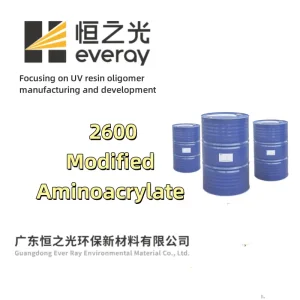
Wholesale Durable 2600UV resin: high hardness and excellent wear resistance, suitable for UV applications Suppliers, Factory
Wholesale Durable 2600UV Resin: High Hardness & Excellent Wear Resistance
View Product Details →
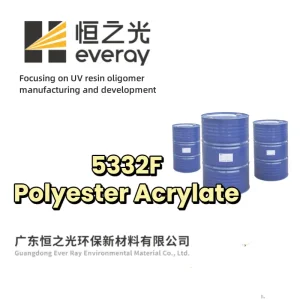
High-Quality Polyester Acrylate 5332F – The Premium Choice for Offset Inks Manufacturers, Supplier
High-Quality Polyester Acrylate 5332F – Premium Choice for Offset Inks
View Product Details →
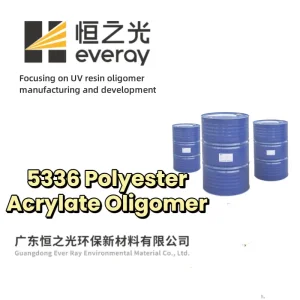
Buy Polyester Acrylate 5336 – The Ideal Resin for High-Performance UV Inks and Varnishes Supplier, Suppliers
Buy Polyester Acrylate 5336 – Ideal Resin for UV Inks & Varnishes
View Product Details →
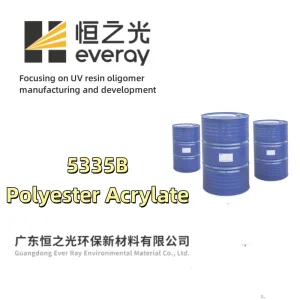
Wholesale 5335B UV-resin in UV color inks, varnishes, and offset inks Manufacturer, Manufacturers
Wholesale 5335B UV Resin for Color Inks, Varnishes & Offset Systems
View Product Details →
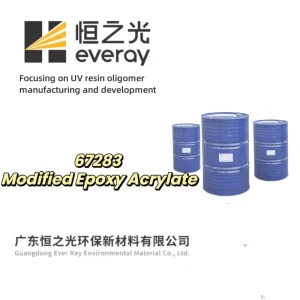
Wholesale 67283:Rapid-setting yellowing-resistant modified epoxy acrylate solution Suppliers, Factories
Wholesale 67283: Rapid-Setting Yellowing-Resistant Modified Epoxy Acrylate
View Product Details →
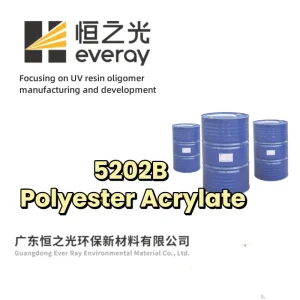
Wholesale Polyester Acrylate 5202B – The Ideal Choice for High-Performance UV Coatings Manufacturers, Factory
Wholesale Polyester Acrylate 5202B for High-Performance UV Coatings
View Product Details →
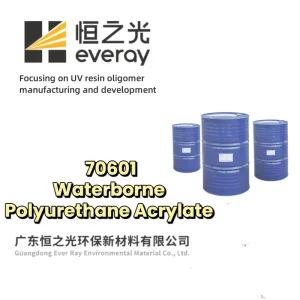
Buy Waterborne 70601 UV-resin for 3D Printing,UV-ink and UV Wood-coatings Suppliers, Product
Buy Waterborne 70601 UV Resin for 3D Printing, Inks & Wood Coatings
View Product Details →

The Chemistry of Amino Acrylate Oligomers: Eliminating Oxygen Inhibition

In the realm of radiation curing, achieving full surface cure under ambient atmosphere remains a primary engineering challenge. Amino acrylate oligomers represent a chemical breakthrough that directly solves free-radical quenching caused by atmospheric oxygen.

Mechanism of Amine Synergism & Hydrogen Abstraction

When UV energy irradiates a free-radical polymerizable formulation, atmospheric oxygen ($O_2$) rapidly diffuses into the liquid surface layer. Oxygen reacts with propagating acrylate radicals ($R^\bullet$) at diffusion-controlled rates to form unreactive peroxyl radicals ($ROO^\bullet$). This phenomenon—known as oxygen inhibition—leaves the coating surface tacky, prone to scratching, and chemically vulnerable.

Amino acrylate oligomers integrate tertiary amine groups directly into the polymer backbone (typically via Michael addition of primary or secondary amines to polyfunctional acrylates). The aliphatic hydrogens $\alpha$ to the tertiary nitrogen atom possess extraordinarily low bond dissociation energy. The non-reactive peroxyl radicals abstract these $\alpha$-hydrogens, regenerating active aminoalkyl radicals ($R-\dot{C}H-N-R'$) capable of re-initiating monomer polymerization. This mechanism effectively converts an inhibiting species into a active curing agent.

Bound Amine Backbones vs. Low-Molecular Amine Synergists

Historically, formulators added monomeric tertiary amines (such as EDB, DMB, or triethanolamine) to overcome surface tack. However, small unreacted amine molecules exhibit severe technical drawbacks: post-cure migration, unpleasant fishy odor, severe film yellowing, and blooming on high-gloss substrates.

Key Chemical Advantage: By chemically copolymerizing tertiary amine functionalities directly onto polyester or polyether acrylate backbones, EVER RAY’s amino acrylate oligomers achieve zero post-cure migration, dramatically lower residual odor, and permanent incorporation into the crosslinked matrix.
Performance Parameter Standard Epoxy / Polyester Acrylate Monomeric Amine Synergist Blend EVER RAY Bound Amino Acrylate Oligomer
Surface Cure Speed (Air) Poor (Tacky under UV LED / Low Dose) Moderate (Requires High Photoinitiator) Superior (Instant tack-free surface)
Extractables & Migration Low High (Risk of food package contamination) Ultra-Low (Fully bound polymer backbone)
Odor Profile Moderate Acrylate Odor Strong Amine / Fishy Odor Low Odor / Neutral
Yellowing Index ($\Delta YI$) Low to Moderate Severe Yellowing upon UV aging Controlled / Non-Yellowing Options Available
Photoinitiator Efficiency Baseline Requirement (100%) Reduced PI by 15-20% Reduced PI loading by 30-50%

China Manufacturing Integration & Industrial Scale

Guangdong Ever Ray Environmental Material Co., Ltd. operates at the center of the world's most robust chemical manufacturing ecosystem. Our scale delivers unparalleled supply reliability and cost efficiencies directly to global buyers.

2006
Established Expertise
40,000+
m² Production Base
10+
Automated Reactors
< 0.1%
Residual Monomer Target

Backward Raw Material Integration

Located in Guangdong's chemical cluster, EVER RAY secures primary feedstocks—including acrylic acid, epoxides, aliphatic polyols, and specialty amines—directly from tier-one upstream producers. This raw material security protects our global clients from supply bottlenecks and extreme price volatility.

Automated Synthesis & QC Tolerance

Our Yunfu production facility utilizes fully enclosed, computer-controlled stainless steel reactors. Automated dosing systems enforce precise stoichometric control during amine modification, guaranteeing viscosity variance within strict $\pm 5\%$ limits from drum to drum.

Global Logistics & Packaging Fleet

We offer standard 200kg steel drums, 1000kg IBC totes, and ISO tanks. All containers feature anti-static liners and nitrogen blanketing to ensure 12-month shelf life stability during long ocean freight transit to Europe, North America, and Southeast Asia.

Meeting Global Corporate Procurement Standards

Multinational chemical purchasers require rigorous quality assurance, batch traceability, and comprehensive chemical stewardship. EVER RAY's export infrastructure is engineered to pass enterprise supplier audits.

Strict Quality Control (COA Parameters)

Every export production batch is tested in our analytical laboratory using Gel Permeation Chromatography (GPC), Brookfield Rotational Viscometry, FTIR spectroscopy, and Karl Fischer titration. Official COAs accompany every shipment, verifying:

  • Viscosity (mPa.s at 25°C)
  • Color (Gardner scale < 1.0)
  • Acid Value (< 2.0 mg KOH/g)
  • Inhibitor Content (MEHQ verification)

Custom ODM/OEM Formulation Tailoring

No single resin meets every curing window. Our R&D application laboratory works directly with customer formulation teams to customize key physical attributes:

  • Amine Value tuning for specific PI photo-packages
  • Functionality adjustment (2-fold to 6-fold acrylates)
  • Viscosity dilution using preferred monomers (HDDA, TPGDA, TMPTA)
  • Tg control for flexible or ultra-hard coatings

Supply Chain Security & Risk Mitigation

To prevent disruptions in automated high-speed coating lines, corporate procurement managers rely on our structured inventory buffers. We maintain raw material stock reserves and finished goods warehousing, offering dual-plant contingency fulfillment.

Macro Industry Trends Driving Amino Acrylate Demand

The global radiation curing market is undergoing rapid technological transitions driven by energy costs, regulatory pressure, and LED equipment upgrades.

1. Rapid Transition to Energy-Efficient UV LED Curing

Industrial lines are rapidly replacing traditional broad-spectrum medium-pressure mercury lamps with 365nm, 385nm, 395nm, and 405nm UV LED systems. LED emitters lack shortwave UV-C output, which historically drove surface cure. Amino acrylate oligomers act as critical co-initiators, dramatically boosting surface conversion rates under narrow-band UVA LED wavelengths without high thermal load.

2. Reduction of Photoinitiator Costs & Regulatory Restrictions

Type I and Type II photoinitiators (such as TPO, ITX, and Benzophenone) face escalating REACH SVHC classifications and supply volatility. By building amine synergy directly into the oligomer backbone, formulators can cut photoinitiator concentrations by up to 40%, significantly lowering raw material costs while mitigating photoinitiator yellowing and odor.

3. Low VOC & Eco-Friendly Waterborne UV Chemistry

Environmental regulations like China's GB38507 and EU VOC Directives mandate near-zero solvent emissions. EVER RAY's amino acrylate technology extends into waterborne UV systems (such as Waterborne 70601), combining non-toxic water-dilutability with oxygen-resistant crosslinking performance.

Target Industrial Applications & Formulation Guidance

Practical engineering insights for integrating amino acrylate oligomers across demanding downstream processing sectors.

Graphic Arts: Flexo, Offset Inks & Overprint Varnishes (OPV)

High-speed printing presses operating at 300+ m/min require near-instantaneous ink curing to prevent set-off on print rollers. Amino acrylates excel in OPVs and offset formulations, providing exceptional pigment wetting, rapid surface drying, high gloss, and resistance to rub abrasion.

Recommended Addition Rate: 15% to 35% concentration blended with polyester acrylate resin systems (e.g., Polyester Acrylate 5332F / 5336).

3C Consumer Electronics & Plastic Coatings

Smartphones, laptops, and automotive interior panels coated with PC, ABS, or PMMA require glass-like scratch resistance alongside non-yellowing aesthetics. Amino acrylate oligomers allow formulators to achieve high surface crosslinking density without brittle micro-cracking.

Recommended Blend: Combine amino acrylate with aliphatic urethane acrylate oligomers to ensure superior QUV outdoor weatherability and flexibility.

Wood & Industrial Flooring Finishes

Roller-coated parquet flooring and furniture panels suffer from oxygen inhibition due to high line speed and thin topcoat application. Incorporating amino acrylates restores surface hardness (pencil hardness 2H-3H) and chemical resistance against alcohol, coffee, and household stains.

Co-Resin Pairing: Works synergistically with Epoxy Acrylate 9105A-80 to reduce overall viscosity while maximizing film hardness.

3D Printing Photopolymers & UV Adhesives

In SLA/DLP/LCD 3D printing resins, oxygen quenching leads to sticky outer surfaces and loss of dimensional feature accuracy. Amino acrylate oligomers enable tack-free green parts straight out of the vat, requiring significantly less post-curing UV chamber time.

Benefit: Improves layer-to-layer green strength and dramatically reduces post-cure cycle times in precision dental and industrial prototyping resins.

Regulatory Compliance & Global Registration Support

Navigating regional chemical compliance is paramount for seamless international distribution. EVER RAY guarantees transparent documentation and regulatory alignment.

EU REACH & TSCA

Complying with European Chemical Agency (ECHA) registration requirements and US EPA TSCA inventory status for export resins.

RoHS & Heavy Metals

100% compliant with Directive 2011/65/EU (RoHS 2.0). Zero intentionally added heavy metals (Pb, Cd, Hg, Cr VI) or phthalates.

Food Contact Guidance

Formulated according to EuPIA directives and Nestlé Guidance Notes for indirect food packaging inks (low migration / low extractables).

GHS Safety Data Sheets

Multilingual 16-section SDS documentation prepared in accordance with UN GHS Revision standards for immediate local customs clearance.

Frequently Asked Questions (FAQ) & Technical Troubleshooting

Expert answers to common chemical procurement, formulation, and technical processing questions regarding amino acrylate oligomers.

Q1 What is the key chemical difference between an amino acrylate oligomer and an amine synergist additive?
An amino acrylate oligomer chemically binds tertiary amine functionality into the polymer backbone alongside acrylate double bonds. In contrast, traditional amine synergists (like EDB or TEAO) are small monomeric molecules physically blended into the liquid resin. EVER RAY’s bound amino acrylates prevent post-cure migration, phase separation, blooming, and toxic leachables, making them far safer and more durable for advanced industrial coatings.
Q2 How do amino acrylates assist UV LED (365nm / 395nm) curing performance?
UV LED curing sources emit narrow UVA spectral bands that lack shortwave UV-C rays responsible for surface conversion. Consequently, oxygen inhibition is more severe under UV LED illumination. Amino acrylate oligomers act as highly efficient hydrogen donors for Type II photoinitiators (such as ITX or camphorquinone) and rapidly scavenge oxygen radicals, enabling tack-free surface curing at high conveyor belt speeds under 365nm-395nm LED lamps.
Q3 Do amino acrylate oligomers cause film yellowing upon prolonged UV exposure?
Traditional aromatic tertiary amines are prone to oxidation and yellowing. However, EVER RAY utilizes specialized aliphatic amine modification chemistry during oligomer synthesis. Grades designed specifically for clear coats (such as non-yellowing modified series) demonstrate excellent Gardner color stability ($\Delta YI < 1.5$) under QUV accelerated weathering testing, making them perfectly safe for clear wood topcoats and 3C electronic housing finishes.
Q4 Can amino acrylates be blended with epoxy acrylates and polyester acrylates?
Yes, completely. Amino acrylates exhibit broad thermodynamic compatibility with standard bisphenol-A epoxy acrylates, polyester acrylates, aliphatic urethane acrylates, and reactive diluent monomers (such as TPGDA, HDDA, and TMPTA). Adding 10% to 30% amino acrylate into a standard epoxy acrylate system significantly lowers overall viscosity while boosting surface cure response.
Q5 What photoinitiator systems work best in combination with amino acrylate oligomers?
Amino acrylates form optimal synergistic pairs with Type II photoinitiators (Benzophenone, ITX, DETX) via hydrogen-abstraction reactions. They also significantly boost the speed of Type I alpha-cleavage photoinitiators (1173, 184, TPO) by converting unreactive peroxyl radicals back into active aminoalkyl polymer radicals.
Q6 How should amino acrylate oligomers be stored to maximize shelf life stability?
Amino acrylates should be stored in original sealed containers in a cool, dry, and well-ventilated warehouse between 5°C and 30°C, away from direct sunlight, heat sources, and strong oxidizing agents. Because free-radical acrylates require dissolved atmospheric oxygen to maintain MEHQ inhibitor activity, containers should never be blanketed with pure nitrogen during long-term storage. Our standard guaranteed shelf life is 12 months from the manufacturing date.
Q7 What is the typical minimum order quantity (MOQ) and lead time for international buyers?
Our baseline MOQ for standard export packaging is 200 kg (one full steel drum) or 1000 kg (IBC tote). Sample quantities (1 kg - 5 kg) are available immediately via express courier for R&D evaluation. Standard full-container production orders ship within 7 to 10 business days from our Guangdong manufacturing plant.
Q8 How does EVER RAY ensure batch-to-batch consistency for long-term supply contracts?
We operate fully automated chemical reactor lines equipped with inline viscometers and thermal mass flow sensors. Raw materials undergo rigorous incoming inspection (IQC). Every finished production lot undergoes rigorous PQC and OQC analytical testing. We retain dual physical reference samples for every shipped batch for a period of 24 months to support client traceability.

Complementary High-Performance UV Resin Portfolio

Discover our broader range of modified epoxy acrylates, high-flexibility resins, and specialty oligomers engineered to meet complex industrial specifications.

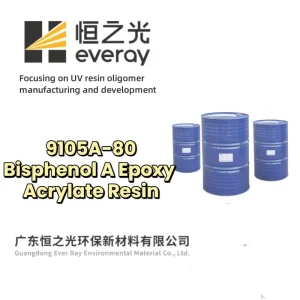
High-Quality 9105A-80: Bisphenol A Epoxy Acrylate Resin - Superior Hardness and Chemical Resistance Ideal for Resin Polyester Applications Supplier, Product
High-Quality 9105A-80: Bisphenol A Epoxy Acrylate Resin
View Product Details →
High-Quality 6116 Low Viscosity UV Curing Epoxy Oligomer, High Flexibility Acrylic Resin for Matte Wood & Ink Coatings Supplier, Products
High-Quality 6116 Low Viscosity Epoxy Oligomer for Matte Wood & Inks
View Product Details →
Buy Polyester Acrylate 5311A – A High-Efficiency and Durable UV Resin Choice Supplier, Factories
Buy Polyester Acrylate 5311A – High-Efficiency Durable UV Resin
View Product Details →
High-Quality 5830A High Hydroxyl Polyester Acrylate Resin for UV Coatings with Superior Water Boiling Resistance, High Leveling & Fullness Factory, Factories
High-Quality 5830A High Hydroxyl Polyester Acrylate Resin
View Product Details →
Wholesale 5450 UV resin for UV coating, paper varnish, screen creeping Factories, Products
Wholesale 5450 UV Resin for UV Coating, Paper Varnish & Screen Inks
View Product Details →
Wholesale Bisphenol A Epoxy Acrylate Resin 9105M-80: A Versatile Core Resin for Durable and Glossy UV Coatings Product, Products
Wholesale Bisphenol A Epoxy Acrylate Resin 9105M-80
View Product Details →
High-Quality 5218 Polyester Acrylate UV Resin: Excellent Adhesion and Pigment Compatibility Manufacturers, Supplier
High-Quality 5218 Polyester Acrylate: Excellent Pigment Adhesion
View Product Details →
High-Quality Fast-reacting 5103 polyester acrylate UV resin, very suitable for plastic coatings Manufacturer, Product
High-Quality Fast-Reacting 5103 Polyester Acrylate for Plastics
View Product Details →

Request Technical Samples & Formulation Consultation

Partner with Guangdong Ever Ray Environmental Material Co., Ltd. for factory-direct amino acrylate supply, custom polymer synthesis, and comprehensive TDS/SDS/COA documentation.

Contact R&D Engineering Team Instant WhatsApp Sales Inquiry
All Amino Acrylate Oligomer Products