UV-curable resins are valued for fast curing, clear finishes, and efficient production. Yet sunlight can change a coating’s color. Yellowing may appear as a warm tint on a clear phone case, a cloudy layer over a printed panel, or a dull finish on an outdoor component. Uv Resin Yellowing Resistance therefore matters to manufacturers choosing materials for appearance and service life.
Market research, including Grand View Research’s coverage of the UV-curable resins market, tracks demand and material trends across applications. Such reports help explain why suppliers invest in improved formulations, but market growth alone does not prove a resin will resist discoloration. Testing matters. ASTM G154 and ISO 4892-3 describe fluorescent UV exposure methods used to assess material weathering. Results still depend on the resin, pigments, additives, film thickness, and exposure conditions.
This guide introduces ten suppliers and the factors worth checking before requesting samples. Compare technical data sheets, stated exposure conditions, and color-change results—not just “non-yellowing” claims. Ask whether data reflects accelerated testing, outdoor exposure, or both. Those details can be surprisingly easy to miss. A useful comparison also considers cure speed, clarity, substrate compatibility, and batch support. Supplier claims are not always directly comparable, and a lab result cannot perfectly predict every installation. That limitation deserves attention. The goal is a practical shortlist, not a promise that any resin will remain unchanged forever.
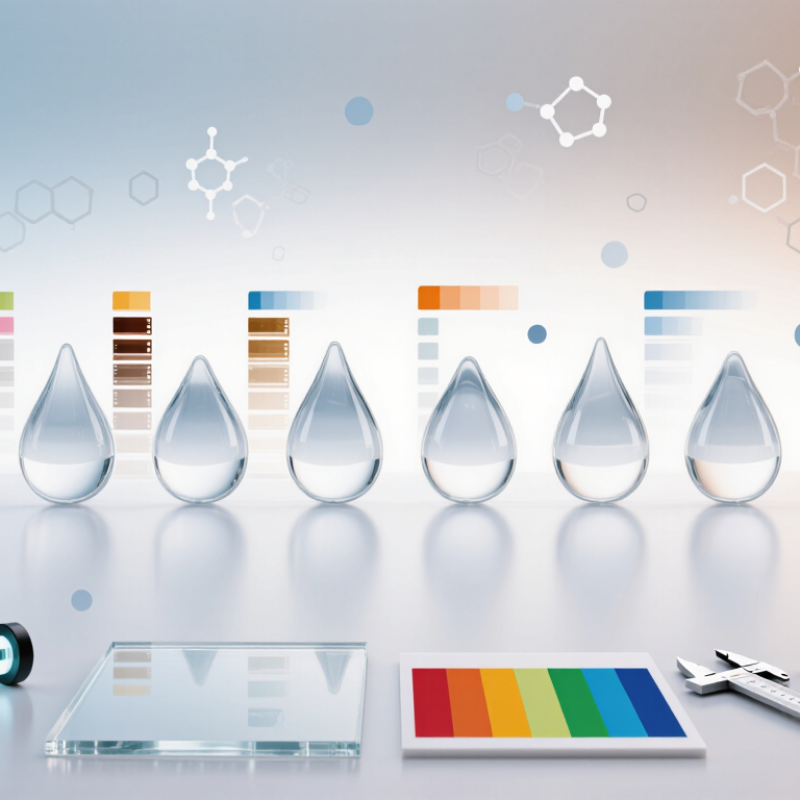
Yellowing resistance describes how well a cured UV resin retains its color during light and heat exposure. It is not a fixed property under every condition. During curing, insufficient UV energy or uneven lamp coverage can leave material less stable. Later exposure to sunlight, heat, and oxygen may deepen a yellow tint. Resin thickness and the color of the underlying surface also affect what the eye sees. Color matters. A clear coating on white paper can reveal changes that are barely visible on a dark surface.
To compare formulations, cure samples at the same thickness and under consistent lamp distance and exposure time. Then record their initial appearance and inspect them after controlled UV and heat exposure. Photograph samples beside a neutral white reference; warm room lighting can distort visual judgments. Ask suppliers for test conditions and color-change data, not only a general claim of “yellowing resistance.” Small changes count. These tests help with selection, but they do not predict every real-world environment. A resin that performs well in one test may still shift under prolonged outdoor exposure, so application-specific testing remains important.
When evaluating Chinese UV resin suppliers for yellowing resistance, ask how they test cured samples. A useful report identifies the resin batch, film thickness, curing conditions, and exposure method. It should also show color measurements before and after testing. A neat datasheet helps, but it is not proof. Ask whether the test uses UV exposure, heat, or both, since these conditions can produce different results.
Review more than the initial color. Compare yellowing, gloss, adhesion, and hardness after exposure, using the same substrate and cure setup. Request samples from multiple batches to check consistency. Ask technical staff how oxygen inhibition, lamp spectrum, and cure depth may affect results. Small differences matter. A supplier’s response should be specific, not just reassuring. Still, laboratory results may not match your finished product exactly.
Tips: Send suppliers your target application and curing details, including lamp type and exposure time. Keep a retained sample from each trial for side-by-side comparison. Do not rely on a single accelerated test; it may miss real storage or use conditions.
Use the following ten criteria to compare suppliers. Yellowing performance depends on the resin, additives, curing conditions, substrate, and exposure environment; the criteria below are evaluation points, not supplier-specific test results or a verified supplier ranking.
| No. | Evaluation criterion | Evidence to request | How to compare |
|---|---|---|---|
| 1 | Yellowing after UV exposure | Test report identifying the resin grade, specimen preparation, curing conditions, exposure source, duration, and color-measurement method. | Compare color change under the same exposure and measurement conditions. ASTM E313 describes calculation of yellowness and whiteness indices; agree on the index and pass limit for the application. |
| 2 | Weathering-test relevance | Full accelerated-weathering protocol, including lamp type, irradiance, temperature, moisture cycle, and total exposure time. | Check whether the method represents the intended service environment. ISO 4892-3 and ASTM G154 cover fluorescent-UV exposure methods; results from different cycles should not be treated as directly equivalent. |
| 3 | Initial color and optical clarity | Initial color values and, where applicable, transmission and haze data for a defined specimen thickness. | Compare baseline and aged specimens made at the same thickness. ASTM D1003 is commonly used to measure haze and luminous transmittance of transparent plastics. |
| 4 | Photoinitiator and formulation disclosure | Technical data on the photoinitiator system and relevant formulation changes, plus a safety data sheet for the supplied product. | Ask how the supplier controls residual odor, color, and cure requirements. Treat formulation information as supporting evidence, not a substitute for aging tests. |
| 5 | Curing window and conversion | Recommended wavelength range, irradiance, dose, line speed or exposure time, and post-cure instructions. | Validate cure under the buyer’s actual equipment and film thickness. Under-curing can affect final properties, so compare yellowing only after confirming adequate cure. |
| 6 | Thermal and environmental durability | Results for relevant heat aging, humidity, water, or chemical exposure, with test conditions and specimen details. | Select tests that match the intended use. Do not infer outdoor or high-temperature durability from a UV-only test. |
| 7 | Batch consistency and quality control | Recent certificates of analysis, batch traceability, release specifications, and documented procedures for handling out-of-specification material. | Compare batch-to-batch variation in agreed properties such as viscosity, color, and cure response. Confirm that the tested grade matches the quoted grade. |
| 8 | Application and substrate compatibility | Application-specific test panels showing adhesion, appearance, and aging performance on the intended substrate or coating stack. | Run trials using the same substrate, surface preparation, thickness, and cure process planned for production. |
| 9 | Technical support and sample validation | Representative samples, processing guidance, troubleshooting records, and a written plan for joint validation. | Assess response time and whether recommendations are supported by reproducible tests on the buyer’s equipment and materials. |
| 10 | Supply, storage, and compliance documentation | Written shelf-life and storage conditions, packaging details, production lead-time information, safety data sheet, and applicable regulatory declarations. | Verify documents for the exact product and destination market. Confirm stock, transport, and storage arrangements before qualification. |
Recommended comparison practice: request identical specimens or prepare samples under a shared protocol, record baseline and post-exposure measurements, and set acceptance limits according to the end-use requirements rather than assuming one universal yellowing threshold.
China’s UV resin suppliers often serve distinct applications, so yellowing resistance should be assessed alongside curing speed and adhesion.
Profile 1: A coastal coatings producer may offer clear resins for outdoor panels. Ask for weathering data.
Profile 2: An electronics-focused formulator may prioritize low shrinkage around small components.
Profile 3: A printing-material supplier may tune resin for glossy, transparent finishes. Test it on the actual substrate.
Profile 4: An automotive supplier may develop coatings for interior trim, where heat exposure matters.
Profile 5: An optical-material specialist may focus on clarity and color stability.
Profile 6: A custom formulator may adjust oligomers and stabilizers for a buyer’s process. Useful, but batch consistency needs checking.
Profile 7: A UV-LED specialist may optimize curing under specific lamp wavelengths. Confirm cure depth, not just surface hardness.
Profile 8: A packaging supplier may offer fast-curing clear coatings, though application conditions can affect color.
Profile 9: An export-oriented producer may provide technical documents and sample support.
Profile 10: A regional manufacturer may focus on a narrow resin grade and flexible production runs.
Compare samples under heat, light, and humidity. Request test methods, exposure duration, and color-change results; “yellowing resistant” alone is not a measurable specification. Samples can look excellent at first. Real performance takes time to verify.
When comparing China’s UV resin suppliers for yellowing resistance, assess test methods alongside product claims. A low-yellowing label alone says little. Ask for accelerated UV-aging data, exposure conditions, and color-change measurements, such as ΔE values. Results are meaningful only when the test resembles your application, whether the resin coats a clear lens, printed panel, or small decorative part.
Check each supplier’s production controls, technical documents, and relevant certifications. A quality-management certificate can indicate consistent processes, but it does not certify every resin’s optical performance. Request a current technical data sheet, safety data sheet, batch traceability details, and sample test results. Then compare viscosity, cure response, adhesion, and yellowing after aging. Details matter.
Customization can separate capable suppliers from catalog-only vendors. Discuss target viscosity, curing wavelength, substrate, working time, and required appearance before requesting a trial batch. Provide a real component when possible; a flat lab coupon may hide edge yellowing or uneven curing. Some suppliers may adjust formulations, but changes can affect hardness or adhesion. Retest. Keep records of sample conditions and revisions, since even a promising comparison can miss production-line differences.
A comparison framework for assessing yellowing resistance, supplier capabilities, certifications, and customization.
These are suggested evaluation weights, not verified scores or rankings for specific suppliers. Assess yellowing resistance using comparable test conditions and documented results; verify certifications and customization capabilities directly with each supplier.
Choosing among China’s UV resin suppliers starts with the finished product, not a broad “yellowing-resistant” claim. A resin suited to a thin display coating may behave differently in a thick casting. Define the application: indoor or outdoor exposure, substrate, layer thickness, and service temperature. Request test data for the specific grade. Compare its initial color and color shift after controlled UV and heat exposure. Ask how each sample was cured, including lamp wavelength, dose, and post-cure time. Small details matter.
Production fit is just as important. Check viscosity at a stated temperature, cure depth, working time, and compatibility with your existing lamp and line speed. For example, a resin that cures well in a small test tray may leave a soft center in a thicker part. Confirm batch tolerances, minimum order quantity, lead time, and packaging options before planning a run. Not always. A promising sample does not guarantee a smooth production change.
Run a pilot using your own equipment and record the results. Keep a retained sample for later comparison. Accelerated aging tests help compare formulations, but they cannot perfectly predict years of service. Ask suppliers to explain test conditions, variation between batches, and any limitations they have observed. That discussion may reveal more than a polished product sheet.
It describes how well cured UV resin keeps its color during light and heat exposure. It is not permanent.
Weak or uneven curing can reduce stability. Sunlight, heat, and oxygen may deepen a yellow tint over time.
Yes. Thick layers and the surface beneath them can change what you see. Clear resin on white paper often shows subtle shifts more clearly.
Keep thickness, lamp distance, and exposure time consistent. Record each sample’s starting appearance, then inspect it after controlled UV and heat exposure. Take photos beside a neutral white reference.
Look for the batch, film thickness, curing conditions, exposure method, and color measurements before and after testing. A neat datasheet alone is not proof.
Yes. Compare gloss, adhesion, and hardness after exposure, using the same substrate and curing setup. Small differences matter.
Request samples from multiple batches and compare them side by side. Keep a retained sample from each trial. It helps, though it is not perfect.
Not always. One accelerated test may miss real storage or use conditions. Test the resin in your intended application, too. A little uncertainty remains.
This article explains why Uv Resin Yellowing Resistance matters for maintaining the color, clarity, and appearance of cured products over time. It outlines the factors that can influence yellowing, such as resin formulation, exposure conditions, and processing, then presents practical criteria for evaluating Chinese suppliers. These include product consistency, technical support, quality controls, relevant certifications, and the ability to provide reliable performance information.
The article also profiles ten suppliers in general terms, comparing their capabilities, customization options, and suitability for different production needs. Rather than treating one supplier as the best choice for every buyer, it helps readers match a supplier’s experience and services to their application, volume, and performance requirements. The goal is to support a more informed selection process and encourage buyers to confirm specifications and test materials under their own operating conditions.

