Explore our engineered range of UV-curable acrylate oligomers, modified epoxy resins, and specialty monomers designed for high adhesion, rapid crosslinking, and zero-yellowing durability.
A rigorous examination of radical photopolymerization, oligomeric backbone modifications, and viscoelastic mechanics powering next-generation industrial bonding solutions.
Acrylate adhesives represent the apex of radiation-curable and reactive structural bonding technology. At the molecular level, acrylate oligomers consist of reactive acrylic acid ester groups (CH₂=CH-COO-) terminated on polymeric backbones ranging from bisphenol-A epoxy to aliphatic polyurethane networks. When exposed to ultraviolet radiation (UV-A/UV-B wavelengths 250nm-405nm) or radical initiators, these terminal double bonds undergo explosive free-radical chain-growth polymerization, converting fluid liquid monomers into highly crosslinked three-dimensional polymer networks within milliseconds.
The selection of the resin backbone dictates the mechanical, thermal, and optical properties of the cured adhesive joint:
Formed by reacting acrylic acid with bisphenol-A or bisphenol-F epoxy resins. Characterized by exceptionally high tensile strength, rapid cure rate, and outstanding chemical resistance. Ideal for glass laminates, rigid wood coatings, and electronic component encapsulation.
Synthesized via diisocyanates (IPDI, HDI, TDI) with hydroxyalkyl acrylates and polyols. Aliphatic PUA offers unmatched yellowing resistance, high impact flexibility, and weathering resistance for outdoor architectural glass and flexible displays.
Multi-functional hyperbranched acrylic oligomers achieve high crosslink density with low volumetric shrinkage stress. Perfect for nano-imprinting, high-scratch-resistant optical films, and optical clear adhesives (OCA).
| Oligomer Type | Viscosity (mPa.s @ 25°C) | Tg (Glass Transition) | Tensile Strength (MPa) | Key Performance Characteristic | Primary Application |
|---|---|---|---|---|---|
| Epoxy Acrylate (e.g. 6803A) | 15,000 - 35,000 | +65°C to +85°C | 45 - 65 | Ultra-fast surface cure, high hardness (3H-4H) | Glass bonding, Rigid Wood UV Varnishes |
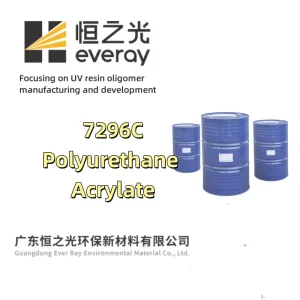
| Aliphatic PUA (e.g. 7296C) | 8,000 - 20,000 | -15°C to +45°C | 25 - 40 | Zero yellowing (QUV > 1500h), elastic recovery | Optical displays, 3C Electronics, Nail Gels |
| Hyperbranched Acrylic (e.g. 4600) | 2,000 - 6,000 | +50°C to +90°C | 35 - 55 | Low viscosity diluent substitute, anti-scratch | High-speed inks, optical anti-fingerprint coatings |
| Dual-Cure PUA (e.g. 72017) | 5,000 - 15,000 | +20°C to +60°C | 30 - 50 | UV shadow-cure + thermal secondary crosslinking | 3D Printing, Automotive sensors, Microelectronics |
How Guangdong Ever Ray is engineering the next decade of radiation-cured adhesives and eco-conscious resin materials.
Overcoming shade-zone limitation in complex 3D assemblies. Our dual-cure polyurethane acrylates (e.g., 72017) initiate rapid gelation under 365nm/395nm LED UV, followed by thermal or ambient moisture crosslinking in unexposed undercuts.
Integrating renewable soybean oil, cashew nut shell liquid (CNSL), and bio-succinic acid into oligomeric backbones. Achieving 35%-60% bio-carbon content without sacrificing hardness, boiling water resistance, or clarity.
Optimized for long-wave LED lamps (385nm, 395nm, 405nm). Our amino-acrylate synergists and active amines effectively eliminate surface oxygen inhibition, drastically cutting energy consumption by up to 65% on automated assembly lines.
Targeted adhesive chemistry formulated to overcome severe industrial conditions, thermal cycling, and chemical exposure.
Low-outgassing, optical clarity (transmittance >99%), and extreme thermal shock tolerance (-40°C to +125°C). Formulated for OLED bezel sealing, camera module positioning, and smartphone housing assembly on PC, ABS, and anodized aluminum.
High lap-shear strength (>18 MPa) and vibration damping for automotive LiDAR sensors, headlamp lens bonding, and battery pack dielectric isolation. Resistant to engine oil, brake fluids, and glycol coolants.
Custom photopolymer resins matching ABS-like toughness, high heat deflection temperature (HDT > 100°C), and elastic elongation (>150% strain at break) for SLA, DLP, and LCD 3D printers.
Inside Guangdong Ever Ray's 40,000+ sqm chemical synthesis complex in Yunfu, Guangdong.
In international chemical procurement, batch-to-batch consistency and supply chain stability are paramount. Guangdong Ever Ray Environmental Material Co., Ltd. operates state-of-the-art automated esterification and polymerization reactors equipped with real-time NIR (Near-Infrared) spectroscopic monitoring systems.
Direct synthesis of key intermediate polyols and epoxy acrylates insulates overseas buyers from upstream petrochemical price shocks while securing uncompromised purity of basic acrylic monomers.
Every drum undergoes strict analytical testing: GPC molecular weight distribution, Brookfield rotational viscosity, APHA color index (<50), acid value (<1.0 mg KOH/g), and residual monomer content (<0.1%).
Dedicated export logistics infrastructure with UN-certified steel drums, IBC totes, and ISO tank loading, paired with seamless customs clearance capabilities across EU, Americas, and SE Asia.
A step-by-step roadmap for procurement leads, OEM chemical compounders, and distribution partners.
When evaluating an overseas acrylate adhesive factory, enterprise buyers require more than low unit costs—they demand Total Cost of Ownership (TCO) optimization, formulation agility, and IP protection.
Meeting the world's strictest chemical safety standards for seamless global market access.
Full registration coverage under EU REACH and US EPA TSCA regulations for key monomers and oligomers, guaranteeing uninterrupted regulatory compliance for global distribution.
Formulations strictly exclude heavy metals, phthalates, halogenated solvents, and hazardous air pollutants (HAPs), aligning with RoHS 3 (EU 2015/863) and SVHC guidelines.
Every shipment is accompanied by multilingual Safety Data Sheets (GHS SDS), Certificates of Analysis (COA), Technical Data Sheets (TDS), and starting point formulation manuals.
Review additional factory-direct grades for high-speed inks, wood varnishes, 3D printing, and plastic coatings.
Expert solutions to common challenges in UV resin selection, adhesion troubleshooting, and chemical formulation optimization.
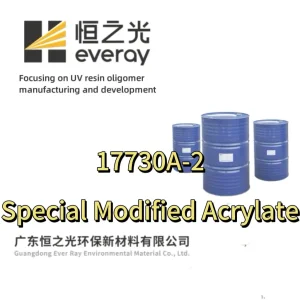
Glass surfaces are highly hydrophilic, forming a moisture layer that breaks standard acrylate bonds under humidity. Modified acrylate resins such as 17730A-2 incorporate silane-functionalized backbones and hydrophobic phosphate ester groups. Upon UV exposure, these groups chemically react with glass surface hydroxyls (Si-OH), forming covalent siloxane (Si-O-Si) networks that resist hydrolysis even after 2 hours of boiling water testing.
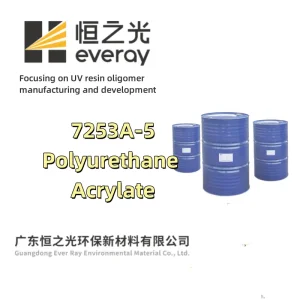
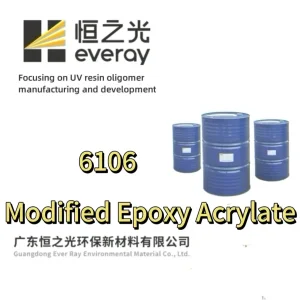
Epoxy acrylates (e.g., 6803A, 6106) offer higher crosslink density, extreme tensile strength, and rapid surface cure at lower costs, but possess rigid polymer backbones. Polyurethane acrylates (e.g., 7253A-5, 7296C) feature soft polyol or polyether segments interspaced with urethane linkage bonds, providing superior impact strength, flexibility, low-temperature crack resistance, and non-yellowing durability.
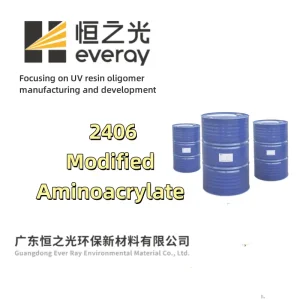
Atmospheric oxygen quenches free radicals generated during photo-curing, causing surface tackiness. Amino acrylate oligomers and active amine synergists act as hydrogen donors. The peroxyl radicals formed by oxygen scavenging react with tertiary amine groups to generate new active alkylamino radicals, restoring rapid polymerization even in thin-film coating or open-air curing applications.
Yes. We fine-tune oligomer molecular weight distribution and select specific low-odor monofunctional or difunctional acrylate monomers (such as IBOA, THFA, or HDDA variants) to achieve precise target viscosities ranging from 50 mPa.s for ultra-fast jetting to thixotropic pastes for high-precision electronics packaging.
We provide 500g to 1kg evaluation samples dispatched via international express, accompanied by comprehensive Technical Data Sheets (TDS), Safety Data Sheets (GHS SDS), Batch Certificate of Analysis (COA), and starting-point formulation guidelines from our application laboratory.
In dual-cure systems like 72017, the resin contains both photoinitiators and thermal radical initiators (or latent epoxy curatives). Initial light exposure provides rapid fixing and shape fidelity within seconds, while subsequent thermal baking (e.g., 80°C - 120°C) drives complete crosslinking in deep sections or shaded areas where light cannot penetrate.
