Direct factory procurement for certified printing inks, industrial coatings, adhesives, and additive manufacturing resins.
Navigating raw material supply chains, volatile acrylic acid monomer pricing, and stringent international environmental compliance protocols.
The global market for acrylic and UV curable resins is expanding at a compound annual growth rate (CAGR) exceeding 6.8%, driven by rapid industrial transition from solvent-borne formulations toward zero-VOC radiation curable systems. As heavy manufacturing, consumer electronics, and automotive OEM sectors demand faster cycle times, UV oligomer synthesis factories are escalating throughput capacities to meet global demands.
Environmental governance, including the EU REACH authorization, EPA Toxic Substances Control Act (TSCA), and China’s strict national standards (GB/T) for volatile organic compounds, has forced chemical specifiers to eliminate hazardous air pollutants (HAPs). Waterborne polyurethane acrylates (WBPUA) and hyperbranched acrylic polymers are replacing legacy thermal-bake enamels.
Direct sourcing from integrated synthesis facilities mitigates volatile supply chain risks associated with acrylic acid, trimethylolpropane (TMP), and isocyanates (IPDI/HDI). Enterprise buyers gain price stability and batch-to-batch consistency by establishing contract-manufacturing relationships with verified synthesis plants in Guangdong chemical zones.
Choosing the precise molecular architecture—epoxy, urethane, polyester, or specialty modified acrylates—for target performance criteria.
| Resin Chemistry Type | Primary Molecular Features | Cure Speed | Mechanical Strengths | Target Technical Applications |
|---|---|---|---|---|
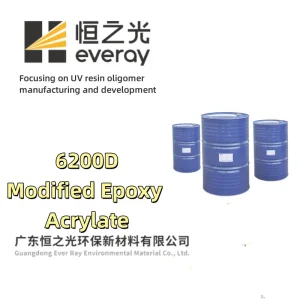
| Epoxy Acrylates (e.g., Bisphenol A) | High crosslinking density, rigid aromatic backbone, high reactivity. | Very Fast (< 0.5s) | Hardness (3H–5H), Chemical & Solvent Resistance. | Wood primers, paper varnishes, rigid PCB solder masks, offset inks. |
| Aliphatic Polyurethane Acrylates | Non-yellowing aliphatic isocyanate backbone (IPDI/HDI), tailored flexibility. | Moderate to Fast | Elongation, Impact Strength, Weatherability, Scratch Repair. | 3C Electronics coatings, automotive clearcoats, outdoor plastics, nail polish. |
| Polyester Acrylates | Low viscosity oligomers, excellent pigment wetting properties. | Fast | Balanced flexibility, substrate adhesion, low shrinkage. | Flexographic inks, gravure inks, paper packaging overprint varnishes (OPV). |
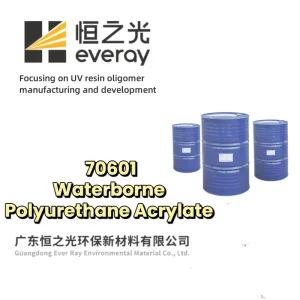
| Waterborne UV Resins | Self-emulsified polyurethane acrylate dispersions in water matrix. | Moderate (post heat-evaporation) | Zero-VOC, low odor, superb intercoat adhesion, soft-touch finishes. | Eco-friendly wood furniture, leather topcoats, sprayable plastic finishes. |
| Specialty / Dual-Cure Systems | Hybrid photo-thermal or shadow-cure mechanisms for complex geometries. | Variable (UV + Heat) | Deep-section cure, zero unreacted monomer migration, high thermal stability. | Automotive electronic encapsulation, 3D printing resins, structural adhesives. |
Atmospheric oxygen quenches free radicals during surface photopolymerization, leaving a tacky film on thin coatings or high-speed flexo inks. To overcome this without expensive nitrogen blanketing, our synthesis engineers incorporate amino-modified acrylate oligomers and reactive amine synergists. These additives undergo rapid hydrogen abstraction, consuming dissolved oxygen and accelerating surface cure velocity even under low-energy LED-UV lamps.
High-functionality acrylates exhibit volumetric shrinkage during polymer network formation, compromising cross-hatch adhesion on non-porous substrates like PET, glass, and metal alloys. By formulating with low-shrinkage pure acrylate oligomers, hyperbranched polymers, or photo-thermal dual-cure urethane acrylates (such as Grade 72017), bond stress is dissipated, ensuring adhesion (5B rating) without sacrificing surface hardness.
Guangdong Ever Ray Environmental Material Co., Ltd. operates state-of-the-art chemical synthesis infrastructure, offering direct factory reliability and complete technical transparency.
Every production lot undergoes rigorous multi-stage testing: Gel Permeation Chromatography (GPC) for molecular weight distribution, rotational viscometry, Gardner color scale measurement, and residual monomer gas chromatography (GC-MS) to guarantee precise specifications.
Our in-house R&D lab custom-engineers oligomer functionality, glass transition temperature ($T_g$), viscosity ranges, and refractive index parameters to match your specific curing lamp spectrum (365nm, 385nm, 395nm LED or Mercury vapor).
Fully compliant with ISO9001, ISO14001, and REACH standards. We supply multi-language Safety Data Sheets (SDS), Technical Data Sheets (TDS), and Certificate of Analysis (COA) documents with every commercial consignment.
Engineering specific resin properties for global industrial manufacturing hubs.
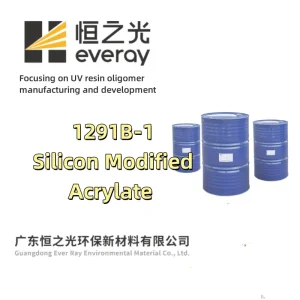
High-volume electronics assembly hubs in Shenzhen, Vietnam, and Malaysia demand scratch-resistant, anti-fingerprint, and sweat-resistant UV clearcoats for smartphone housings, laptops, and wearables. Formulations featuring aliphatic PUA and antifouling resins (like Grade 1291B-1) deliver superior steel-wool rub resistance.
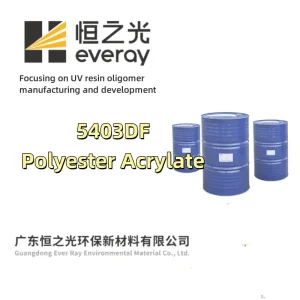
Strict food-packaging migration limits and fast printing speeds in Germany, Italy, and the USA necessitate low-odor, low-migration polyester acrylates (e.g., 5403DF, 5502B) with exceptional pigment wetting and sharp print dot reproduction on flexible film packaging.
Rapidly growing SLA, DLP, and LCD 3D printing farms across North America and Western Europe require low-viscosity, low-shrinkage oligomers. Dual-curing resins (e.g., 72017) provide high mechanical toughness, high heat deflection temperatures (HDT), and dimensional stability for engineering prototypes.
Anticipating chemical innovations, sustainability mandates, and next-generation radiation curing technologies.
Replacing petrochemical polyols with plant-derived, renewable feedstocks to achieve carbon-neutral footprint requirements.
Engineering long-wavelength (385–395nm) ultra-sensitive oligomers to facilitate 100% LED cure transition and cut energy use by 60%.
Integrating dynamic reversible covalent bonds within polyurethane networks for thermal plastic scratch self-repair.
Eliminating cosolvents entirely from waterborne UV dispersions, reaching true 0g/L VOC levels for regulatory perfection.
Incorporating conductive, anti-static, and flame-retardant moieties directly onto acrylate polymer backbones.
Specialty oligomers for matte wood coatings, vacuum plating primers, high-gloss paper varnishes, and low-heat adhesive systems.
Addressing procurement, custom synthesis, supply chain logistics, and technical formulation inquiries.
Accelerate your product development cycle with high-purity acrylate oligomers, custom resin synthesis, and reliable global supply chain logistics.