High-performance UV curable resins, modified epoxy acrylates, and specialty oligomers synthesized for industrial coating lines, offset inks, and protective varnishes.
An analytical review of cross-border market shifts, regulatory compliance trends, and the chemical evolution toward ultraviolet (UV) and electron beam (EB) curing systems.
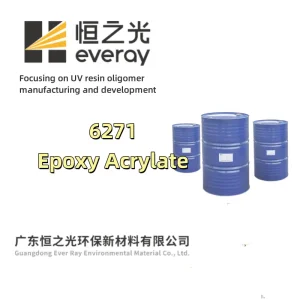
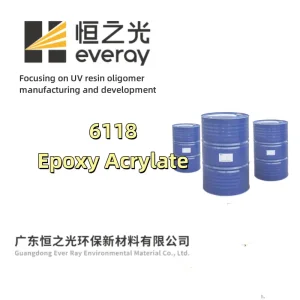
The global market for epoxy resin coatings is undergoing a fundamental structural transformation. Driven by stringent global environmental mandates—such as the European Union’s REACH regulations and US EPA Clean Air Act amendments—industrial formulators are aggressively phasing out traditional high-VOC, solvent-borne epoxides in favor of 100% solids, radiation-curable epoxy acrylate systems. Epoxy acrylates, synthesized via the addition reaction of acrylic acid to bisphenol-A diglycidyl ether (DGEBA) or novolac resins, now represent the backbone of high-speed industrial finishing lines.
Valued at over USD 12.4 Billion in the thermosetting coatings segment, the market is projected to expand at a Compound Annual Growth Rate (CAGR) of 6.8% through 2032. Growth is disproportionately concentrated in high-throughput manufacturing hubs requiring instantaneous polymerization, exceptional pencil hardness (3H–6H), and uncompromising chemical resistance against solvents, acids, and mechanical wear.
| Coating Technology Class | Curing Kinetics | VOC Emissions | Pencil Hardness | Substrate Adhesion | Energy Footprint |
|---|---|---|---|---|---|
| Solvent-Borne Epoxy | Slow (Thermal / 24h) | High (400–600 g/L) | 2H – 3H | Excellent | High (Ovens required) |
| Waterborne Epoxy | Moderate (Air dry / 4h) | Low (<100 g/L) | H – 2H | Good | Moderate |
| UV-Curable Epoxy Acrylate | Instantaneous (<3 seconds) | Zero / Ultra-Low | 4H – 6H | Exceptional (Modified) | Minimal (LED-UV / Mercury) |
Key industrial sectors driving this demand include 3C consumer electronics, heavy industrial flooring, automotive component primers, rigid packaging overprint varnishes (OPV), and fast-emerging photopolymer formulation for additive manufacturing (3D printing). Formulators searching to buy epoxy resin coatings from qualified manufacturers and direct factories are no longer merely seeking raw materials; they demand chemical consistency, custom-tailored viscosity indices, and documented batch-to-batch repeatability.
How fully integrated chemical synthesis, raw material proximity, and continuous-process reactor automation provide global B2B buyers with unrivaled scale, quality control, and cost competitiveness.
China’s Pearl River Delta and Eastern Chemical Clusters co-locate basic epoxide synthesis (Bisphenol-A, Epichlorohydrin) directly with esterification facilities. This vertical synergy removes transport surcharges, eliminates supply chain bottlenecks, and guarantees raw material purity prior to acrylate modification.
Modern Chinese factories (such as Guangdong Ever Ray Environmental Material Co., Ltd., operating 40,000+ m² production bases) utilize automated DCS continuous reactor loops. Precise thermal control during acrylic acid addition prevents premature gelation and maintains tight viscosity bands (±200 mPa.s at 25°C).
Leading export manufacturers operate full-scale analytical laboratories equipped with High-Performance Liquid Chromatography (HPLC), Gel Permeation Chromatography (GPC), and Fourier-Transform Infrared Spectroscopy (FTIR) to ensure SVHC compliance and COA accuracy for European and North American buyers.
From micro-electronics encapsulated coatings to heavy-duty industrial floor sealers, explore how modified epoxy acrylates solve critical end-use failure modes.
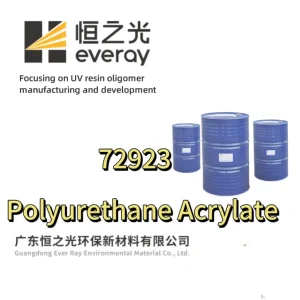
Consumer electronics demand high scratch resistance, anti-fingerprint properties, and adhesion to difficult substrates like Polycarbonate (PC), ABS, and PMMA. Standard bisphenol-A epoxy acrylates provide extreme hardness but can suffer from brittleness. Manufacturers blend high-functionality aliphatic urethane acrylates or amine-modified epoxy acrylates (e.g., Grade 6231) to balance impact strength with steel-wool abrasion resistance.
In commercial SPC/LVT flooring and solid wood furniture finishing, rapid line speeds (up to 40 m/min) demand fast surface tack-free times and high sanding efficiency. Epoxy acrylate sealers penetrate deeply into cellulose pores, sealing wood fibers while providing an impermeable barrier against moisture, alcohol spills, and fork-lift tire scuffing.
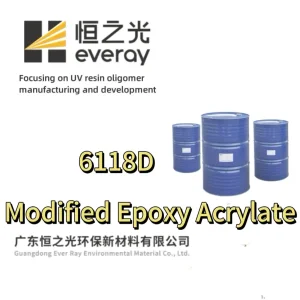
In printing inks, oligomers must demonstrate superior pigment wetting to achieve low rheological yield points and vibrant color density. Modified polyester and epoxy acrylates ensure ideal ink-water balance on high-speed lithographic presses without emulsification, curing cleanly under both traditional mercury vapor and 365–395nm LED-UV lamps.
Additive manufacturing relies on fast double-bond conversion and minimal volumetric shrinkage stress to prevent part warping. Low-viscosity epoxy acrylate derivatives blended with reactive diluents (such as TPGDA, HDDA, or TMPTA) yield high tensile modulus and thermal deflection temperatures (HDT > 90°C) for functional engineering prototypes.
How modern monomer modification, bio-based precursors, and photoinitiator synergy are solving historic challenges of brittleness and oxygen inhibition.
Standard Bisphenol-A Epoxy Acrylate is synthesized via nucleophilic ring-opening of epoxide groups using acrylic acid in the presence of a catalyst (such as triphenylphosphine or quaternary ammonium salts) and a radical inhibitor (hydroquinone) at 90°C–105°C:
While unmodified epoxy acrylates provide unmatched reactivity and hardness due to the aromatic backbone and hydroxyl functional groups (-OH), they exhibit two primary technical limitations: high room-temperature viscosity (often requiring reactive diluent cutting) and susceptibility to yellowing under prolonged outdoor UV exposure.
A systematic framework for chemical purchasing managers and procurement directors to evaluate supplier credibility, batch consistency, and international shipping protocols.
Ensure your factory supplier guarantees Brookfield viscosity ranges at specified temperature (e.g., 25°C ± 0.5°C) and Gardner Color indices ≤ 1.0 for clear varnish formulations.
Excess unreacted acrylic acid leads to odor, skin irritation, and corrosion on metal substrates. Require acid value specification < 2.0 mg KOH/g on all Certificates of Analysis (COA).
Inquire about inhibitor packages (MEHQ levels). Accelerate shelf-life testing at 60°C for 7 days to verify dark thermal stability without viscosity drift.
Confirm UN-certified steel drum or IBC tote packaging compliance with maritime IMDG and air IATA safety protocols for smooth customs clearance.
Verify full REACH registration status or OR (Only Representative) coverage if importing into EU member states or the United Kingdom.
Audit the manufacturing plant’s annual tonnage capacity to prevent allocation issues during peak industrial demand cycles.
Wholesale supplier solutions tailored for specialized spray coating, non-yellowing adhesives, wood lacquers, and soft-touch tactile finishes.
Comprehensive answers regarding epoxy acrylate chemistry, ordering protocols, sample evaluations, and technical formulation adjustments.
