Modern high-speed manufacturing lines in consumer electronics, automotive assembly, optical display, and renewable energy require ultra-fast curing adhesive chemistry. Fast-drying epoxy glues and modified epoxy acrylates provide structural integrity, zero-gap stress relief, and rapid green strength within seconds.
Advanced mercaptan and modified amine curing systems deliver rapid fixture times without compromising post-cure crosslinking density or thermal stability under thermal shock conditions.
Formulated to prevent thermal runaway and micro-cracking in thick potting layers, guaranteeing dimensional stability for precision microelectronics and lens assembly.
Fully compliant with international environmental directives including RoHS, REACH SVHC, TSCA, and Low-VOC standardizations for worldwide export.
Select from our benchmark chemical formulations designed for floor coatings, outdoor tapes, UV inks, and structural bonding.
Achieving rapid fixture times while preserving high lap shear strength requires precise formulation balance between ring-opening polymerization, acrylate crosslinking, and photoinitiator sensitivity.
In modern industrial manufacturing, hybrid dual-cure systems combine free-radical acrylate photopolymerization with thermal cationic epoxy curing. This dual mechanism ensures instant surface tack-free setting under UV-LED light (365nm to 395nm wavelength) while allowing deep shadow areas to achieve 100% conversion via residual thermal crosslinking.
Unmodified bisphenol-A epoxy resins often exhibit high viscosity and shrinkage stress during rapid cure cycles. Incorporating modified reactive diluent monomers and hyperbranched acrylate oligomers optimizes viscosity (ranging from 1,000 to 15,000 mPa.s at 25°C), significantly reducing volumetric shrinkage below 1.5% and eliminating substrate deformation.
Compare physical properties, cure speeds, and performance metrics across major resin chemistry classes to identify the exact match for your process parameters.
| Resin Chemistry Type | Cure Mechanism | Fixture Time | Shore D Hardness | Lap Shear (Steel/Steel) | Yellowing Resistance | Primary Industrial Use |
|---|---|---|---|---|---|---|
| Standard Bisphenol A Epoxy Acrylate | Free-Radical UV / EB | 1 - 3 Seconds | 85D - 90D | 18 - 22 MPa | Moderate | Wood primers, Overprint Varnishes, PCB inks |
| Modified Fast-Curing Epoxy Acrylate | Dual UV / Thermal | 2 - 5 Seconds | 80D - 88D | 22 - 28 MPa | Good | Electronic potting, structural bonding, metal coating |
| Aliphatic Polyurethane Acrylate (PUA) | UV Free-Radical | 3 - 8 Seconds | 65D - 78D | 14 - 18 MPa | Excellent (ΔE < 1.0) | 3C electronics housing, automotive clearcoats, outdoor tapes |
| Polyester Acrylate Oligomer | UV Free-Radical | 2 - 4 Seconds | 70D - 82D | 12 - 16 MPa | Moderate | UV printing inks, offset lithography, flexo packaging |
| Mercaptan-Cured Fast Epoxy | 2-Part Chemical Reaction | 3 - 5 Minutes | 75D - 85D | 20 - 25 MPa | Fair | General maintenance, glass bonding, repair kits |
Tailored chemical engineering for high-throughput automated manufacturing environments.
Fast-drying epoxy resins provide shadow-curing capabilities for optical lens alignment, camera module fixations, smartphone chassis structural bonding, and edge sealing on OLED/LCD display panels with zero outgassing.
High-temperature thermal cycle resistant formulations tailored for battery cell module encapsulation, sensor sealing, electric motor wire potting, and lightweight composite carbon-fiber structural joining.
Modified epoxy acrylate oligomers delivering superior scratch resistance, high gloss retention, chemical solvent resistance, and rapid UV line curing speeds exceeding 40 meters per minute on continuous coating lines.
Key quality assurance metrics, audit protocols, and risk mitigation strategies when partnering with direct chemical manufacturers.
Direct factory supply guarantees eliminate middleman markups while providing raw material traceability from basic epoxy resins (DGEBA) to finished acrylate formulations. Key logistics features include:
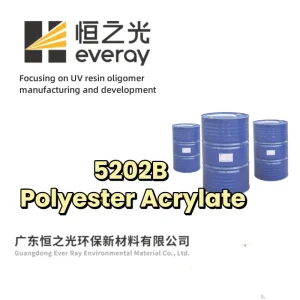
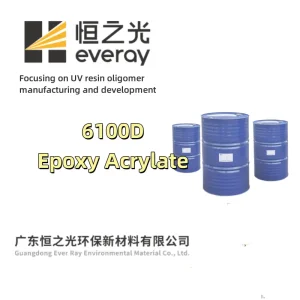
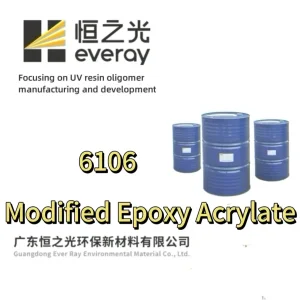
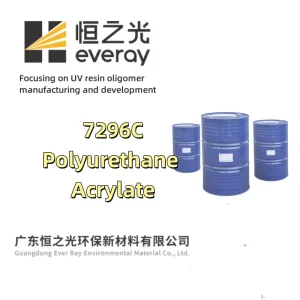
Browse our extended product lineup engineered for nail polish, electronic potting, wood coatings, and high-adhesion metal primers.
Ensuring full environmental safety standards for international distribution across North America, Europe, and Asia-Pacific.
All raw materials and synthesized oligomers strictly comply with European Chemical Agency (ECHA) REACH regulations, containing zero Substances of Very High Concern (SVHC).
Formulated to meet strict electronic assembly requirements with total chlorine and bromine content under 900 ppm, fully compliant with RoHS 2.0 directive 2011/65/EU.
Advanced synthesis techniques strip residual monomers and volatile organic compounds, yielding ultra-low odor resins suited for indoor flooring and food packaging OPV.
Practical solutions for common manufacturing defect modes encountered during high-speed adhesive dispensing and UV curing.
Surface tack in free-radical acrylate systems occurs when ambient oxygen quenches radical species at the coating-air interface. Solutions include adding amine synergist oligomers (e.g., Amino Acrylate series), utilizing nitrogen purging under UV lamps, or formulating with photo-cationic epoxy co-initiators.
Rapid epoxy curing reactions release localized exothermic heat. In potting depths over 5mm, excess heat can induce micro-cracks or substrate discoloration. Incorporating low-viscosity polyester acrylates or adjusting photoinitiator loading to 1.5%–2.5% controls the exothermic temperature spike below 80°C.
Direct answers to crucial technical and commercial questions raised by production engineers and purchasing directors.
Contact our application engineering team today for personalized formulation matching, chemical compatibility testing, and bulk factory quotes.
