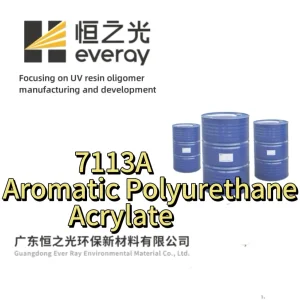
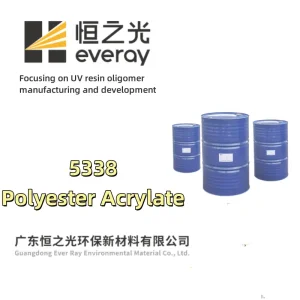
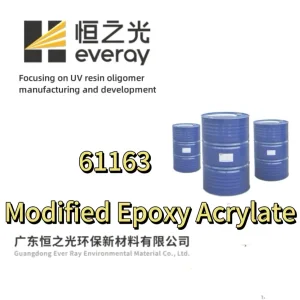
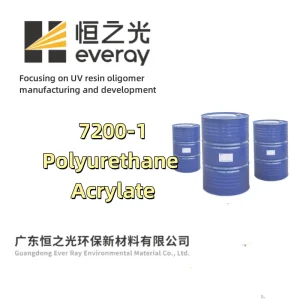
Direct factory supply from our 40,000+ m² Guangdong production base. The following selection covers high-adhesion urethane acrylates, anti-yellowing modified epoxy resins, and specialized polyester acrylates for advanced industrial laminates, coatings, and structural adhesives.
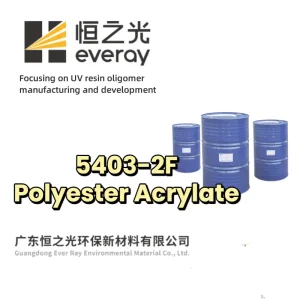
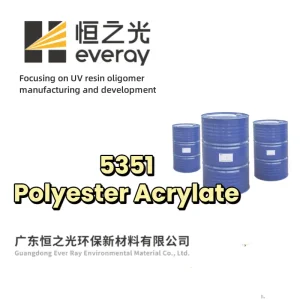
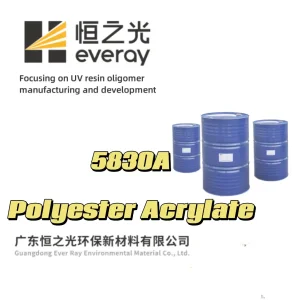
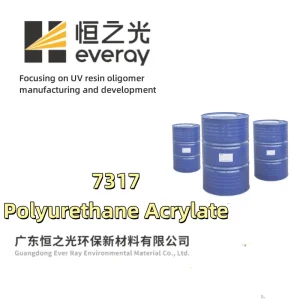
In the rapidly evolving landscape of advanced manufacturing, selecting the optimal material adhesive supplier and product formulation is no longer a mere procurement decision—it is a critical engineering requirement that dictates structural integrity, process speed, and product longevity. Photopolymerizable materials, particularly UV (Ultraviolet) and EB (Electron Beam) curable acrylic oligomers, represent the pinnacle of modern industrial adhesive technology.
As an industry-leading material adhesive manufacturer established in 2006, Guangdong Ever Ray Environmental Material Co., Ltd. (operating from our state-of-the-art synthesis facility in Yunfu, Guangdong, and global sales headquarters in Jiangmen) integrates high-level polymer chemistry with real-world processing parameters. Modern structural adhesives rely on precision-tailored reactive oligomers including epoxy acrylates, aliphatic/aromatic polyurethane acrylates (PUA), polyester acrylates, and hyperbranched functional resins.
Ultraviolet curing adhesives operate via rapid photoinitiated polymerization. Upon radiation exposure (typically LED-UV 365nm-395nm or Medium-Pressure Mercury lamps), photoinitiators generate free radicals that attack the carbon-carbon double bonds ($C=C$) of acrylate functional groups. Polymer networks form in milliseconds, locking substrate interfaces under minimal thermal stress.
Bonding low surface energy (LSE) polymers such as untreated Polycarbonate (PC), Acrylonitrile Butadiene Styrene (ABS), and Polyethylene Terephthalate (PET) requires adhesive oligomers engineered with specific polar functional groups. Hydroxyl, carboxyl, and urethane linkages lower contact angles and promote molecular interlocking and hydrogen bonding.
A primary challenge in high-precision structural adhesives is polymerization shrinkage. High acrylic double-bond conversion can induce internal stress, leading to delamination under thermal cycling. EVER RAY solves this by formulating hyperbranched oligomers and specialty urethane backbones that absorb shrinkage stress while retaining mechanical shear strength.
The global market for material adhesives and energy-curable resins is undergoing a structural transition driven by stringent environmental mandates (REACH, TSCA, Low-VOC standards) and high-throughput production automation. Traditional solvent-based adhesives are systematically replaced by 100% solid-content UV radiation-curable systems.
The Asia-Pacific region dominates both production capacity and consumer demand, driven by mega-clusters in consumer electronics (3C), automotive display assembly, and renewable energy equipment. European and North American markets are prioritizing non-toxic, photoinitiator-optimized resins that comply with stringent chemical exposure regulations while lowering carbon intensity per unit produced.
To maintain competitiveness, industrial adhesive buyers are bypassing multi-tier chemical distributors to collaborate directly with synthesis manufacturers. B2B purchasing teams demand full transparency on raw material origins, batch viscosity consistency, color index (Gardner/APHA), and chemical regulatory filings (TDS, SDS, COA).
Selecting the right material adhesive oligomer requires analyzing physical-chemical properties across the entire curing cycle. Below is a comparative chemistry matrix detailing EVER RAY’s core material adhesive resin categories and their technical performance metrics.
| Resin Chemistry Class | Cure Speed Response | Lap Shear Strength (MPa) | Tg (°C) | Volumetric Shrinkage (%) | Key Performance Attribute | Primary Industrial Application |
|---|---|---|---|---|---|---|
| Aliphatic Urethane Acrylate (PUA) | Medium - High | 12 - 18 | -10 to 65 | < 2.5% | Non-yellowing, high weatherability & elasticity | 3C Consumer Electronics, Optical Bonding, Automotive HUD |
| Aromatic Urethane Acrylate (PUA) | High | 15 - 22 | 20 to 85 | 2.5% - 4.0% | High toughness, abrasion resistance, cost-efficiency | Vacuum Metallizing Topcoats, ABS/PC Structural Bonding |
| Bisphenol A Epoxy Acrylate | Very High | 18 - 28 | 60 to 110 | 4.0% - 6.5% | Exceptional hardness, chemical resistance & tensile strength | Glass Primers, Metal Laminates, Heavy-Duty Industrial Overcoat |
| Polyester Acrylate Oligomer | High | 8 - 14 | -20 to 45 | 3.0% - 5.0% | Superior pigment wetting, low viscosity, high flexibility | UV Offset & Screen Printing Inks, Packaging Laminating Adhesives |
| Hyperbranched Acrylate Oligomer | Ultra-Fast | 14 - 20 | 40 to 105 | < 1.8% | Multi-functional reactivity with exceptionally low viscosity | Excimer Laser Soft-Touch Coatings, High-Speed UV Inks |
| Pure Acrylate / Specialty Functional | Medium | 10 - 16 | -30 to 30 | < 1.5% | Zero-shrinkage tendency, extreme clarity, high ductility | Optical Clear Adhesives (LOCA/OCR), Flexible Displays |
Industrial material adhesives must function under demanding factory conditions and severe field environments. Guangdong Ever Ray Environmental Material Co., Ltd. custom-formulates resin systems for targeted application scenarios:
Modern mobile phones, smart wearables, and tablets require adhesives that offer high optical clarity ($>99\%$ transmittance), zero haze, and resistance to thermal shock. Using our Pure Acrylate and Aliphatic PUA Oligomers, formulators achieve Liquid Optical Clear Adhesives (LOCA) that prevent yellowing under intense UV illumination while maintaining elastic stress relief between display cover glass and touch sensor panels.
Automotive assemblies demand adhesive performance across extended temperature ranges ($-40^\circ\text{C}$ to $+125^\circ\text{C}$). Encapsulating LIDAR modules, bonding head-up displays (HUD), and securing interior trim components mandate low-outgassing, vibration-damping adhesives engineered with high thermal transition stability.
Direct vacuum aluminum deposition on ABS/PC plastic housings requires a primer coating with high crosslinking density and flexible adhesive anchoring. EVER RAY’s aromatic PUA oligomers provide exceptional intercoat adhesion, preventing flaking during environmental tape-pull testing (ASTM D3359 5B).
The next decade of adhesive material science will be defined by five core technological vectors. Guangdong Ever Ray Environmental Material Co., Ltd. continuously invests R&D resources to keep our customers at the forefront of polymer innovation:
Transitioning from conventional mercury arc lamps to energy-efficient LED-UV curing systems requires oligomers optimized for longer wavelengths. EVER RAY is re-engineering surface cure response to overcome atmospheric oxygen inhibition without relying on toxic amine synergists.
Complex 3D assembly geometries often contain shadowed areas where direct UV light cannot penetrate. Our R&D team is developing dual-cure oligomer architectures that combine initial UV light tacking with secondary moisture-cure or thermal-cure mechanisms to ensure 100% polymer conversion.
In response to global carbon neutrality goals, EVER RAY is integrating plant-derived polyols and bio-based reactive monomers into our polyurethane acrylate and polyester acrylate synthesis lines, reducing fossil fuel dependence while matching petrochemical performance.
Excimer laser curing (172nm) allows ultra-matte surface structuring without physical matting agents. Our specialty hyperbranched acrylate grades (e.g., 53036) are specifically engineered to respond to micro-folding effects, delivering silky skin-feel textures with high scratch resistance.
Additional technical resins engineered for nail gels, excimer laser applications, LED-UV converting packaging, high-gloss inks, and specialized metal coatings.
Guangdong Ever Ray Environmental Material Co., Ltd. enforces strict quality assurance across all raw material intakes and synthesis batches. Our Yunfu production base operates under standardized ISO 9001 and ISO 14001 frameworks, conducting multi-stage testing on every batch before drum packaging:
Using rotational cone-and-plate viscometers at controlled temperatures ($25.0^\circ\text{C} \pm 0.1^\circ\text{C}$), we ensure viscosity tolerances remain within tight contract specifications (e.g., $\pm 5\%$), preventing process drift on high-speed automated dispensing and roll-coating lines.
Fourier-Transform Infrared (FTIR) spectroscopy is used to evaluate the consumption of acrylate carbon-carbon double bonds ($C=C$ peak at $1635\text{ cm}^{-1}$), verifying reaction end-points and ensuring zero unreacted monomer residue in cured films.
Adhesive samples undergo $100^\circ\text{C}$ boiling water immersion for 2 to 4 hours (e.g., Grade 5830A), followed by cross-hatch adhesion testing (ISO 2409 / ASTM D3359) to guarantee zero intercoat blistering or delamination on glass and metal surfaces.
Detailed technical and commercial answers provided by EVER RAY’s application engineering team to support product selection, sample evaluation, and bulk procurement.
Epoxy Acrylates (such as bisphenol A epoxy acrylate) offer very high reactivity, exceptional hardness, chemical resistance, and excellent tensile strength at a cost-effective price point. However, they exhibit higher volumetric shrinkage ($4-6\%$) and tend to yellow under outdoor UV exposure. Aliphatic Polyurethane Acrylates (PUA) deliver outstanding non-yellowing weatherability, high elongation at break, low shrinkage ($<2.5\%$), and flexible toughness. Formulators choose Epoxy Acrylates for rigid interior substrates (wood, glass primers, rigid packaging) and Aliphatic PUAs for outdoor coatings, flexible displays, optical bonding (LOCA), and 3C consumer electronics.
EVER RAY manages a fully integrated production facility in Dawan Industrial Park, Yunfu, featuring over 10 automated synthesis lines with an annual capacity exceeding tens of thousands of metric tons. Every batch undergoes strict Quality Control (QC) testing covering viscosity, Gardner color index, acid value, density, and double-bond conversion speed via FTIR. Samples from every batch are retained in our archive for two years. A complete Certificate of Analysis (COA) is shipped with every drum lot.
For untreated plastic substrates, we recommend using modified Aromatic Urethane Acrylates (such as Grade 7162 or 7296-1) or Pure Acrylate Adhesion Promoters. These resins contain polar functional groups and optimized molecular weight distributions that penetrate the polymer substrate surface slightly, forming strong mechanical interlocking and hydrogen bonds. They pass the 100-grid cross-hatch tape test (ASTM D3359 5B) with zero delamination.
Yes. Backed by over 10 invention and utility patents and an in-house polymer synthesis laboratory, our R&D team regularly customizes oligomers for specialized process requirements. We can adjust the degree of acrylation, monomer cut ratio (e.g., dilution with HDDA, TMPTA, TPGDA, or IBOA), Tg, and target viscosity to align with your automated dispensing equipment or coating application process.
Atmospheric oxygen scavenges free radicals on the surface of curing photopolymers, leading to tacky or incomplete surface cure. To mitigate this, formulators can incorporate Amino Acrylate Oligomers or Active Amine Synergists (such as EVER RAY Active Amine series) into the formula. The amine hydroperoxide pathway effectively scavenges dissolved oxygen radicals, accelerating surface cure even under low energy LED-UV lamps.
We provide export-standard packaging options including 20kg steel pails, 200kg plastic/iron drums, and 1000kg IBC totes. All shipments are accompanied by updated Technical Data Sheets (TDS), Safety Data Sheets (SDS) compliant with GHS regulations, and batch Certificates of Analysis (COA). Our logistics team handles dangerous-goods (DG) sea freight packaging and customs clearance documentation globally.
