Select from our engineering-grade polyurethane acrylates, modified epoxy acrylates, and specialty oligomers engineered for extreme adhesion, rapid light-cure response, and thermal durability.
An authoritative evaluation of current market dynamics, supply chain considerations, and chemical polymer benchmarks shaping the global light-curing adhesives industry.
The global demand to buy UV adhesive glue product formulations has experienced exponential growth, driven by the aggressive miniaturization of consumer electronics, high-speed automated automotive manufacturing, and stringent environmental regulations banning volatile organic compounds (VOCs). Unlike solvent-based or two-component epoxy systems, photopolymerized adhesives cure almost instantaneously upon exposure to ultraviolet radiation (200 nm to 400 nm) or visible light (400 nm to 470 nm).
This rapid transition from liquid to solid crosslinked network eliminates thermal ovens, reduces floor space footprint by up to 70%, and substantially lowers operational energy expenditures for tier-1 manufacturing facilities globally.
At the chemical synthesis level, raw material procurement focuses heavily on tailored urethane acrylate oligomers, epoxy acrylates, polyester acrylates, and reactive diluent monomers (such as IBOA, THFA, TPGDA, and TMPTA). Formulators are increasingly moving toward aliphatic backbones for outdoor non-yellowing durability and specialized silane-modified oligomers to achieve direct covalent bonding onto unprimed glass, aluminum, and polyolefin substrates.
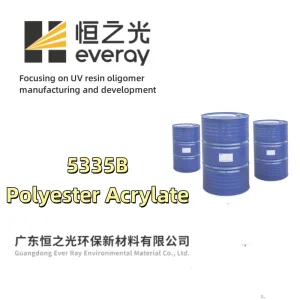
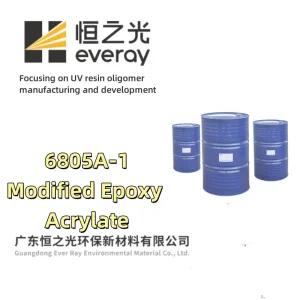
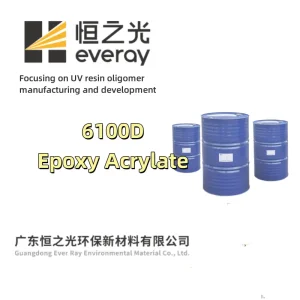
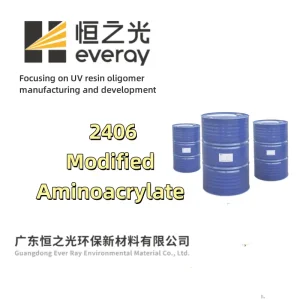
Guangdong Ever Ray Environmental Material Co., Ltd. leads this chemical synthesis landscape, manufacturing high-purity oligomers that serve as the foundational backbone for high-yield industrial UV adhesives worldwide.
| Adhesive Chemistry Type | Cure Mechanism | Tensile Strength (MPa) | Tg Range (°C) | Optical Clarity & Yellowing | Primary Industrial Substrates |
|---|---|---|---|---|---|
| Aliphatic Polyurethane Acrylate | Free Radical (UV-LED) | 15 – 45 | -40 to +80 | Exceptional (>99% Transmittance, No Yellowing) | Optical Glass, PC, PMMA, Touch Panels |
| Aromatic Epoxy Acrylate | Free Radical / Cationic | 40 – 85 | +50 to +140 | Moderate (Slight yellowing over time) | Metals, Ceramics, FR4 PCBs, Structural Glass |
| Polyester Acrylate | Free Radical | 20 – 50 | -10 to +90 | Standard Technical Grade | Paper OPV, Plastics, Flexible Packaging |
| Silane-Modified Dual-Cure | UV Free Radical + Moisture | 25 – 60 | -30 to +110 | High Transparency | Opaque Electronics, Automotive Sensors, Solar Modules |
Exploring next-generation chemical engineering breakthroughs: LED-UV curing efficiency, shadow-cure mechanisms, nano-additives, and eco-compliant bio-resins.
Traditional medium-pressure mercury arc lamps are rapidly being phased out due to high thermal emissions, short service lives, and environmental mercury hazards. Modern high-intensity LED curing systems emit monochromatic spectral peaks at 365 nm, 385 nm, 395 nm, and 405 nm.
Formulating UV adhesive glue products for LED sources requires precise photoinitiator matching (e.g., TPO, TPO-L, BAPO, and Omnirad 819) combined with high-reactivity oligomers like EVER RAY's PUA series to achieve full surface dry and deep-section polymerization without thermal distortion of heat-sensitive substrates.
A primary historical limitation of light curing is shadow regions—areas where UV light cannot penetrate complex 3D metal components or opaque plastics. To overcome this, chemical engineers have perfected dual-cure systems:
Polymerization shrinkage during free-radical UV crosslinking can introduce micro-stresses, causing optical distortion or bond line delamination. Advanced UV structural adhesives now incorporate surface-treated nano-silica particles (10–50 nm) and hyperbranched acrylate oligomers.
These inorganic-organic hybrid networks reduce volumetric shrinkage from typical values of 6%–10% down to < 1.5%, maintaining sub-micron positional alignment in micro-optical sensors, camera lenses, and fiber optic transceivers.
Discover how specialized UV adhesive glue products solve critical engineering bottlenecks across advanced manufacturing sectors.
In smartphone assembly, OLED panel bonding, and smart wearable manufacturing, optical clarity and impact resistance are mandatory. UV curable Liquid Optically Clear Adhesives (LOCA) eliminate air gaps between cover glass and touch sensors.
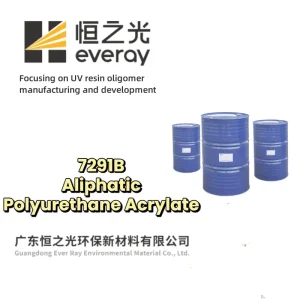
Recommended Solution: Formulations utilizing ultra-pure aliphatic urethane acrylate oligomers (such as EVER RAY 7291B family) deliver >99% light transmission, a refractive index matched to glass (1.49 - 1.51), and high elasticity to absorb mechanical impacts without yellowing under sunlight UV radiation.
Automotive LiDAR sensors, camera modules, battery management systems (BMS), and Head-Up Displays (HUD) operate in extreme environments ranging from -40°C to +125°C with severe vibration.
Recommended Solution: Dual-curing modified epoxy acrylate resins combined with thermal-resistant monomers. These resins pass rigorous thermal shock cycling (1000+ cycles), automotive damp-heat aging tests (85°C / 85% RH for 1000 hours), and maintain structural shear strength exceeding 25 MPa on anodized aluminum and PBT plastics.
Hypodermic needle bonding to hubs, anesthesia mask assembly, intravenous catheter fabrication, and fluidic reservoir sealing require ultra-pure, non-toxic UV light-curable adhesives capable of withstanding ETO gas, gamma radiation, and autoclave sterilization.
Recommended Solution: Biocompatible acrylated oligomer systems synthesized with zero extractable residues, ultra-low monomer migration, and instantaneous deep UV fixture under high-intensity 365 nm LED light engines.
Glass-to-metal furniture bonding, decorative bevel glass laminates, and vacuum metallization primers on plastic cosmetic containers demand extreme adhesion and boiling-water moisture resistance.
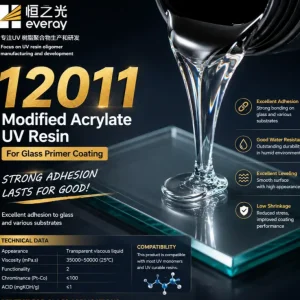
Recommended Solution: Specially modified resins like EVER RAY 12011 & 1730. These resins feature active phosphate and carboxyl functional groups that chemical anchor directly to glass silanol molecules and metallic sputtered layers, passing 100-hour boiling water immersion tests without edge delamination or haze formation.
Where photopolymer chemistry is heading: Sustainable bio-derived monomers, self-healing networks, and cationically cured cycloaliphatic epoxies.
Driven by global carbon neutrality goals, R&D is rapidly replacing petrochemical polyols with soybean oil, cashew nut shell liquid (CNSL), and lignin-derived bio-polyols. Next-gen bio-based UV oligomers offer >50% renewable carbon content while matching the thermal stability and mechanical performance of standard petroleum-derived acrylics.
Unlike free-radical systems that suffer from oxygen inhibition at the surface layer, cationic UV curing (utilizing cycloaliphatic epoxies and oxetanes initiated by iodonium or sulfonium salts) experiences zero oxygen sensitivity, extremely low volumetric shrinkage (<1%), and superior thermal resistance up to 200°C.
With the rise of high-power LED arrays, 5G chipsets, and EV power electronics, structural adhesives must dual-function as thermal interface materials (TIM). Integrating micro-aluminum nitride or boron nitride fillers into low-viscosity UV resins allows formulators to achieve thermal conductivity > 2.0 W/m·K alongside rapid 3-second UV fixation.
A checklist for chemical procurement teams, formulation chemists, and OEM manufacturing engineers evaluating UV light-curable resin supplies.
Determine whether your automated dispensing system requires thixotropic non-drip gels (20,000 to 100,000 cP) for vertical seam sealing, or ultra-low viscosity fluids (50 to 500 cP) for capillary wicking into pre-assembled pin clearances. Reactive diluents can be added to adjust flow kinetics.
Match your line’s UV lamp emission (Mercury vs. 365nm/395nm LED) with the resin's photoinitiator absorption package. Verify required curing energy density (mJ/cm²) and irradiance (mW/cm²) to ensure complete crosslinking at target conveyor speeds.
Low surface energy plastics (PE, PP, PTFE) require plasma treatment or specialized chlorinated/phosphate acrylate oligomers. Glass and metals require silane coupling agents (e.g., gamma-methacryloxypropyltrimethoxysilane) to prevent moisture degradation at the bond line.
Always audit supplier test data for post-cure shrinkage, glass transition temperature (Tg), coefficient of thermal expansion (CTE), yellowing index (ΔYI), lap shear strength before/after humidity chamber exposure, and outgassing metrics for optical assemblies.
Explore our full spectrum of UV curable polyurethanes, polyester acrylates, epoxy acrylates, and specialty oligomers for advanced adhesive, ink, and coating formulations.
Detailed answers regarding UV adhesive glue products, formulation customization, depth of cure, shelf life, and international export standards.