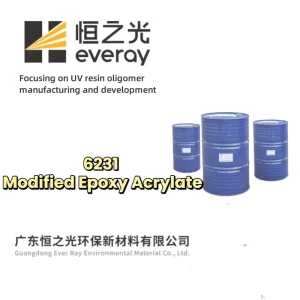
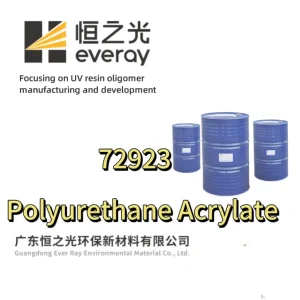
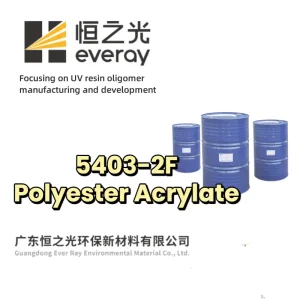
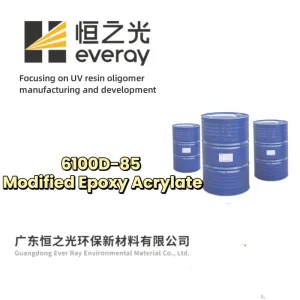
Explore our premium selection of epoxy acrylates, polyurethane acrylates, and specialty oligomers engineered for maximum cure speed, extreme hardness, and robust chemical durability.
An authoritative analysis of photopolymerization mechanisms, bisphenol-A esterification, oligomer modification, and batch-to-batch consistency for chemical procurement teams.
In the modern landscape of high-performance surface treatments, functional adhesives, graphics packaging, and additive manufacturing, UV cured epoxy resins (primarily synthesized as epoxy acrylate oligomers) represent the cornerstone of rapid-curing chemistry. Combining the mechanical tenacity, chemical resistance, and adhesion characteristics of classic epoxy resins with the ultra-fast reaction kinetics of free-radical acrylic polymerization, these oligomers enable automated industrial lines to operate at unprecedented line speeds while eliminating volatile organic compound (VOC) emissions.
As a premier UV cured epoxy manufacturer and factory established in 2006, Guangdong Ever Ray Environmental Material Co., Ltd. (operating from a 40,000+ m² automated synthesis complex in Yunfu, Guangdong) engineered this comprehensive technical guide. Designed specifically for industrial chemical formulators, procurement leaders, and coating engineers, this whitepaper dives deep into polymer architecture, crosslinking physics, formulation tuning, and supply chain scalability.
Standard Bisphenol A epoxy acrylate (such as standard Grade 9105A or 6100 series) offers unparalleled hardness (pencil hardness up to 4H-5H) and ultra-fast surface cure response due to its dense acrylic ester functionality. However, un-modified epoxy acrylates can suffer from volumetric polymerization shrinkage (up to 6-8%) and high room-temperature viscosity. Chemical modification via monomeric diluents, polyurethane hybridization, or fatty acid grafting solves film brittleness without compromising cure velocity.
Understanding how molecular weight distribution, hydroxyl value, and acrylate functionality dictate performance under UV mercury and LED light sources.
Our synthesis protocols react high-purity Bisphenol A (BPA) diglycidyl ether resins (E-51/E-44 grade) with glacial acrylic acid in the presence of proprietary triphenylphosphine or quaternary ammonium catalysts. Ring-opening esterification yields secondary hydroxyl groups, imparting excellent polarity, chemical resistance, and glass-transition temperatures (Tg > 65°C).
Under UV radiation (254nm–395nm), photoinitiators absorb photons to produce free radicals that trigger acrylate double bond crosslinking within milliseconds. Our modified epoxy acrylates (e.g., 6851A and 61003A) are tuned for high double-bond conversion under energy-efficient 365nm and 395nm UV LED arrays, eliminating surface tackiness.
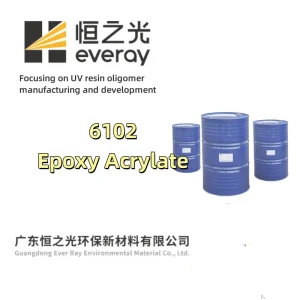
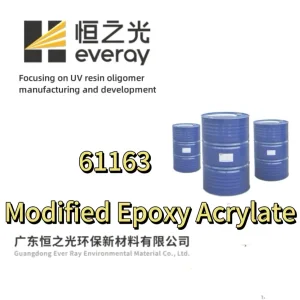
To overcome traditional epoxy brittleness, EVER RAY incorporates aliphatic ester soft segments or amine synergist grafts into the resin backbone. Modified grades (like 6102 and 61163) reduce linear cure shrinkage to under 2.5%, achieving superior adhesion on non-porous metals, plastics, and glass substrates.
Select the optimal oligomer chemistry based on viscosity profile, curing speed, yellowing resistance, and target physical properties:
| Resin Chemistry Class | Viscosity (mPa.s @ 25°C) | Pencil Hardness | Tg (°C) | Yellowing Index | Primary Industrial Application |
|---|---|---|---|---|---|
| Standard Bisphenol A Epoxy Acrylate | 15,000 – 45,000 | 4H – 5H | 75 – 85 | Moderate (3-4) | UV Wood Sealers, Paper OPV, PCB Solder Mask |
| Modified Low-Shrinkage Epoxy Acrylate | 4,000 – 12,000 | 2H – 3H | 50 – 65 | Low (1-2) | Plastic Coatings, Metal Primers, UV Adhesives |
| Aliphatic Polyurethane Acrylate (PUA) | 2,000 – 8,000 | HB – 2H | 35 – 55 | Non-Yellowing (<0.8) | 3C Electronics, Automotive Interior, UV Nail Gel |
| Polyester Acrylate Oligomer | 800 – 3,500 | H – 2H | 40 – 60 | Low (1.5) | UV Offset Printing Inks, Flexo Inks, Litho OPV |
| Waterborne Polyurethane Acrylate | 100 – 500 (Dispersed) | H – 3H | 45 – 70 | Non-Yellowing (<1.0) | Eco Leather Finishing, Waterborne UV Wood Paints |
Inside Guangdong Ever Ray Environmental Material Co., Ltd.'s Yunfu production base: Automated synthesis, continuous quality monitoring, and global export infrastructure.
Located in Dawan Industrial Park, Yunfu, Guangdong, our chemical synthesis plant houses 10+ fully automated stainless-steel reactors ranging from 5-ton to 30-ton capacities. Closed-loop temperature control (±0.5°C) prevents gelation risks during acrylic esterification and ensures consistent color values (<1.0 Gardner).
Every production lot undergoes rigorous analytical screening using High-Performance Liquid Chromatography (HPLC), Fourier-Transform Infrared Spectroscopy (FT-IR), and Brookfield Rotational Viscometers. We verify double bond conversion, acid value (<1.0 mg KOH/g), and residual monomer levels before issuing batch COAs.
By controlling raw material synthesis from initial oligomer polycondensation to final dilution with functional monomers (such as TPGDA, TMPTA, DPHA, or HDDA), EVER RAY eliminates supply disruptions and guarantees factory-direct price competitiveness for international buyers across Europe, the Americas, Southeast Asia, and the Middle East.
Custom-formulated resin solutions engineered to meet demanding operational criteria in electronics, graphics, wood flooring, and structural adhesives.
Our aliphatic polyurethane acrylates and modified epoxy oligomers deliver 4H+ pencil scratch resistance, anti-fingerprint properties, and zero yellowing for smartphone housings, tablet backcovers, notebook chassis, and optical films (TAC/PET).
High-solids epoxy acrylates provide rapid sealer penetration, sandability, and abrasion resistance for solid wood, parquet, LVT, and SPC flooring production lines running at conveyor speeds exceeding 40 meters per minute.
Polyester acrylate and amino acrylate oligomers excel in lithographic offset, screen printing, and flexographic inks. They offer low misting, rapid pigment wetting, optimal water-ink balance, and high gloss retention on paperboard and plastic packaging.
Pure acrylates and low-shrinkage epoxy oligomers are critical for glass-to-metal bonding, LCD optical clear adhesives (LOCA), peelable temporary protectants, and fast-curing electronic potting compounds that withstand thermal shock cycle testing (-40°C to +120°C).
Custom hyperbranched and low-viscosity urethane/epoxy acrylate blends form the backbone of industrial 3D printing resins. They deliver high heat deflection temperatures (HDT), dimensional fidelity, toughness, and rapid layer cure times for additive tooling.
Purified, ultra-low irritation aliphatic polyurethane acrylates provide tack-free surface cure, extreme gloss, zero burning sensation under low-wattage LED lamps, and 30-day chip resistance for commercial gel polish formulations.
Streamlined chemical sourcing: How we partner with global coating brands, formulators, and distributors to deliver custom viscosity and tailored performance.
Every application demands a specific viscosity window, crosslink density, and substrate adhesion index. Our senior R&D team (backed by over 10 invention and utility patents) offers tailored synthetic modifications:
We ensure hassle-free global export compliance for international chemical buyers:
Pioneering eco-friendly photopolymer chemistry: Bio-based epoxies, waterborne UV dispersions, and low-energy LED curing systems.
EVER RAY is scaling synthesis routes utilizing renewable plant oil epoxies and cashew nut shell liquid derivatives. Our goal is to achieve 30%+ bio-based carbon content in next-generation epoxy acrylates while maintaining high Tg and scratch performance.
Addressing stringent global VOC regulations, our waterborne polyurethane acrylate dispersions utilize water as a carrier. Post-water evaporation, UV light triggers rapid crosslinking, creating solvent-free coatings for luxury interior wood and synthetic leather.
Traditional mercury lamps emit heat and ozone. We are redesigning oligomer backbones to feature higher photo-reactivity under long-wave LED emissions, allowing formulators to cure dark pigments and ultra-thick coatings with minimal energy consumption.
Get authoritative answers on synthesis, curing kinetics, photoinitiator matching, and batch consistency from EVER RAY's senior application engineers.
Our standard UV epoxy oligomers are synthesized via the complete esterification reaction of high-purity Bisphenol A diglycidyl ether resins with acrylic acid. This produces acrylated epoxy resins featuring aromatic backbones for hardness, secondary hydroxyl groups for adhesion, and terminal acrylate double bonds for ultra-fast free-radical polymerization under UV light.
Standard Bisphenol A epoxy acrylates offer high pencil hardness (4H-5H) and fast cure speed, but can be brittle with high viscosity. Modified epoxy acrylates (such as EVER RAY 6851A, 61003A, or 61163) incorporate polyether, polyurethane, or fatty acid modifications into the resin structure. This lowers viscosity, significantly reduces shrinkage, improves flexibility, and enhances yellowing resistance without sacrificing cure speed.
For clear coatings and overprint varnishes cured under medium-pressure mercury lamps, Type I photoinitiators such as 1173 (HMPP) or 184 (CPK) at 2–4% loading yield excellent surface cure. For UV LED 365nm/395nm curing systems or pigmented inks, we recommend pairing Type I with acylphosphine oxide photoinitiators like TPO or 819 (BAPO), combined with an amine synergist (such as EVER RAY Active Amine series) to mitigate surface oxygen inhibition.
We operate 10+ automated synthesis reactors equipped with closed-loop DCS process control at our Yunfu chemical base. Every raw material batch undergoes strict incoming QC. Final oligomer batches are evaluated for viscosity, acid value (<1.0 mg KOH/g), color (<1.0 Gardner), and gel time using rotational viscometers and FT-IR spectrographic finger-printing. A certified COA accompanies every single drum shipment.
Yes. As a direct manufacturer with an in-house R&D team holding over 10 invention patents, we frequently customize resin viscosity using specified diluent monomers (such as TPGDA, TMPTA, DPHA, HDDA, or IBOA). We can also adjust functionality, flexibility, and adhesion indices to suit your specific substrate requirements (metals, plastics, glass, or paperboard).
Our standard export minimum order quantity starts at 200kg (1 steel drum) for sample evaluation and trial production, up to full container loads (FCL, 16–20 metric tons). Standard grades ship within 7–10 business days from our Guangdong factory base. Sample quantities for laboratory testing can be dispatched within 48 hours.
Browse additional high-performance oligomers engineered for specialized applications in inks, peelable adhesives, matte coatings, and wood primers.