Explore our factory-direct, laboratory-certified UV curable oligomers engineered for demanding industrial coatings, offset inks, and specialty adhesives.
An in-depth chemical evaluation of ultraviolet-curable oligomers, reactive diluents, and crosslinking dynamics for technical procurement managers and chemical formulation engineers.
The global industrial sector is undergoing a massive paradigm shift toward ultra-fast, energy-efficient, and zero-VOC cure mechanisms. At the forefront of this industrial transformation are UV-curable polymers (photopolymers), synthesized through radiation polymerization under ultraviolet light radiation (wavelength range 200–400 nm) or electron beams (EB). When procurement managers and chemical engineers evaluate how to buy UV polymer products from tier-1 suppliers, understanding the molecular architecture—specifically acrylate oligomers, reactive monomeric diluents, photoinitiators, and functional additives—is essential to ensuring end-product performance, thermal resistance, and long-term durability.
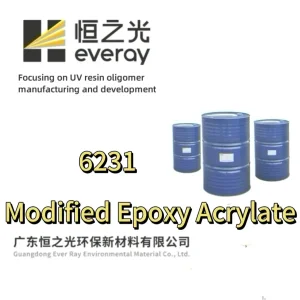
Epoxy acrylates represent one of the most widely utilized backbone polymers in the UV curing industry. Synthesized by the esterification reaction between epoxy resins (predominantly Bisphenol A diglycidyl ether, DGEBA) and acrylic acid, these resins contain terminal acrylate functional groups that undergo free-radical polymerization upon photoactivation.
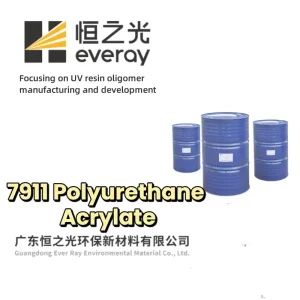
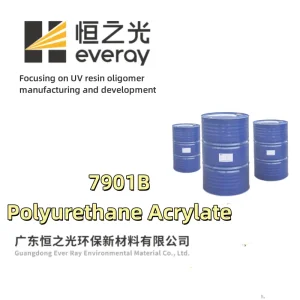
Polyurethane acrylates combine the elastomeric toughness, abrasion resistance, and cold-flexibility of polyurethane chains with the rapid curing speed of acrylic esters. They are chemically classified into two major categories:
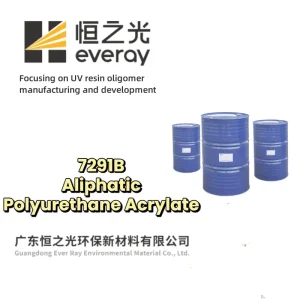
Synthesized using aliphatic diisocyanates such as IPDI (Isophorone Diisocyanate) or HDI (Hexamethylene Diisocyanate). They exhibit zero light absorption in the solar UV spectrum, conferring absolute resistance to yellowing, weathering, and chalking. Essential for high-end 3C electronics (smartphones/laptops), automotive exterior clearcoats, and optical films.
Utilize aromatic diisocyanates like TDI (Toluene Diisocyanate) or MDI. While prone to yellowing under prolonged sunlight exposure, they offer superior tensile strength, modulus, tear strength, and cost efficiency for interior flooring, industrial coatings, and tough structural adhesives.
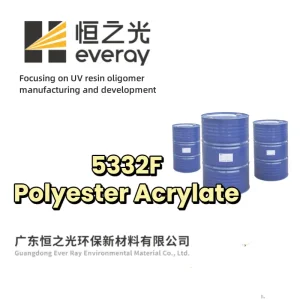
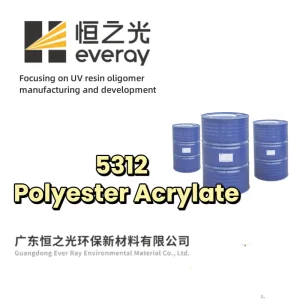
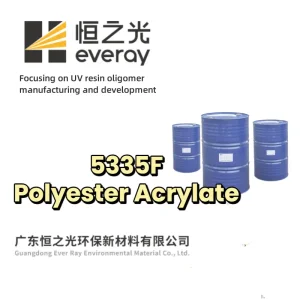
Polyester acrylates are produced by condensations of polyhydric alcohols and polybasic acids, followed by acrylation. They are world-renowned for their superb pigment-wetting capability, low viscosity, and balanced elasticity. Key formulations such as Polyester Acrylate 5332F and 5319A-1 are engineered specifically for high-speed lithographic offset printing inks, flexographic inks, and screen printing varnishes where rheology, ink-water balance, and low misting are paramount.
Why leading global chemical enterprises, industrial coaters, and ink manufacturers choose Guangdong Ever Ray as their strategic OEM/ODM partner.
Guangdong's advanced chemical industrial clusters ensure direct access to high-purity acrylic acid, Bisphenol A, polyols, IPDI/TDI, and functional monomers. This integrated supply chain mitigates price volatility and yields significant cost efficiencies for overseas buyers.
Our state-of-the-art manufacturing facilities in Yunfu, Guangdong feature 10+ automated stainless-steel synthesis reactors. From 200kg trial batches to multiple 20-ton ISO-tank shipments, we guarantee rapid turnaround times and rigorous batch-to-batch consistency.
Holding over 10 national invention patents, our application engineers customize polymer viscosity, functionality, glass transition temperature ($T_g$), refractive index, and cure response to match client-specific UV lamp setups and challenging substrates.
Discover how tailored UV polymer resin formulations resolve critical production bottlenecks across high-value global manufacturing sectors.
The Challenge: Modern smartphones, wearables, and laptop enclosures require micro-thin coatings that withstand continuous skin oil contact, alcohol wipes, keys scratching, and outdoor UV degradation without yellowing or micro-cracking.
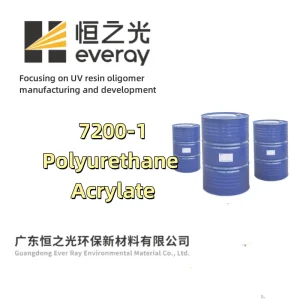
The UV Polymer Solution: Formulations incorporating Aliphatic Polyurethane Acrylates (e.g., Grade 7200-1, 72923) paired with hyperbranched acrylate monomers deliver 4H pencil hardness, exceptional flexibility (180° mandrel bend), and zero yellowing after 1000+ hours of QUV accelerated weathering tests.
The Challenge: Modern commercial printing presses operate at speeds exceeding 15,000 sheets per hour. Inks must demonstrate precise hydrophilic-lipophilic balance (HLP), rapid curing under LED-UV lamps, low water pickup, and zero pigment flaking.
The UV Polymer Solution: Utilizing specialized Polyester Acrylates (e.g., Grade 5332F, 5319A-1, 5501) provides superb pigment dispersion, rapid surface tack reduction, and optimal water-ink balance, significantly reducing press downtime and energy consumption.
The Challenge: Industrial SLA, DLP, and LCD 3D printers demand low-viscosity liquid resins that cure rapidly with minimal volumetric shrinkage, preventing warp deformation during layer-by-layer photopolymerization.
The UV Polymer Solution: Custom functional oligomer blends engineered with low-shrinkage urethane acrylate chemistry ensure dimensional fidelity ($\pm 0.05\text{mm}$), high tensile modulus, and impact durability for functional prototypes and end-use industrial parts.
We meet the rigorous chemical compliance standards established by multinational buyers across North America, Europe, East Asia, and South America.
All UV resins and acrylate oligomers are free from restricted heavy metals, phthalates, PFOA/PFOS, and SVHC (Substances of Very High Concern), enabling seamless import into European and North American markets.
To comply with global decarbonization policies, our waterborne polyurethane acrylate dispersions (PUDs) offer near-zero VOC emissions while retaining solvent-borne levels of hardness and water resistance.
Every batch produced undergoes rigorous testing: Viscosity (Brookfield), Gardner Color Scale ($\le 1$), Acid Value ($\le 1 \text{ mg KOH/g}$), Double-Bond Conversion Rate, and Shelf-Life Stability ($60^\circ\text{C}$ thermal storage test).
Key chemical innovations shaping the future of industrial coatings, adhesives, and 3D printing resins over the next decade.
Industrial coaters are rapidly migrating from traditional medium-pressure mercury lamps to energy-saving LED-UV curing systems. This shift requires oligomers and photosensitizers optimized for longer UV wavelengths (365nm, 385nm, 395nm, 405nm) to overcome surface oxygen inhibition without overheating sensitive plastic substrates.
In response to ESG mandates, photopolymer R&D is increasingly incorporating renewable bio-based feedstocks (such as epoxidized soybean oil, castor oil polyols, and cardanol) into acrylate resin backbones, achieving carbon-footprint reduction without sacrificing mechanical performance.
Clear, expert answers to common technical queries raised by chemical formulators, procurement managers, and international distributors.
Discover our specialized high-flexibility, fast-curing, and yellowing-resistant UV oligomer products for advanced coating, printing ink, and industrial adhesive formulations.
Contact our chemical engineering team to request complimentary 1kg laboratory evaluation samples, technical data sheets (TDS), safety documentation (SDS), and custom formulation guidance.
Contact Our Technical Sales Engineers