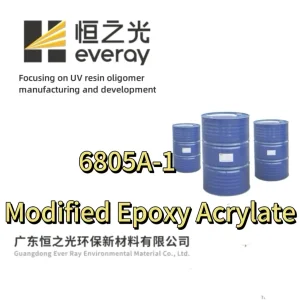
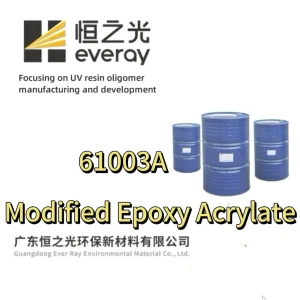
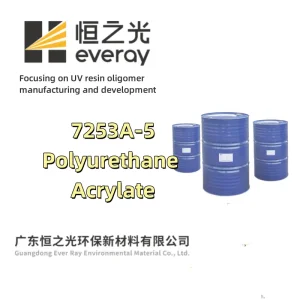
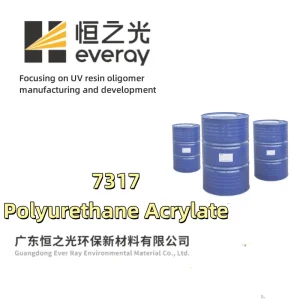
Direct factory supply engineered for extreme weatherability, rapid photo-cure kinetics, and superior interfacial adhesion.
Aliphatic Polyurethane Acrylates (APUA) represent the pinnacle of UV/EB (Ultraviolet/Electron Beam) curable resin technology. Formulated by reacting aliphatic diisocyanates—such as Isophorone Diisocyanate (IPDI), Hexamethylene Diisocyanate (HDI), or Dicyclohexylmethane Diisocyanate (H12MDI)—with hydroxyl-functional acrylate monomers and polyols, these oligomers eliminate aromatic ring conjugation.
Unlike aromatic counterparts that undergo photo-Fries rearrangement upon exposure to solar radiation, aliphatic urethane acrylates demonstrate exceptional weatherability, non-yellowing characteristics, and long-term optical clarity. This structural integrity makes them indispensable for automotive topcoats, 3C consumer electronics, optical displays, and outdoor industrial coatings.
By tuning the polyol backbone (polyester, polyether, or polycarbonate) and acylation functionality (from difunctional to hexafunctional), chemical engineers can precisely balance mechanical toughness, elongation at break, glass transition temperature ($T_g$), and crosslink density.
Guangdong Ever Ray Environmental Material Co., Ltd. (operating since 2006) stands at the forefront of radiation-curable material synthesis. With a state-of-the-art 40,000+ m² production base in Yunfu, Guangdong, and over 10 fully automated synthesis lines, we deliver consistent, lab-verified UV resin batches to international tier-1 formulators.
Analyzing regulatory shifts, technical breakthroughs, and sustainable chemistry mandates driving global procurement strategies through 2030.
Global environmental regulations (EU REACH, US EPA Title V, China GB38508-2020) are forcing a rapid migration away from solvent-borne coatings. High-solids, 100% active content Acrylic Aliphatic Urethane oligomers provide near-zero volatile organic compound emissions, reducing energy usage during thermal baking cycles.
The industrial coating sector is rapidly replacing medium-pressure mercury arc lamps with energy-efficient UV-LED systems (emitting at 365nm, 385nm, 395nm, and 405nm). Formulating aliphatic urethane acrylates with high reactivity and optimized photoinitiator absorption curves mitigates surface tackiness caused by atmospheric oxygen inhibition.
Combining the low viscosity of waterborne dispersions with the instantaneous crosslinking of UV light, WPUAs enable thin-film application on heat-sensitive substrates like real leather, soft PVC, and wood veneers without requiring high concentrations of toxic reactive monomer diluents.
Forward-thinking polymer factories are integrating bio-derived polyols (harvested from castor oil, succinic acid, and modified soybean oil) into aliphatic urethane acrylate backbones, achieving up to 40-60% renewable carbon index (RCI) without compromising mechanical hardness or anti-yellowing performance.
Tailored resin formulations designed to overcome specific substrate limitations, environmental degradation, and processing bottlenecks.
| Target Industry | Key Performance Challenges | Recommended Chemistry / Oligomer | Achieved Technical Advantage |
|---|---|---|---|
| 3C Consumer Electronics & Wearables | High scratch stress, artificial sweat corrosion, non-yellowing requirement on clear PC/ABS. | Hexafunctional Aliphatic Polyurethane Acrylate + Hyperbranched Acrylate | Pencil hardness $\ge 3\text{H}$, zero yellowing ($\Delta YI < 0.5$ after 1000h QUV-A), high flexibility. |
| Automotive OEM & Clearcoats | Stone-chip impact, acid rain resistance, thermal shock (-40°C to 120°C). | Aliphatic Polycarbonate Urethane Acrylate | Exceptional hydrolytic stability, self-healing elastic recovery, extreme weathering durability. |
| Optical Films & Display Panels | Cure shrinkage stress causing curl, light transmission loss, interfacial delamination. | Low-Shrinkage Difunctional Aliphatic Urethane Acrylate (e.g. 73008 Grade) | Shrinkage $< 2.5\%$, refractive index matching ($n_D \approx 1.49-1.52$), $99\%$ optical transparency. |
| Architectural Wood & Flooring | Abrasion resistance, fast curing speed under high line-speeds ($> 30\text{ m/min}$). | Modified Epoxy Acrylate + Trifunctional Aliphatic Urethane Acrylate | High Taber abrasion resistance, rapid surface dry, deep cure in filled wooden pores. |
| Specialty UV Adhesives & 3D Printing | Deep UV-LED cure depth, moisture-heat resistance, low odor, biocompatibility options. | Pure Acrylate / Urethane Acrylate Blends with Active Amine Synergists | High tensile bonding strength ($> 15\text{ MPa}$ on glass/metal), rapid green-strength development. |
How Guangdong Ever Ray secures supply chains for chemical formulators across Europe, North America, Southeast Asia, and the Middle East.
Every lot undergoes stringent testing for viscosity (Brookfield viscometer), color (Hazemeter / Gardner scale), residual monomer content (GC-MS), gel time, and conversion percentage under UV radiation.
We provide full SDS (Safety Data Sheets) formatted under GHS Revision 8, Technical Data Sheets (TDS), Certificates of Analysis (COA) per batch, and REACH, SVHC, K-REACH, TSCA regulatory declaration letters.
Our senior formulation experts can adjust oligomer viscosity, double bond functionality, monomer dilution ratios, and adhesive flexibility to match your precise line speed and curing equipment constraints.
Pioneering tomorrow's radiation-curing platforms with dual-cure networks, hyperbranched architectures, and self-healing functional polymers.
Developing dendritic and hyperbranched acrylic aliphatic urethane structures that offer ultra-high acrylic double-bond density ($Functionality \ge 8$) while maintaining surprisingly low solution viscosity. This minimizes monomer diluent reliance, boosting surface scratch resistance.
Synthesizing hybrid oligomers featuring both UV-curable acrylate groups and secondary curing mechanisms (such as moisture-cure silane tail-blocks or thermal epoxy-isocyanate crosslinking). These resins solve shadow-cure problems in complex 3D electronic assemblies.
Integrating dynamic hydrogen-bonding urea/urethane domains with micro-phase separated soft polyether segments. Micro-scratches on consumer electronic housings auto-repair at room temperature or upon mild thermal excitation.
Select from our full range of modified epoxy acrylates, polyester acrylates, and specialty oligomers.
In-depth technical answers curated by Guangdong Ever Ray's R&D application engineers to address real-world formulation challenges.
Aliphatic Polyurethane Acrylates are synthesized using non-aromatic diisocyanates (such as IPDI, HDI, or H12MDI), whereas Aromatic Urethane Acrylates utilize aromatic monomers like TDI (Toluene Diisocyanate) or MDI (Methylene Diphenyl Diisocyanate). Aromatic rings contain conjugated double bonds that absorb UV radiation and undergo photo-degradation (photo-Fries rearrangement), resulting in rapid yellowing and embrittlement upon outdoor exposure.
In contrast, Aliphatic Urethane Acrylates do not absorb solar UV-A and UV-B wavelengths, offering outstanding non-yellowing durability ($\Delta YI < 1.0$ over multi-year outdoor weathering), superior flexibility retention, and weatherability suitable for automotive clearcoats and 3C electronic housings.
Balancing these competing properties requires blending oligomers of varying functionalities or utilizing hyperbranched structures:
Recommended Strategy: Use a combination of a hexafunctional aliphatic urethane acrylate (for surface cure and hardness) blended with a flexible difunctional polyether/polyester APUA (for toughness), diluting with monomeric acrylates like TPGDA, TMPTA, or IBOA to adjust viscosity without compromising conversion rate.
Atmospheric oxygen reacts rapidly with radical species during UV curing to form unreactive peroxyl radicals ($\text{ROO}\cdot$), terminating polymerization at the coating-air interface. Under UV-LED sources (365nm-395nm), surface cure is particularly challenging due to lower energy photons compared to broad-spectrum mercury lamps.
Formulation Solutions:
Cure shrinkage occurs when free van der Waals spaces between liquid monomer/oligomer molecules shrink into tight covalent $C-C$ single bonds during photo-polymerization (reducing intermolecular distances from $\approx 0.3-0.4\text{ nm}$ down to $\approx 0.15\text{ nm}$). Excessive shrinkage leads to internal stress, substrate curling (especially on thin films), and adhesion failure.
Low-shrinkage oligomers like Ever Ray Grade 73008 mitigate this stress by incorporating bulky polyol backbones, lower functional group densities per unit molecular weight, and ring-opening or hydrogen-bonded polyurethane domains that absorb internal stress during network formation.
Yes. All products manufactured at our Yunfu, Guangdong production plant comply with strict international environmental regulations. We support our customers with comprehensive compliance dossiers, including EU REACH registration/pre-registration, SVHC candidate list screening, RoHS 3.0 (Directive 2015/863), US TSCA inventory listing, and China GB38508-2020 low-VOC standard certifications.
When stored in original sealed, light-proof containers (typically black or amber HDPE drums/pails) at temperatures between $15^\circ\text{C}$ and $25^\circ\text{C}$ away from direct sunlight, ambient UV sources, and strong oxidizing agents, Ever Ray oligomers maintain a stable shelf life of 12 months. Air headspace must be retained in drums because dissolved oxygen acts as a natural radical inhibitor prevents premature gelation.
Absolutely. Our in-house R&D team consists of senior polymer chemists and application engineers. We regularly design custom resin architectures for global enterprise clients—adjusting molecular weight distribution ($M_w/M_n$), changing polyol backbones (polyether vs. polyester vs. polycarbonate), or pre-diluting oligomers with specific reactive diluents (e.g., HDDA, TPGDA, DPHA, or IBOA) to match your target viscosity window.
Formulators and procurement teams can request documentation and 1kg-5kg evaluation samples by contacting our sales technical desk directly at [email protected] or via WhatsApp/Phone at +86-18029628893. Sample shipments are dispatched globally with full batch Certificates of Analysis (COA) within 48 hours.