Industrial Chemical Polymer Report

High-Quality All Purpose Epoxy Manufacturers & Suppliers

Engineered Polymer Formulations, Advanced Bisphenol Syntheses, and Resilient Global B2B Supply Chains for Structural, Coatings, and Advanced Materials Applications

Featured Industrial Epoxy & UV Curable Formulations

Direct supply of precision-engineered oligomers, modified epoxy acrylates, and specialty polymers designed for demanding industrial applications.
Wholesale Anti-Yellowing Polyurethane Acrylate Oligomer

Wholesale Anti-Yellowing Polyurethane Acrylate Oligomer-High Flexibility UV Resin for Adhesive and Nail Gel Suppliers, Factories

View Product Specifications
Buy 7901B UV-resin for industrial coatings

Buy 7901B UV-resin for industrial coatings Manufacturers, Factories

View Product Specifications
Wholesale Polycarbonate Acrylate 72203A

Wholesale Polycarbonate Acrylate 72203A – Fast Curing UV Resin for Soft Touch Coatings, Clear Coats & UV Inks Supplier, Suppliers

View Product Specifications
Buy Polyester Acrylate 5319A-1

Buy Polyester Acrylate 5319A-1–A Reliable Solution for High-Performance UV Coatings Manufacturer, Products

View Product Specifications
Buy 56031 Low Viscosity High Reactivity Polyester Acrylate Resin

Buy 56031 Low Viscosity High Reactivity Polyester Acrylate Resin for UV Gravure Varnish, Flexo Ink & Snow Effect Coatings Factory, Products

View Product Specifications
Wholesale 6200D UV-resin in shadowless glue systems

Wholesale 6200D UV-resin in shadowless glue systems Suppliers, Products

View Product Specifications
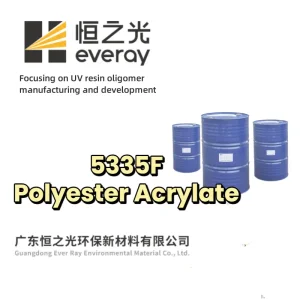
Buy Polyester Acrylate 5335F

Buy Polyester Acrylate 5335F A High-Performance Solution for Offset Inks Supplier, Factory

View Product Specifications
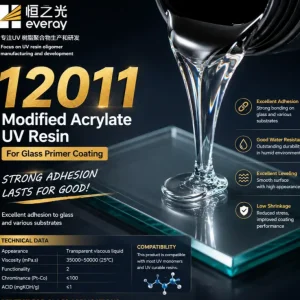
Buy 12011 Modified Acrylate UV Resin for Glass Primer Coatings

Buy 12011 Modified Acrylate UV Resin for Glass Primer Coatings | Excellent Adhesion & Boiling Water Resistance Supplier, Product

View Product Specifications

Chemical Foundations & Synthesis Dynamics of All Purpose Epoxy Resins

Understanding the molecular design, crosslinking density, stoichiometric balancing, and structural performance factors that define premier industrial epoxy polymers.

1. Molecular Architecture: Bisphenol-A, Bisphenol-F, and Cycloaliphatic Backbone Engineering

In modern industrial polymer chemistry, the term "All Purpose Epoxy" refers to thermosetting polymer matrices synthesized primarily through the condensation reaction of Epichlorohydrin (ECH) and Bisphenol-A (BPA) or Bisphenol-F (BPF). The fundamental building block of standard commercial epoxies, Diglycidyl Ether of Bisphenol A (DGEBA), provides an exceptional balance of mechanical strength, chemical resistance, and thermal stability due to its rigid aromatic ether backbone.

However, modern industrial specifications demand versatility beyond baseline DGEBA resins. Tier-1 manufacturers manipulate molecular weight distribution—measured via Epoxide Equivalent Weight (EEW)—to fine-tune viscosity and reactivity. Low-EEW liquid resins (180–190 g/eq) offer superior wetting and high crosslinking density ideal for high-solids structural adhesives, whereas higher EEW solid resins (450–500 g/eq) yield flexible, impact-resistant industrial coatings and primers.

Key Technical Insight: Substituting BPF for BPA lowers formulation viscosity without solvent dilution, preventing crystallization at low temperatures while boosting chemical resistance against aggressive polar solvents and inorganic acids.

2. Curing Kinetics and Hardener Stoichiometry

The performance of any all-purpose epoxy system is fundamentally dictated by its curing agent stoichiometry. Epoxy resins do not dry; they undergo step-growth polymerization triggered by nucleophilic ring-opening reactions. The selection of hardener determines the crosslink density, Glass Transition Temperature ($T_g$), and ambient processability:

Aliphatic Polyamines

Fast ambient curing agents (e.g., TETA, DETA) providing high crosslinking density, intense chemical resistance, and high hardness. Ideal for rapid assembly adhesives and structural repair kits.

Cycloaliphatic Amines

Formulated for exterior durability, yellowing resistance, and moisture insensitivity (e.g., IPDA). Essential for protective floor toppings, marine topcoats, and clear encapsulation.

Polyamides & Adducts

Offer long pot-life, superb flexibility, and high moisture tolerance. Widely utilized in heavy-duty anti-corrosion primers, masonry sealers, and flexible joint sealants.

Global Industry Trends & Macro Procurement Drivers

Analyzing the shift toward zero-VOC waterborne systems, microelectronics encapsulation demand, and structural light-weighting across global markets.

Decarbonization & Low-VOC Regulatory Shifts

Global environmental mandates—such as EU REACH Annex XVII amendments, US EPA Rule 1113, and China’s stringent GB 30981-2020 standards—are driving procurement teams away from traditional solvent-borne epoxy systems. All-purpose epoxy manufacturers are heavily investing in Waterborne Epoxy Resin (WER) technologies and 100% solids reactive diluent platforms.

Modern waterborne epoxies utilize non-ionic self-emulsifying oligomers that eliminate volatile organic compounds while maintaining film hardness, adhesion, and salt-spray corrosion resistance exceeding 1,500 hours in ASTM B117 testing.

Thermal Management in EV & Clean Energy

The rapid electrification of automotive powertrains and grid-scale energy storage systems (BESS) has transformed structural epoxy requirements. All-purpose structural epoxies are now dual-engineered as Thermal Interface Materials (TIMs). By loading liquid epoxy matrices with surface-treated alumina or aluminum nitride nanoparticles, manufacturers deliver electrical insulation alongside thermal conductivity (>2.5 W/m·K) to prevent thermal runaway in battery packs.

Global Procurement Index Metrics

  • 01
    Compound Annual Growth (CAGR) Global industrial epoxy market projected to reach $14.8 Billion by 2030, growing at 6.2% CAGR driven by wind energy composites and infrastructure repair.
  • 02
    Supply Chain Regionalization 74% of Fortune 500 chemical buyers are executing dual-sourcing strategies, pairing Western specialized formulators with high-capacity Asian primary resin synthesizers.
  • 03
    Bio-Based Epoxy Innovations Transition toward epoxidized plant oils (ESO) and cardanol-derived amine hardeners to achieve 30%+ renewable carbon content without sacrificing mechanical strength.

China Factory 4.0: Supply Chain Resilience & Efficiency Advantages

How automated continuous synthesis, integrated chemical clusters, and digital quality control give Chinese manufacturers a structural competitive edge.

40,000+
Square Meters Facility
10+
Automated Lines
< 0.5%
Batch Variance Rate
50+
Global Export Markets

Upstream Raw Material Integration

China’s chemical manufacturing clusters in Guangdong and Eastern economic zones host fully integrated production loops. Direct pipeline access to Phenol, Acetone, Chlorine, and Epichlorohydrin eliminates intermediate freight costs and insulates downstream buyers from global raw material volatility.

Continuous Process Automation (DCS)

Transitioning from traditional batch reactors to automated Distributed Control Systems (DCS) allows micro-adjustment of temperature profiles, vacuum degassing, and stoichiometry in real-time. This guarantees exact EEW tolerance, narrow molecular weight distribution, and crystal-clear clarity.

Lean Chemical Logistics & Compliance

Equipped with ISO tank containers, flexitanks, and specialized hazardous material packaging facilities adjacent to major deep-water ports (Guangdong/Shenzhen), Chinese suppliers ensure rapid international dispatch with full GHS, SDS, and maritime dangerous goods compliance.

Technical Matrix: Industrial Epoxy Resin Classification

Comprehensive benchmarking of primary epoxy chemistries to assist R&D formulators and procurement managers in resin selection.

Resin Chemistry Class Viscosity Range (cP @ 25°C) Typical EEW (g/eq) Tensile Strength (MPa) Tg (°C) Range Primary Industrial Application
Standard Liquid DGEBA (BPA) 11,000 – 14,000 182 – 192 60 – 75 80 – 120 Structural adhesives, civil grouting, tooling resins
Low-Viscosity BPF Epoxy 3,000 – 4,500 165 – 175 65 – 80 85 – 130 Solvent-free coatings, anti-corrosion linings, potting
Epoxy Acrylate Oligomer (UV/EB) 5,000 – 25,000 N/A (C=C functional) 70 – 90 90 – 140 Fast-cure UV inks, paper varnishes, wood topcoats
Cycloaliphatic Epoxy 200 – 450 130 – 145 50 – 65 140 – 200+ High-voltage electrical insulation, outdoor LED encapsulation
Waterborne Epoxy Dispersion 500 – 2,500 500 – 1,000 (Delivery) 40 – 60 50 – 90 Eco-friendly green building primers, concrete sealers
Toughened Elastomer-Modified 20,000 – 50,000 220 – 300 45 – 60 65 – 95 Aerospace bonding, high-impact automotive crash adhesives

Micro-Localized Industrial & Commercial Application Scenarios

From aerospace structural bonding to heavy marine protective coatings, exploring how specialized epoxy formulations solve critical engineering challenges.

Civil Engineering & Structural Grouting

All-purpose epoxy grouts engineered for heavy machinery foundations, bridge deck expansion joints, and concrete crack injection. Formulated with low-exotherm polyamine curing agents, these systems display creep resistance under perpetual static loads and superior adhesion to damp concrete substrates (exceeding concrete tensile strength).

Marine & Heavy Offshore Coatings

High-build phenolic epoxy novolac systems designed for ballast tanks, cargo holds, and subsea pipelines. Formulated to withstand constant immersion in saltwater, cathodic disbondment stresses, and petroleum distillate abrasion while providing continuous barrier protection up to 160°C.

Electronics Potting & Semiconductor Encapsulation

Ultra-pure, low-ionic epoxy resins modified with micro-silica fillers for potting printed circuit board (PCB) assemblies, transformers, and sensors. Features low coefficient of thermal expansion (CTE), high dielectric breakdown strength (>20 kV/mm), and flame retardancy meeting UL 94 V-0 standards.

Industrial Flooring & Terrazzo Matrices

Self-leveling 100% solids epoxy topping systems designed for high-traffic manufacturing plants, cleanrooms, and commercial spaces. Engineered for high impact resistance, seamless hygienic maintenance, and exceptional aesthetic clarity when blended with decorative quartz or metallic pigments.

High-Grade Acrylate & Specialty Epoxy Oligomers

Explore our full range of specialty resin grades for UV inks, high-gloss varnishes, glass coatings, and high-adhesion wood finishes.
Wholesale Fast-Cure High-Gloss Modified Epoxy Acrylate UV Resin 6805A-1

Wholesale Fast-Cure High-Gloss Modified Epoxy Acrylate UV Resin 6805A-1 for UV Ink and UV varnish Suppliers, Products

View Product Specifications
High-Quality Multifunctional 7600 polyurethane acrylate oligomer

High-Quality Multifunctional 7600 polyurethane acrylate oligomer for UV coatings and inks Factory, Factories

View Product Specifications
Wholesale Low Shrinkage High Flexibility UV Curing Polyurethane Acrylate Resin

Wholesale Low Shrinkage High Flexibility UV Curing Polyurethane Acrylate Resin for Nail Gel, Leather and Wood Manufacturer, Products

View Product Specifications
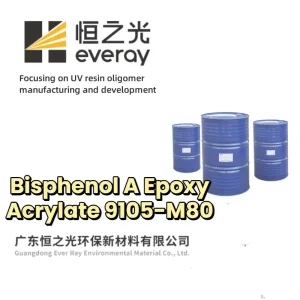
Wholesale Bisphenol A Epoxy Acrylate Resin 9105M-80

Wholesale Bisphenol A Epoxy Acrylate Resin 9105M-80: A Versatile Core Resin for Durable and Glossy UV Coatings Product, Products

View Product Specifications
Buy Polyester Acrylate 5377A

Buy Polyester Acrylate 5377A – The Ideal Choice for Flexographic UV Inks Manufacturer, Factories

View Product Specifications
High-Quality 9105A-80 Bisphenol A Epoxy Acrylate Resin

High-Quality 9105A-80: Bisphenol A Epoxy Acrylate Resin - Superior Hardness and Chemical Resistance Ideal for Resin Polyester Applications Supplier, Product

View Product Specifications
Buy Waterborne 70601 UV-resin

Buy Waterborne 70601 UV-resin for 3D Printing,UV-ink and UV Wood-coatings Suppliers, Product

View Product Specifications
Buy High adhesion 6100D-85 epoxy acrylate

Buy High adhesion 6100D-85 epoxy acrylate for UV wood coating applications, etc. Suppliers, Factory

View Product Specifications

B2B Procurement & Batch-to-Batch Audit Protocol

A rigorous testing and analytical evaluation framework designed to ensure absolute supply reliability, physical consistency, and international regulatory compliance.

1. Epoxide Value & EEW Titration

Every incoming polymer batch undergoes per-lot potentiometric titration according to ASTM D1652. Ensuring EEW variance remains within ±2 g/eq guarantees predictable crosslinking density, pot-life, and mechanical strength across production runs.

2. Viscosity & Rheological Profiling

Utilizing cone-and-plate rotational rheometers (ASTM D445 / ISO 3219), temperature-dependent viscosity curves are verified at 25.0°C (±0.1°C). This ensures uniform flow, leveling, and air-release behavior in automated spray, roll-coating, or metering pump systems.

3. Color & Clarity Determination

Spectrophotometric analysis using the Gardner Color Scale (ASTM D1544) and APHA/Hazen scale ensures optical purity. Low Gardner ratings (<0.5) are enforced for clear topcoats, optical adhesives, and non-yellowing gel coats.

4. Moisture Content & Volatiles

Karl Fischer titration (ASTM E203) limits free moisture content to <0.05%. Excess moisture reacts with hardeners or hydrolyzes reactive groups, causing micro-void formation, foaming, or premature gelling in sealed storage containers.

Frequently Asked Questions (FAQ) for Enterprise Procurement

Detailed technical answers addressing formulation optimization, supply chain lead times, custom modification capabilities, and international logistics.

What distinguishes standard DGEBA epoxy from modified epoxy acrylates?
Standard DGEBA (Diglycidyl Ether of Bisphenol A) epoxies are thermosetting polymers cured via stoichiometry-driven chemical addition reactions with amine or anhydride hardeners over hours or days. Modified epoxy acrylates are synthesized by reacting acrylic acid with epoxy resins to yield acrylate-functional oligomers. These cure via free-radical polymerization in milliseconds under UV radiation or electron beam (EB) exposure, offering extreme line speed, high scratch resistance, and zero-solvent operation.
How does ambient temperature affect the storage stability and viscosity of all-purpose epoxies?
Liquid epoxy resins are supercooled liquids prone to crystallization at low temperatures (below 15°C), presenting as cloudiness or solid settling. Crystallization is reversible by heating the drum to 50–60°C without altering chemical properties. To avoid crystallization during transit or long-term storage, formulators can request low-viscosity BPF-modified grades or active diluent blends that maintain liquid phase stability down to 0°C.
Can your technical team customize resin viscosity, functionality, or adhesion for specific substrates?
Yes. Supported by over 10 invention and utility patents and an expert R&D team, we offer custom synthesis. We can modify oligomer backbone structures, adjust acrylic functionality (from mono-functional to hexafunctional), tune viscosity using specialized reactive diluents, or integrate adhesion promoters (such as silane or phosphate esters) tailored for difficult substrates like untreated PP, PET, aluminum, or glass.
What documentation and compliance certifications accompany bulk chemical shipments?
Every shipment includes a lot-specific Certificate of Analysis (COA), fully compliant 16-section Safety Data Sheet (SDS) in native languages, and Technical Data Sheets (TDS). Our core product range complies with EU REACH, RoHS, US TSCA, and China GB environmental directives. Hazardous goods export packaging (UN-rated drums, IBC totes, and ISO tanks) ensures smooth customs clearance.
What is the standard lead time and Minimum Order Quantity (MOQ) for international orders?
Standard catalog items maintain a stock reserve with typical dispatch lead times of 3 to 7 business days from our Guangdong manufacturing base. Custom modified or synthesized grades require 14 to 21 days for synthesis and quality verification. Sample evaluation quantities (1kg to 20kg pails) are readily available. Commercial MOQs start at 200kg (single drum) up to 20-foot full container loads (FCL).
How do aliphatic polyurethane acrylates compare to epoxy acrylates regarding exterior weatherability?
Epoxy acrylates possess aromatic benzene rings in their backbone, rendering them susceptible to UV-induced degradation and yellowing when exposed to outdoor sunlight over time. Consequently, epoxy acrylates are preferred for interior wood, paper OPV, packaging inks, and primers. For exterior coatings requiring non-yellowing weatherability, Aliphatic Polyurethane Acrylates (Aliphatic PUA) are recommended due to their light-stable hydrocarbon backbone.