A comprehensive technical analysis of Bisphenol-A based Oligomers, Modified Acrylate Matrices, and Next-Generation Photopolymer Synthesis for B2B Chemical Formulators.
Epoxy Acrylate (EA) oligomers represent the foundational workhorse chemistry within the global radiation-curable (UV/EB) coatings, printing inks, and industrial adhesive sectors. Synthesized primarily through the nucleophilic ring-opening esterification of Bisphenol A Diglycidyl Ether (BADGE) with acrylic acid, epoxy acrylates deliver unmatched reactivity speed, superior mechanical tensile strength, outstanding chemical resistance, and exceptional surface hardness upon free-radical photopolymerization.
The global UV resin market—valued at over USD 3.8 Billion in 2023—continues to experience robust compound annual growth rates (CAGR exceeding 7.2% through 2030). Driven by rigorous worldwide VOC regulations, the phase-out of traditional solvent-borne thermal cure systems, and the explosive expansion of 3C electronics, automated wood manufacturing lines, and sustainable packaging, high-grade Epoxy Acrylate formulations stand as the most economically viable and technically versatile solution for industrial coaters and chemical formulators.
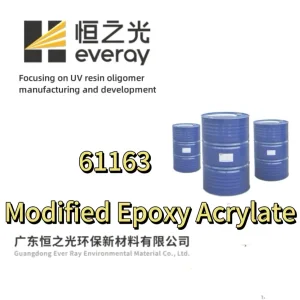
Standard Bisphenol A Epoxy Acrylates offer unparalleled cost-to-performance ratios but suffer from inherent brittle molecular networks and low flexibility. Modern chemical synthesis mitigates these limitations through chemical modification—incorporating polyurethane domains, aliphatic polyester backbone segments, fatty acid chains, or amine synergists directly into the acrylate structure. This whitepaper analyzes these critical modifications to empower R&D chemists and industrial procurement teams.
Direct Factory Grade Epoxy Acrylates & Specialty Oligomer Solutions for High-Performance Industrial Coatings
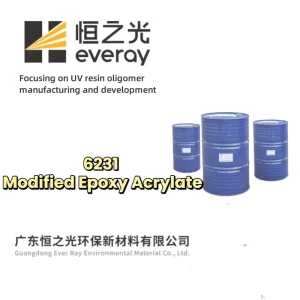
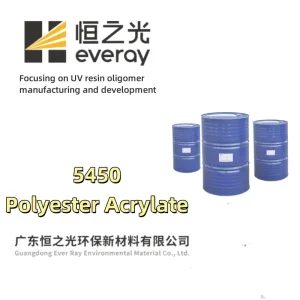
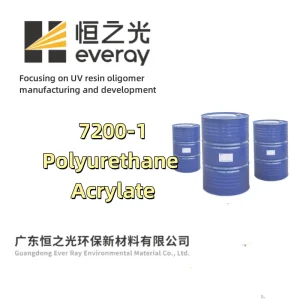
Understanding the fundamental reaction chemistry of Bisphenol A epoxy backbones and functional modifications.
The standard chemical structure of standard Epoxy Acrylate oligomers is derived from the reaction of 1 mole of Bisphenol A Diglycidyl Ether (DGEBA) with 2 moles of Acrylic Acid in the presence of an esterification catalyst (e.g., triphenylphosphine or tertiary amines) and polymerization inhibitors. The resulting difunctional monomer, Bisphenol A Epoxy Diacrylate (BADGE-DA), contains two terminal acrylate double bonds and secondary hydroxyl (-OH) groups along the aliphatic chain length.
Offers ultra-fast surface drying, high crosslink density, pencil hardness reaching up to 5H, superior solvent resistance (MEK rubs > 200), and high gloss. Ideal for rigid substrates like timber flooring, paper overprint varnishes, and metal cans.
Synthesized by reacting secondary amines with epoxy acrylate via Michael addition. Amine modifications overcome atmospheric oxygen inhibition, accelerate surface cure rates under low-energy LED lamps, and enhance pigment wetting capability for UV inks.
Chemically modified with aliphatic fatty acid chains or isocyanate prepolymers to break the rigid aromatic ring lattice. Delivers significant flexibility enhancement, low volume shrinkage during curing, and high impact toughness on flexible plastics (PET, PC, PVC).
| Oligomer Chemical Grade | Viscosity (mPa.s @ 25°C) | Cure Speed (m/min) | Pencil Hardness | Substrate Adhesion Profile | Primary Industrial Application |
|---|---|---|---|---|---|
| Standard BADGE Epoxy Acrylate | 40,000 – 70,000 | Very Fast (> 35m/min) | 4H – 5H | Wood, Paper, Steel, Glass | UV Paper Varnishes, Wood Topcoats |
| Amine-Modified Epoxy Acrylate | 15,000 – 35,000 | Ultra Fast (LED Curable) | 3H – 4H | Paper, Board, Corona Treated Film | High-Speed Offset & Flexo Inks |
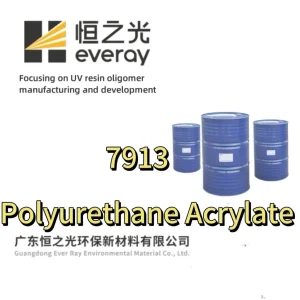
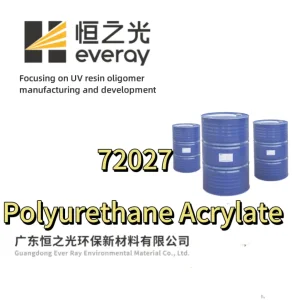
| Polyurethane-Modified EA | 25,000 – 50,000 | Medium - Fast | 2H – 3H | PC, ABS, PMMA, Treated PET | 3C Electronic Consumer Packaging |
| Waterborne UV Epoxy Acrylate | 500 – 2,500 (Emulsion) | Medium | 2H – 4H | Porous Wood, Leather, Concrete | Zero-VOC Eco Wooden Flooring Coatings |
Analyzing the pivotal shifts towards LED-UV curing efficiency, low yellowing index requirements, and bio-based epoxy precursors.
Traditional medium-pressure mercury arc lamps generate extreme heat and produce toxic ozone gas. The global coating industry is aggressively adopting 365nm, 385nm, and 395nm LED-UV curing systems. Formulators require modified epoxy acrylates with enhanced surface reactivity to cure under narrower UV-A spectral outputs without surface tackiness.
Bisphenol A backbones contain aromatic ether structures prone to photo-oxidation, leading to yellowing when exposed to prolonged sunlight. Next-generation factories utilize modified aliphatic epoxy precursors, cycloaliphatic structures, or novel UV stabilizer blends to lower the Yellowing Index (YI < 2.0) for clear topcoats.
Aligning with ESG criteria and European REACH directives, leading chemical plants are synthesizing bio-epoxy acrylates incorporating plant-derived epoxidized soybean oil (ESO), cardanol from cashew nut shell liquid, or bio-based acrylic acid, drastically reducing carbon footprints.
Engineering customized formulation matrices for high-throughput production lines across target geographic regions.
In major manufacturing hubs (China, Vietnam, Poland, Italy), fast-line automated roller coating demands low-viscosity, high-build epoxy acrylate sealers. These formulations fill wood pores, offer sandability within seconds, and provide chemical barrier resistance against household liquids.
Flexographic and screen printing presses in packaging sectors rely on high-reactivity epoxy acrylates blended with reactive diluent monomers (such as TPGDA and TMPTA). Delivers immediate stackability, scuff resistance, and food packaging compliance when purified.
Sleek laptop chassis, smartphone backplates, and automotive interior panels require modified epoxy-polyurethane hybrid acrylates. The hybrid polymer resists drop impacts, thermal cycling (-40°C to +85°C), and skin-oil abrasion.
Pioneering dual-cure mechanisms, self-healing networks, and digital additive manufacturing photopolymers.
As industrial manufacturing migrates towards Industry 4.0 automation and high-precision digital fabrication, the chemical design of Epoxy Acrylate oligomers is undergoing profound evolutionary transformations:
Specialty Modified Oligomers, Anti-Fouling Systems & High-Adhesion Resin Formulations
Expert answers based on ISO audit requirements, analytical chemistry validation, and industrial scale-up inquiries.
Bisphenol A Epoxy Acrylate delivers significantly faster curing speed, higher pencil hardness (4H–5H), superior chemical/solvent resistance, and a lower raw material cost compared to Polyurethane Acrylate. However, PUA oligomers offer superior elongation at break, weatherability, and non-yellowing characteristics. In practical industrial coatings, EA and PUA are frequently blended together to achieve a synergized balance of hardness, adhesion, and flexibility.
When stored in original sealed drums away from direct sunlight, thermal sources, and UV light exposure at temperatures between 10°C and 30°C, high-quality Epoxy Acrylate oligomers maintain a minimum shelf life of 12 months. Standard formulations include 100–300 ppm of MEHQ (Hydroquinone monomethyl ether) as a free-radical scavenger to prevent premature gelation.
Pure BADGE-DA exhibits viscosities ranging from 40,000 to over 100,000 mPa.s at 25°C. Formulators cut viscosity by diluting the resin with monomeric reactive diluent monomers such as TPGDA (Tripropylene glycol diacrylate), HDDA (1,6-Hexanediol diacrylate), or TMPTA (Trimethylolpropane triacrylate). Alternatively, factory-modified grades (e.g., 80% EA cut in 20% TPGDA) are purchased directly to streamline manufacturing mixing processes.
Qualified chemical suppliers must provide a Certificate of Analysis (COA) for every production batch detailing parameters such as Viscosity (Brookfield @ 25°C), Acid Value (mg KOH/g < 2.0), Color (Gardner < 1.0), Appearance, and Epoxy Equivalent Weight. Additionally, Safety Data Sheets (SDS) complying with GHS standards and REACH/RoHS compliance certification are mandatory for global import compliance.