Factory-direct chemical innovations designed for high reactivity, superior crosslinking density, and tailored substrate adhesion.
Ultra-fast cure polyester acrylate resin designed specifically for high-speed UV offset and flexo printing inks demanding excellent pigment wetting.
Buy 5336B UV Oligomer
Specialty UV resin for metallic substrates and tinplate printing inks, engineered for extreme deep-drawing resistance and adhesion strength.
Buy 6203F UV Metal Resin
Multi-purpose low-viscosity resin synthesized for high-resolution SLA/DLP 3D printing photopolymers, UV inks, and clear wood finishes.
Buy 70250 3D & Wood Resin
High-hardness acrylic resin providing exceptional scratch resistance and surface durability across plastic and industrial wood topcoats.
Wholesale 2600UV Resin
High-efficiency polyester acrylate oligomer balanced for versatility, reducing oxygen inhibition in overprint varnishes and industrial coatings.
Wholesale 5405B Resin
Tailor-made resin backbone for flexo UV inks requiring superior film flexibility, fast reactivity, and exceptional pigment dispersion capacity.
Buy 5377A Flexo Resin
Specialty PUA oligomer optimized for vacuum plating, PVD primers, and metallized plastic substrates with zero intercoat flaking.
Wholesale 7230E PUA Resin
Standard benchmark epoxy acrylate oligomer delivering lightning-fast UV curing, high pencil hardness, and robust chemical resistance.
Buy 9104 Epoxy AcrylateUnderstanding the chemical evolution, market drivers, and regulatory demands shaping modern thermoset polymer systems.
The global epoxy modified materials market is experiencing a profound paradigm shift driven by stringent Volatile Organic Compound (VOC) regulations, rapid electronic miniaturization, and demanding performance mandates in automotive lightweighting. Traditionally valued for their unyielding tensile strength, chemical inertia, and electrical insulation properties, standard unmodified epoxy resins (such as unmodified bisphenol A diglycidyl ethers - DGEBA) often exhibit severe intrinsic vulnerabilities: brittle crosslinked networks, poor impact strength, limited weatherability, and prolonged thermal cure schedules.
To bridge these technical gaps, leading high-quality epoxy modified manufacturers and synthesis factories have pioneered advanced chemical modifications. By grafting acrylate functionalities, siloxane chains, polyurethane segments, and bio-based fatty acids directly onto the oxirane backbone, modern chemical plants produce hybridized resins. These dual-functional polymers combine the rapid polymerization kinetics of free-radical or cationic UV-curing with the structural integrity of classic epoxy matrices.
Industrial demand is currently anchored by five primary manufacturing sectors:
How molecular architects engineer epoxy resins to overcome physical limitations while maximizing UV crosslinking speed.
The esterification of bisphenol A epoxy resins with acrylic acid yields standard epoxy acrylate oligomers (e.g., Grade 9104). This modification introduces terminal vinyl groups onto an aromatic backbone.
Primary Benefit: Instantaneous radiation curing under UV/LED light sources, exceptional surface hardness, and high chemical resistance against acids, alkalis, and solvents.
Incorporating aliphatic or aromatic isocyanate prepolymers creates Urethane Epoxy Acrylates (e.g., Grade 6851A). This combines polyurethane flexibility with epoxy adhesion.
Primary Benefit: Eliminates brittleness, drastically improves impact resistance, enhances elongation at break, and prevents yellowing in high-transparency gel polishes.
Reacting hydroxyl moieties along the epoxy backbone with organosilicon intermediates or unsaturated fatty acids modifies polar surface energy.
Primary Benefit: Delivers hydrophobic properties, low surface tension, outstanding leveling, slip control, and weatherability for outdoor applications.
| Performance Vector | Standard Bisphenol-A Epoxy (DGEBA) | Standard Free-Radical Acrylate | Modified Epoxy Acrylate (e.g., 6851A / 6160M) | Dual-Cure Epoxy Hybrid |
|---|---|---|---|---|
| Cure Mechanism | Thermal Amine / Anhydride | Free-Radical UV (365-405nm) | Free-Radical UV / LED | UV Free-Radical + Cationic / Moisture |
| Cure Speed | Slow (30 mins - 24 hrs) | Ultra-Fast (< 1 sec) | Ultra-Fast (0.1 - 0.5 sec) | Dual Stage (Instant Snap + Shadow Cure) |
| Volumetric Shrinkage | 1.5% - 3.0% | 6.0% - 10.0% | 2.0% - 4.5% | < 1.8% |
| Adhesion to Glass/Metal | Excellent (5B) | Poor to Moderate (0B - 2B) | Superior (5B with Primer) | Maximum (5B after Boiling Water Test) |
| Pencil Hardness | 2H - 4H | 1H - 3H | 4H - 7H | 5H - 6H |
| Yellowing Index (ΔYI) | High (Severe aging) | Variable (Grade dependent) | Low to Zero (Non-yellowing grades) | Very Low |
How Guangdong’s chemical manufacturing ecosystem guarantees batch-to-batch consistency, raw material security, and cost leadership.
Guangdong Ever Ray Environmental Material Co., Ltd. operates from the heart of Southern China's advanced chemical cluster in Yunfu and Jiangmen. China’s domestic chemical supply chain provides unprecedented integration for core raw materials including Epichlorohydrin (ECH), Bisphenol A (BPA), Acrylic Acid, Isophorone Diisocyanate (IPDI), and specialized polyols.
Unlike Western formulators who face extended lead times and volatile monomer surcharges, our synthesis plants maintain direct pipelines to tier-1 petrochemical producers. This upstream integration cushions global B2B buyers against sudden price spikes and guarantees uninterrupted batch delivery even during global shipping bottlenecks.
Our modern 40,000 m² chemical production base in Dawan Industrial Park features fully automated, closed-loop stainless steel synthesis reactors equipped with real-time DCS (Distributed Control System) tracking.
Field-tested resin formulations designed to meet exact manufacturing line conditions worldwide.
Challenge: Glass bottles, perfumery containers, and architectural glass suffer coating delamination when subjected to pasteurization or dishwasher cycles.
Solution: Formulations using modified epoxy acrylate Grade 12011 combined with silane coupling agents create boiling-water resistant primers. Film adhesion remains 5B after 2 hours of boiling water immersion tests.
Challenge: Metallic cosmetic caps and automotive interior trims require high gloss basecoats that resist thermal shock and outgassing during UV vacuum metallization.
Solution: Utilizing Grade 7230E Polyurethane Acrylate provides superior wetting over ABS/PC substrates, high thermal resistance, and exceptional intercoat adhesion with vapor-deposited aluminum layers.
Challenge: Web-fed flexible packaging flexo presses operating at 300+ m/min demand ultra-low viscosity inks that cure instantly without solvent odor residue.
Solution: Blending Polyester Acrylate 5377A with active amine synergists delivers rapid radical generation, preventing ink misting while offering low extractable potential for non-food contact packaging.
Empowering multinational R&D teams with fully compliant documentation, safety data sheets, and custom synthesis support.
Navigating global chemical management framework is essential for international chemical trading. All products manufactured by Guangdong Ever Ray undergo comprehensive screening to satisfy destination market standards:
We recognize that standard off-the-shelf resins may not fulfill niche application metrics. Our dedicated R&D laboratory, backed by over 10 invention and utility patents, provides tailor-made polymer engineering services:
Detailed answers to technical, commercial, and operational questions asked by chemical procurement managers and formulators.
Engineered oligomers and reactive diluents for wood coatings, nail polish gels, glass primers, and offset inks.
Balanced polyester acrylate oligomer providing low viscosity reduction, excellent surface slip, and high reactivity for industrial overprint varnishes.
Wholesale 5202B Oligomer
Highly durable UV resin grade designed for long-term wear resistance, low film shrinkage, and fast UV lamp cure response in wood coatings.
Buy 5311A UV Resin
Reliable resin backbone engineered specifically for offset printing inks requiring precise lithographic water-ink emulsification balance.
Buy 5403-2F Ink Resin
High-performance resin choice for paper varnishes and packaging graphics, delivering high gloss, scratch resistance, and low odor profile.
Buy 5336 Varnish Resin
Flexible polyurethane acrylate oligomer developed for nail gel polishes, leather topcoats, and flexible plastics requiring minimal shrink stress.
Wholesale Flexible PUA
High-viscosity acrylate resin formulation offering outstanding pigment wetting and dot transfer fidelity in UV offset lithography printing.
Buy 6805A-1 Offset Resin
Premium modified epoxy acrylate resin engineered for high optical transparency, low yellowing index, and high mechanical tough film formation.
Buy 6851A Resin Grade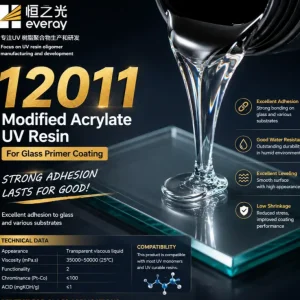
Specialty modified glass primer resin providing exceptional wet adhesion, chemical durability, and resistance against boiling water testing.
Buy 12011 Glass Resin