Industrial Photopolymer Synthesis White Paper

High-Quality Fast Curing Epoxy Manufacturer & Manufacturers

Engineered Epoxy Acrylate Oligomers, Free-Radical Curing Kinetics, and Tailored Acrylated Resins for High-Speed Industrial Coatings, Inks, and Advanced Adhesives.

Primary Product Showcase

Featured Fast-Curing Epoxy & Specialty Oligomer Solutions

Standard-setting formulations engineered for rapid photopolymerization, superior chemical resistance, and robust mechanical performance across demanding substrates.
High-Quality Low viscosity 1262B: suitable for PVC floor coating applications Supplier, Factory
View Specifications
High-Quality Polyester Acrylate 5332F – The Premium Choice for Offset Inks Manufacturers, Supplier
View Specifications
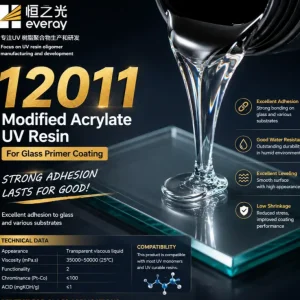
Buy 12011 Modified Acrylate UV Resin for Glass Primer Coatings | Excellent Adhesion & Boiling Water Resistance Supplier, Product
View Specifications
High-Quality 6106 Fast-Curing Modified Epoxy Acrylate Oligomer—High Adhesion, Flexible & Yellowing-Resistant UV Resin
High-Quality 6106 Fast-Curing Modified Epoxy Acrylate Oligomer—High Adhesion, Flexible & Yellowing-Resistant UV Resin Manufacturer, Suppliers
View Specifications
Wholesale 7317 UV resin professional in UV ink-wrinkle and snowflake effects Supplier, Factories
View Specifications
Wholesale 72923 Fast-Cure Non-Yellowing Polyurethane Acrylate Resin for UV Peelable adhesive Manufacturer, Supplier
View Specifications
Wholesale Anti-Yellowing Polyurethane Acrylate Oligomer-High Flexibility UV Resin for Adhesive and Nail Gel Suppliers, Factories
View Specifications
High-Quality A Revolutionary Choice Empowering High-End UV Applications: PUA 7291B Manufacturer, Suppliers
View Specifications
White Paper Fundamentals

Epoxy Acrylate Polymerization Kinetics & Fast-Curing Synthesis

Understanding the molecular architecture, acrylate conversion ratios, and crosslinking density that enable sub-second radiation curing in industrial manufacturing environments.

Acrylated Bisphenol-A backbone

Synthesized via the reaction of Bisphenol-A diglycidyl ether (DGEBA) with high-purity acrylic acid. The rigid aromatic backbone imparts exceptional glass transition temperatures ($T_g > 65^\circ\text{C}$), pencil hardness reaching 4H–6H, and outstanding chemical resistance against aggressive polar solvents.

Sub-Second Photopolymerization

Under ultraviolet radiation (250–395 nm), free radicals generated by photoinitiators cleave the terminal acrylic double bonds ($\text{C=C}$), driving crosslinking speeds of under 0.5 seconds at energy densities of $1500\text{ mJ/cm}^2$. This eliminates thermal dwell times and maximizes assembly line throughput.

Low Residual Epoxy Index

Strict stoichometric control during ring-opening esterification ensures an acrylation yield exceeding $98.5\%$, reducing residual epoxy value to $<0.02\text{ eq/100g}$. This guarantees non-yellowing characteristics and long-term shelf stability exceeding 12 months at $25^\circ\text{C}$.

Mechanistic Overview: Free Radical vs. Cationic Fast-Curing Systems

Traditional epoxy resins rely on polyamine or anhydride thermal curing agents, requiring elevated temperatures ($80^\circ\text{C}$ to $150^\circ\text{C}$) and processing times ranging from 30 minutes to several hours. In contrast, fast-curing modified epoxy acrylate oligomers (such as EVER RAY Grade 6106 and 6160M-3) combine the chemical toughness of bisphenol epoxies with the instant reaction velocity of radical acrylate photopolymerization.

When exposed to targeted UV-LED or medium-pressure mercury lamps, photoinitiators such as Type I $\alpha$-hydroxyketones (e.g., Irgacure 184) or acylphosphine oxides (e.g., TPO) undergo homolytic cleavage. The resulting radical species initiate chain-growth polymerization across terminal vinyl groups. Because epoxy acrylates possess high vinyl double-bond density per unit mass, the system quickly forms a densely crosslinked three-dimensional polymer network, reaching full surface dry and depth cure within milliseconds.

Information Gain: Double Bond Conversion Rate ($DC\%$) Impact on Mechanical Performance

Experimental Real-Time FTIR (RT-IR) spectroscopy shows that optimizing reactive diluents (such as TPGDA or HDDA) alongside modified epoxy acrylates increases terminal double bond conversion from $78\%$ to $>92\%$. This reduction in unreacted monomer matrix decreases volumetric shrinkage stress, elevates MEK double rub resistance beyond 200 cycles, and improves adhesion on non-porous metal and glass substrates under humid environments.

Macro-Industrial Outlook

Global Fast Curing Epoxy Market Vectors & Technical Telemetry

Analyzing sector-specific demand across consumer electronics, EV automotive encapsulation, SPC flooring, and additive photopolymer manufacturing.

Resin Chemistry Category Cure Time ($1000\text{ mW/cm}^2$) Tensile Strength (MPa) Shore Hardness Glass Transition ($T_g$) Volumetric Shrinkage Primary Industrial Vector
Bisphenol-A Epoxy Acrylate < 0.5 sec 65 – 85 85D – 90D 75°C – 105°C 3.5% – 5.0% Wood Overprint Varnish, PCB Soldermask, Glass Coatings
Modified Low-Viscosity Epoxy Acrylate < 0.8 sec 50 – 70 80D – 85D 60°C – 85°C 2.8% – 4.2% High-Speed PVC/SPC Flooring, Flexo Inks
Aliphatic Polyurethane Acrylate (PUA) 1.0 – 2.0 sec 35 – 55 65D – 78D 35°C – 60°C 1.8% – 3.0% 3C Electronic Hardcoats, Non-Yellowing Topcoats
Polyester Acrylate Oligomer 0.6 – 1.2 sec 40 – 60 70D – 82D 45°C – 70°C 3.0% – 4.5% Offset Lithographic Inks, Paper Varnishes
Waterborne UV Polyurethane Dispersion Flash off + 2.0 sec 25 – 45 55D – 70D 20°C – 50°C < 1.0% Low-VOC Eco Leather, Sustainable Furniture Coatings

1. High-Speed Consumer Electronics (3C)

Modern smartphone frames, tablet housings, and wearable optical lenses demand ultra-scratch-resistant clear coatings. Modified fast-curing epoxy resins provide micro-hardness capable of passing 0000# steel wool abrasion testing over 2000 cycles without gloss reduction.

2. Electric Vehicle (EV) Module Potting

Fast curing epoxy acrylates serve as structural dielectrics and thermal encapsulation materials for lithium battery packs. Rapid gelation prevents resin migration prior to full cure, providing dielectrical breakdown strength $>25\text{ kV/mm}$.

3. Architectural SPC/LVT Flooring Lines

Continuous UV coating lines running at speeds exceeding $60\text{ meters/minute}$ require low-viscosity epoxy acrylates (such as Grade 1262B) to deliver instant surface cure, stain defense, and high-impact micro-scratch suppression.

Polymer Architecture & R&D Mastery

Micro-Engineering Oxygen Inhibition Mitigation & Adhesion Mechanics

Overcoming surface tackiness, enhancing interfacial bonding on non-polar substrates, and engineering stress-relaxed polymer matrices.

1. Neutralizing Oxygen Inhibition at the Coating Surface

In atmospheric radiation curing, triplet atmospheric oxygen ($\text{O}_2$) rapidly quenches propagating free radicals, forming unreactive peroxyl radicals ($\text{ROO}^\bullet$). This process leaves the top $1–5\,\mu\text{m}$ layer tacky and prone to surface marking.

EVER RAY Chemical Solution: Incorporating amino acrylate oligomers (such as Amino Acrylate Series) and active amine synergists into the formulation. Tertiary amine structures donate hydrogen atoms to peroxyl radicals, forming active alkylamino radicals that re-initiate double bond polymerization, guaranteeing tack-free surface cure under standard air atmospheres.

2. Interfacial Adhesion Mechanics on Glass & Metal

High crosslink density in epoxy acrylates can lead to high volumetric shrinkage ($>4\%$), resulting in interfacial stress and delamination on inert substrates like glass, untreated PET, and aluminum alloys.

EVER RAY Chemical Solution: Our modified acrylate oligomer grade 12011 incorporates carboxyl functional groups and silane coupling moieties directly onto the acrylic backbone. These functional groups form covalent siloxane ($\text{Si-O-Si}$) bonds with inorganic oxides, maintaining 5B cross-hatch adhesion (ASTM D3359) even after $100^\circ\text{C}$ boiling water immersion testing for 2 hours.

Trust & Reliability Assurance

Global Compliance, Quality Assurance & Production Telemetry

Operational metrics from Guangdong Ever Ray Environmental Material Co., Ltd.—delivering chemical consistency, hazardous cargo compliance, and global logistics transparency.

2006
Established Year
40,000+
Plant Area ($m^2$)
10+
Automated Lines
10+
Invention Patents
100%
Batch Traceability

International Regulatory Compliance

All EVER RAY resin grades comply with EU REACH (Substances of Very High Concern - SVHC free), US TSCA Inventory, RoHS 3.0 Directive (EU 2015/863), and zero-VOC standard GB 38507-2020. Food contact grades align with FDA 21 CFR 175.105 for indirect food packaging adhesives.

Analytical Quality Control Standards

Every production batch undergoes strict quality control testing: Brookfield RVT Viscosity characterization, Gardner Color Scale inspection ($< 1.0$), High-Performance Liquid Chromatography (HPLC) monomer purity checks, and dynamic cone-and-plate rheology verification.

Export Logistics & Packaging Security

Export shipments are offered in UN-rated 200kg steel drums, 1000kg IBC totes, or custom nitrogen-blanketed ISO tanks. MSDS/SDS documentation in 15+ global languages accompanies all international bill-of-lading documents.

Future Technology Roadmap

Next-Generation Curing Systems & Bio-Based Acrylates (2025–2030)

Pioneering energy-efficient LED-UV 395nm reactive resins, bio-derived epoxy acrylates, and dual-cure moisture/UV hybrid chemistry.

LED-UV 395nm Low-Energy Optimization

Traditional mercury vapor lamps generate intense thermal infrared radiation and toxic ozone emissions. EVER RAY’s next-generation modified epoxy acrylates are engineered for high reactivity under monochromatic LED-UV emission wavelengths ($365\text{ nm}$, $385\text{ nm}$, $395\text{ nm}$), reducing facility electricity consumption by up to $70\%$.

Bio-Based Sustainable Carbon Architecture

Incorporating plant-derived epoxides (derived from epoxidized soybean oil and cardanol) into the acrylate backbone yields bio-content indices $>40\%$. These sustainable resins offer low irritation indices (Primary Irritation Index $<1.5$) while retaining fast cure speed and high mechanical strength.

Dual-Cure (UV / Moisture & UV / Thermal) Systems

For complex 3D electronic components and automotive modules featuring shadow zones unexposed to direct UV light, our hybrid oligomers incorporate secondary moisture-curing silane or thermal-isocyanate mechanisms, ensuring complete crosslinking throughout unexposed volumes.

Specialty Portfolio Showcase

Waterborne, Low-Odor & Specialty Functional Resins

Eco-compliant waterborne UV dispersions, low-shrinkage monomers, matte-finish resins, and specialty polyester acrylates for advanced technical formulations.
Buy Waterborne 70251 UV-resin for 3D Printing,UV-ink and UV Wood-coatings Manufacturer, Manufacturers
View Specifications
Buy 2406 UV Resin: Low Odor Solution for Rapid Paper and Plastic Varnishes Manufacturers, Supplier
View Specifications
Buy Waterborne 70601 UV-resin for 3D Printing,UV-ink and UV Wood-coatings Suppliers, Product
View Specifications
Buy Polyester Acrylate 5377A – The Ideal Choice for Flexographic UV Inks Manufacturer, Factories
View Specifications
Wholesale UV Resin 5017 with Low Odor, Low Shrinkage for UV Inks and Varnishes Supplier, Suppliers
View Specifications
High-Quality 5218 Polyester Acrylate UV Resin: Excellent Adhesion and Pigment Compatibility Manufacturers, Supplier
View Specifications
High-Quality 7411B UV Resin: Ideal low viscosity, high solids solution for matte UV applications Supplier, Suppliers
View Specifications
Buy Polyurethane Acrylate 7911 – The Ideal Choice for High-Performance UV Coatings! Supplier, Factories
View Specifications
Technical & Procurement FAQ

Frequently Asked Technical & Procurement Questions

In-depth guidance for chemical formulators, procurement officers, and plant engineers evaluating fast-curing epoxy acrylate oligomers.

1. What is the fundamental difference between standard Epoxy Resins and Fast-Curing Epoxy Acrylates?
Standard epoxy resins (such as un-modified Bisphenol-A DGEBA) rely on thermal ring-opening reactions with amine, anhydride, or mercaptan curing agents, taking anywhere from 30 minutes to 24 hours to cure. Fast-curing epoxy acrylates are synthesized by reacting acrylic acid with the epoxy ring, introducing terminal acrylic double bonds ($\text{C=C}$). When combined with a photoinitiator and exposed to UV light, radical polymerization occurs instantly, achieving complete crosslinking in under 0.5 to 1.0 seconds without external heat input.
2. How can formulators reduce the high viscosity of Bisphenol-A Epoxy Acrylate oligomers?
Standard Bisphenol-A epoxy acrylates have high viscosity ($20,000$ to $50,000\text{ mPa.s}$ at $25^\circ\text{C}$). Formulators can cut viscosity by blending reactive diluents such as Tripropylene Glycol Diacrylate (TPGDA), 1,6-Hexanediol Diacrylate (HDDA), or Trimethylolpropane Triacrylate (TMPTA). Alternatively, EVER RAY supplies pre-diluted grades (e.g., 80% oligomer in 20% TPGDA like Grade 9105A-80) or modified low-viscosity epoxy acrylates like Grade 1262B.
3. How do EVER RAY epoxy acrylates perform regarding yellowing resistance?
Standard aromatic Bisphenol-A epoxy acrylates contain benzene rings that absorb solar UV light over extended periods, leading to slight yellowing ($b^*$ color value shift). For interior applications (wood flooring, paper packaging, solder masks), this is negligible. For non-yellowing exterior or clear 3C applications, EVER RAY recommends utilizing our Aliphatic Polyurethane Acrylate series (e.g., Grade 72923 or PUA 7291B) or modified non-yellowing epoxy acrylate Grade 6106.
4. What photoinitiators are recommended for pairing with fast-curing epoxy acrylate resins?
For clear topcoats cured under medium-pressure mercury lamps, Type I photoinitiators such as Irgacure 184 (1-Hydroxycyclohexyl phenyl ketone) or Darocur 1173 at $2.0\%–4.0\%\text{ w/w}$ concentration provide optimal surface cure. For pigmented inks, thick sections, or 395nm LED-UV curing equipment, photoinitiators like TPO (Diphenyl(2,4,6-trimethylbenzoyl)phosphine oxide) or DETX paired with active amine synergists ensure complete through-cure.
5. Can custom resin synthesis be requested for specific target parameters?
Yes. Guangdong Ever Ray Environmental Material Co., Ltd. operates a specialized R&D laboratory and scalable synthesis reactor lines. We can tune molecular weight distribution, acrylic functionality ($n = 2$ to $n = 6$), glass transition temperature, acid value ($< 1.0\text{ mg KOH/g}$), and viscosity to match specific customer application lines. Technical Data Sheets (TDS), Safety Data Sheets (SDS), and Certificates of Analysis (COA) are provided for all custom pilot batches.