An authoritative technical analysis of current trends in structural epoxy adhesives, UV photopolymers, and acrylate oligomer chemistries transforming modern manufacturing.
The global industrial adhesives market is undergoing a seismic transition from traditional solvent-based thermosetting adhesives toward ultra-fast, solvent-free UV curable epoxy and polyurethane acrylate systems. Driven by stringent global VOC regulations (REACH, EPA, TSCA) and the demand for high-throughput automated assembly in 3C consumer electronics, automotive EV battery packs, and optical displays, formulators require resins that combine high crosslinking density with low shrinkage stress.
Modern epoxy acrylates and polyurethane acrylates provide crucial performance properties: exceptional lap shear strength, superior chemical resistance against harsh acids/alkalis, thermal stability up to 200°C, and rapid photopolymerization under both traditional Mercury vapor and energy-efficient 365nm/395nm UV LED light sources. As a direct chemical factory, our synthesize technologies optimize molecular weight distribution ($M_w/M_n$) to ensure ultra-low viscosity without sacrificing bond strength.
Precision-engineered chemical grades designed for high-performance UV coatings, industrial inks, structural adhesives, and specialty surface finishes.
Understanding molecular structure, functional group density, and curing kinetics to optimize adhesive performance on engineered substrates.
| Resin Class | Key Chemical Structure | Viscosity Range (mPa.s @ 25°C) | Primary Physical Advantages | Key Application Scenarios |
|---|---|---|---|---|
| Bisphenol A Epoxy Acrylate | Di-functional aromatic backbone with acrylic ester terminals | 40,000 – 150,000 (Pure) / 1,000 – 5,000 (Diluted) | High tensile strength, rapid surface cure speed, superior solvent resistance | Heavy-duty wood varnishes, offset inks, high-hardness protective topcoats |
| Aliphatic Urethane Acrylate (PUA) | Isocyanurate / IPDI core with polyester/polyether soft blocks | 2,000 – 25,000 | Zero yellowing, high elongation at break (up to 300%), high impact toughness | 3C plastic coatings, flexible packaging, UV nail gel, optical clear adhesives (LOCA) |
| Aromatic Urethane Acrylate | TDI / MDI aromatic polyurethane acrylate oligomer | 10,000 – 80,000 | Cost-effective toughness, excellent wear and scratch resistance | Floor finishes, structural adhesives, PVC sheet laminating glues |
| Hyperbranched Polyester Acrylate | Multi-arm dendrimer architecture with 6 to 12 terminal acrylate groups | 500 – 3,000 | Ultra-fast cure speed, minimal oxygen inhibition, low viscosity without diluents | 3D printing photopolymers, excimer laser matte coatings, high-speed inks |
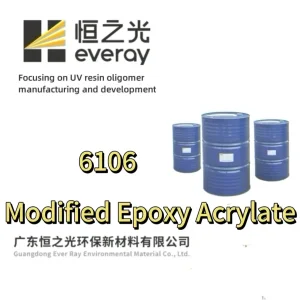
Free-radical UV curing systems often suffer from surface tackiness caused by atmospheric oxygen quenching the excited triplet state of photoinitiators. As an experienced OEM supplier, our modified epoxy acrylate oligomers incorporate tertiary amine synergists directly into the polymer backbone. This internal amine structure reacts with peroxide radicals to yield active alkyl radicals that consume oxygen locally, dramatically speeding up surface cure while maintaining optimal depth of cure. Furthermore, by introducing flexibilized polyether modified epoxy segments, volumetric shrinkage during crosslinking is reduced from 8-10% down to under 1.5%, preventing micro-cracking and loss of adhesion on smooth metal or glass surfaces.
Tailored resin formulations tailored to specific manufacturing line conditions, climate variations, and substrate characteristics.
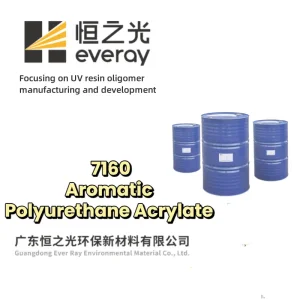
In high-precision consumer electronics (smartphones, laptops, wearable devices), plastic substrates like PC, ABS, and PMMA require exceptional adhesion and optical clarity. Our aromatic polyurethane acrylates (e.g., Grade 7160 & PUA Oligomers) are engineered for UV vacuum metallizing topcoats, providing high gloss, thermal cycle resistance (-40°C to +85°C), and resistance to artificial sweat and cosmetics.
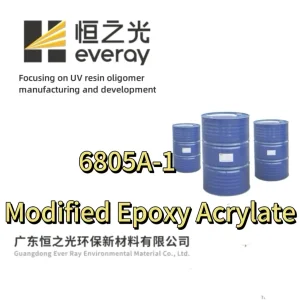
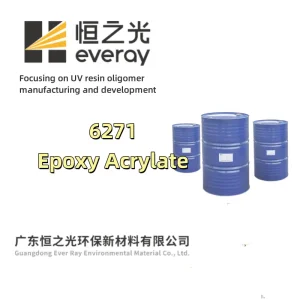
Electric vehicle battery modules require structural adhesives capable of dampening continuous vibration and enduring thermal shock. Our dual-cure epoxy acrylates combine UV surface fixing within seconds with secondary thermal or moisture curing in shadowed areas. This ensures high lap shear strength (>25 MPa on aluminum-to-composite joints) and long-term durability under demanding automotive environments.
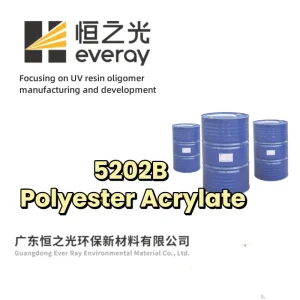
Modern UV offset, flexographic, and screen printing presses operate at speeds exceeding 300 meters per minute. Our polyester acrylates (5403-2F, 5351) offer superior pigment wetting, fast cure response, and low misting tendencies. They enable stable water-ink balance on high-speed offset lines while complying with low-migration food packaging standards.
Leveraging the world's most robust chemical industry cluster in Guangdong Province to deliver uninterrupted global supply and cost efficiency.
Situated within Guangdong's premier chemical industrial park (Yunfu & Jiangmen manufacturing bases), our factory maintains direct raw material pipelines for Acrylic Acid, Epichlorohydrin, Bisphenol A, and Diisocyanates (TDI/IPDI). This vertical integration protects global customers from raw material price volatility and guarantees reliable batch-to-batch consistency.
Our facility houses over 10 fully automated computer-controlled stainless steel reactor lines ranging from 5-ton pilot units to 30-ton bulk production vessels. Every production lot undergoes rigorous multi-stage Testing: Gel Permeation Chromatography (GPC) for molecular weight control, Brookfield Viscometry, Acid Value Titration, and Color Meter verification, keeping variance below 2%.
Located near major ocean logistics hubs (Guangzhou, Shenzhen, and Hong Kong ports), we offer international buyers unmatched dispatch speed. Standard drum orders (200kg steel drums or 1000kg IBC totes) ship within 7 to 10 days, supported by complete dangerous goods export documentation (UN-rated packaging, Safety Data Sheets, Certificates of Analysis).
Pioneering sustainable chemistry, bio-based monomer integration, and excimer laser compatibility for next-generation surface engineering.
To reduce carbon footprint across global supply chains, our R&D lab is synthesizing polyester and epoxy acrylates utilizing renewable bio-based polyols derived from modified soybean oil, cardanol, and bio-succinic acid. These green resins achieve over 40-60% bio-carbon content while matching petrochemical resins in hardness and thermal resistance.
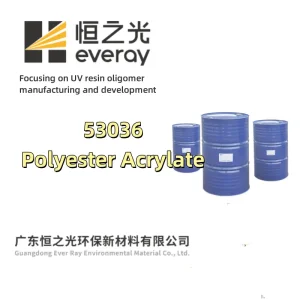
Specialty resins like our Grade 53036 are engineered to respond to 172nm excimer laser irradiation. By inducing ultra-thin surface micro-folding before full UV LED curing, formulations achieve dead-matte finishes (<2 Gloss Units at 60°) with self-healing, anti-fingerprint, and velvety "skin-feel" physical properties without matting agents.
As conventional Mercury UV lamps are phased out worldwide under the Minamata Convention on Mercury, our new acrylate oligomer lines are tailored for 365nm, 385nm, and 395nm UV-LED curing arrays. Furthermore, cationic epoxy resin hybrids eliminate oxygen inhibition altogether while providing ultra-low shrinkage and superior optical clarity.
Full technical and regulatory documentation to ensure seamless market entry across Europe, the Americas, and Asia-Pacific regions.
All resin products fully adhere to EU REACH SVHC restrictions, RoHS directive 2011/65/EU, and TSCA inventory requirements, free from heavy metals, halogenated compounds, and banned phthalates.
Every commercial dispatch is accompanied by batch-specific Certificates of Analysis (COA), detailed Technical Data Sheets (TDS), and multi-lingual GHS Safety Data Sheets (SDS) for worker safety.
Our senior formulation chemists work directly with your R&D engineering teams to customize resin viscosity, refractive index, curing speed, and flexibility to meet proprietary end-user specifications.
Rapid international sample delivery (1kg/4kg metal canisters) with dedicated application support to assist formulators during plant trials, lamp intensity setup, and substrate line testing.
Discover specialized resin chemistries formulated for low yellowing, high wear resistance, offset inks, and nail extension glues.
Direct technical answers from our chief polymer engineers regarding resin selection, formulation troubleshooting, and factory procurement.
Request customized formulation support, bulk price quotations, or technical data sheets directly from our engineering team today.