Direct factory supply engineered by Guangdong Ever Ray Environmental Material Co., Ltd. Optimized for rapid curing, surface optical clarity, exceptional boiling-water resistance, and substrate adhesion.
Understanding how cross-linking density, molecular weight distribution, and functional monomer selection dictate industrial performance in modern UV/EB curing formulations.
In the contemporary advanced chemical manufacturing landscape, Liquid Glass Epoxy and its associated radiation-curable derivatives—specifically Bisphenol-A Epoxy Acrylates, Modified Epoxy Acrylate Solutions, and Polyurethane Acrylate (PUA) Oligomers—represent the absolute pinnacle of high-durability surface treatment, optical clarity, and barrier protection. As global manufacturing transitions toward zero-VOC (Volatile Organic Compound) standards, instant line-speed polymerization, and ultra-high mechanical durability, the demand for high-purity liquid glass epoxy resins has escalated exponentially across 3C consumer electronics, architectural glass primers, automotive displays, optical adhesives, and heavy-duty industrial coatings.
At Guangdong Ever Ray Environmental Material Co., Ltd. (EVER RAY), established in 2006, our synthetic chemistry unit in Yunfu, Guangdong operates over 40,000 square meters of high-tech production infrastructure. By leveraging chemical modifications such as phosphate ester adhesion promotion, aliphatic urethane capping, and hyperbranched polyester architectures, EVER RAY addresses long-standing industry trade-offs—such as balancing high hardness with flexibility, or achieving deep UV-LED surface cure while preventing oxygen inhibition.
Key structural shifts driving material engineering, procurement criteria, and formulation science.
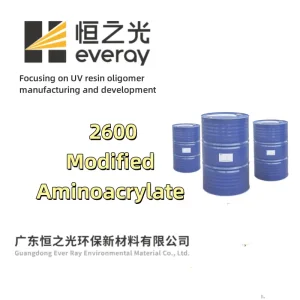
Legacy mercury vapor lamps generate substantial thermal infrared radiation, causing thermal distortion on thin plastic films (PET, TAC) and glass assemblies. Modern formulations utilize modified epoxy acrylates and amine synergists (such as EVER RAY Active Amine and Amino Acrylate series) to maximize radical generation under monochromatic 365nm and 395nm UV-LED sources, achieving complete double-bond conversion without yellowing or substrate degradation.
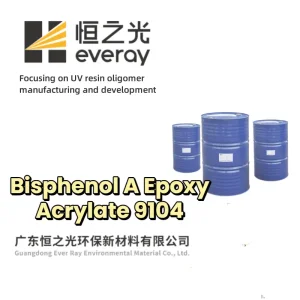
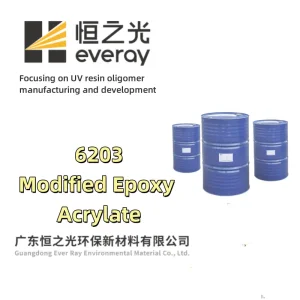
Traditional acrylic resins exhibit 6% to 10% volumetric shrinkage during free-radical polymerization, causing micro-fractures, delamination from smooth glass, and internal stress buildup. By introducing ring-opening epoxy domains and hyperbranched acrylate oligomers (e.g., EVER RAY 6102 and 6203F), volumetric shrinkage is reduced below 1.8%, guaranteeing optical flat finishes and permanent adhesion.
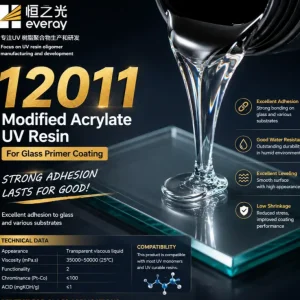
In architectural glass spandrels, screen-printed glass cooktops, and automotive display covers, liquid glass coatings face extreme environmental stress. Formulations incorporating silane-functionalized acrylates (such as EVER RAY 12011) withstand over 100 hours of continuous 100°C boiling water testing without cross-hatch tape adhesion loss or blistering.
How international formulators, OEM purchase leads, and chemical buyers evaluate liquid glass epoxy and UV prepolymers.
When enterprise chemical buyers search for "High-Quality liquid glass epoxy Supplier & Product", their technical and commercial intent extends far beyond simple price-per-kilogram quotes. Based on global market analysis across Europe, North America, Southeast Asia, and East Asia, enterprise purchasing decisions are governed by four critical procurement pillars:
Automated coating lines (slot-die, curtain coating, roller coating) demand precise viscosity windows (e.g., 2,500 ± 200 mPa.s at 25°C). Variations in oligomer viscosity lead to uneven film thickness, coating defects, and line stoppages. EVER RAY enforces rigorous multi-stage automated filtration and viscometer testing on every batch.
Global exports must comply with EU REACH registration, RoHS 3.0, SVHC (Substances of Very High Concern) restrictions, and zero-organotin catalyst requirements. Modern UV resins must eliminate volatile monomer odors and skin-irritation monomers like TPO photoinitiator side-products.
Off-the-shelf resins often fail unique client specifications. Enterprise buyers look for suppliers capable of tailoring functionality, glass transition temperature (Tg), acid value control, and refractive index directly at the reactor stage.
Exporting liquid photopolymer resins requires Class 9 or non-DG maritime transport certification, hazardous material drum packaging (UN-rated drums/IBCs), and temperature-controlled shipping to ensure resin shelf-life stability during transit.
End-to-end resin matrix systems engineered for high-value manufacturing applications.
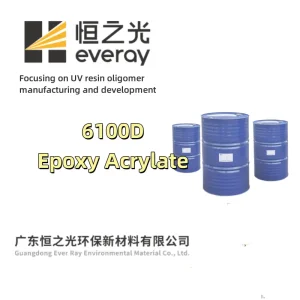
Laptops, smartphones, and wearable displays require optical liquid glass clear coats with extreme scratch resistance (steel wool testing > 2,500 cycles). Combining EVER RAY 6100D Epoxy Acrylate with Aliphatic Polyurethane Acrylate 7291B yields high optical gloss, fingerprint resistance, and zero yellowing under continuous UV exposure.
Glass bottles, perfume flasks, and decorative glass panels demand robust primers. EVER RAY 12011 Glass Primer UV Resin provides polar hydroxyl/silanol bonding, creating a chemical bridge that prevents moisture intrusion and withstands severe hot water washing line requirements.
High-speed printing presses running at 300 m/min require ultra-fast surface cure and excellent pigment dispersion. Polyester Acrylates (such as EVER RAY 5320 and 5336B) provide optimal lithographic water-ink balance, high gloss, and low misting under high shear rates.
How EVER RAY is advancing synthetic photopolymer science toward eco-sustainable and multi-cure functionality.
For complex 3D glass geometries, shadow areas, and opaque substrates where UV light cannot penetrate, EVER RAY is engineering dual-functional oligomers containing secondary epoxy-amine or moisture-curable silane moieties. This ensures 100% cure in unexposed shaded zones within minutes post-UV exposure.
Achieving soft-touch, dead-matte liquid glass finishes without adding silica matting agents (which increase resin viscosity) is a major industry goal. EVER RAY 53036 Polyester Acrylate is optimized for 172nm excimer laser surface micro-folding, delivering velvety tactile feel with ultra-high scratch resistance.
Replacing petroleum-derived bisphenol A with bio-based cardanol, soybean oil modified acrylates, and renewable polyols. Our R&D team is actively increasing the bio-content of our liquid glass epoxy oligomers up to 45% without sacrificing mechanical hardness or chemical resistance.
Combining the low-VOC eco-friendliness of water-based systems with the rapid speed and high hardness of traditional liquid glass epoxies. Ideal for luxury wood furniture, automotive interiors, and leather top coats.
Bridging factory-direct Chinese manufacturing power with local technical service for worldwide customers.
We provide global formulators with 1kg - 5kg evaluation samples delivered via DHL/FedEx air express within 5 business days, complete with initial starting formulations and compatibility guidelines.
Every shipment is accompanied by a batch-specific Certificate of Analysis (COA), GHS-compliant Safety Data Sheet (SDS in multi-language format), and detailed Technical Data Sheets (TDS).
Our raw material sourcing and synthesis processes adhere strictly to heavy metal restriction standards (RoHS), volatile organic compound limits, and chemical control inventories across Europe, the Americas, and Asia-Pacific.
Addressing essential technical, operational, and commercial questions regarding liquid glass epoxy resins.
Complete your product formulations with EVER RAY's high-grade functional oligomers, polyester acrylates, and low-shrinkage monomers.
Speak directly with our senior application experts in Guangdong. Accelerate your formulation R&D, secure batch consistency, and eliminate middleman price markups.
