Explore our core UV/EB curable oligomer portfolio engineered for extreme industrial environments and customized chemical formulations.
In the contemporary advanced chemical processing landscape, the search intent surrounding a High-Quality OEM Resin Factory & Factories extends far beyond simple contract manufacturing. Modern global coating formulators, printing ink manufacturers, electronic material developers, and additive manufacturing engineers require integrated chemical synthesis partners. OEM (Original Equipment Manufacturer) resin facilities serve as the vital bridge between basic petrochemical refining (acrylic acid, isocyanates, epoxides, and polyols) and high-value, functional polymer solutions tailored to hyper-specific industrial demands.
Transitioning from traditional solvent-borne systems toward zero-VOC (Volatile Organic Compound), energy-curable (UV/EB) oligomers demands exact control over polymer backbone architecture, double bond conversion (DBC) rates, molecular weight distribution ($M_w/M_n$), and residual monomer concentrations. A tier-1 OEM resin factory operates not merely as a toll blender, but as a specialized chemical synthesis hub capable of bespoke oligomer customization—tuning parameters such as glass transition temperature ($T_g$), viscosity profiles, crosslinking density, surface energy, and substrate adhesion mechanisms.
Core Technical Directive: Industrial OEM resin manufacturing must balance high photopolymerization reactivity with thermal stability and low shrinkage stress. Guangdong Ever Ray Environmental Material Co., Ltd. leverages state-of-the-art automated synthesis platforms to ensure batch-to-batch consistency ($C_{pk} \ge 1.33$), meeting rigorous global regulatory standards including EU REACH, US TSCA, and RoHS/REACH SVHC directives.
Evaluating an OEM resin facility requires assessing technical capability across multi-step organic synthesis, chemical analytics, and application testing. Below is an overview of standard analytical control thresholds maintained during high-grade acrylate resin OEM production:
| Analytical Metric | Test Methodology | Standard Specification Target | Impact on Final Formulation |
|---|---|---|---|
| Dynamic Viscosity | ASTM D445 / Brookfield @ 25°C | Customized (500 to 150,000 mPa·s) | Controls flow, leveling, application thickness, and monomer dilution requirement. |
| Double Bond Content (Acrylate Equivalent) | FTIR Spectroscopy / Chemical Titration | Theoretical target ± 3% | Determines cure speed, crosslink density, film hardness, and volumetric shrinkage. |
| Color (Gardner / APHA) | ASTM D1544 / Spectrophotometric | Gardner ≤ 1.0 / APHA ≤ 50 | Crucial for non-yellowing clear coats, optical adhesives, and white UV inks. |
| Acid Value (mg KOH/g) | ASTM D974 Titration | ≤ 2.0 mg KOH/g (Grade specific) | Prevents corrosion on metallic substrates, enhances storage stability, and affects pigment wetting. |
| Residual Inhibitor (MEHQ) | High-Performance Liquid Chromatography (HPLC) | 100 – 400 ppm (Controlled) | Balances long-term shelf life (>12 months) with rapid UV photo-response during exposure. |
A look at the technical infrastructure and global delivery footprint supporting OEM resin clients worldwide.
The core capability of an elite OEM resin factory lies in precise control over radical photopolymerization kinetics and condensation polymerization routes. Radiation curing (UV/EB) relies on oligomers acting as the structural backbone of the cured matrix. Guangdong Ever Ray Environmental Material Co., Ltd. synthesizes five primary oligomer families, each tailored to distinct thermodynamic, mechanical, and optical performance criteria:
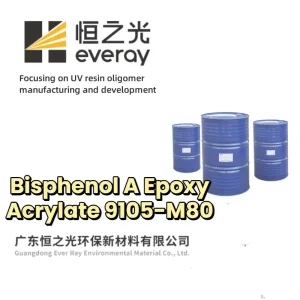
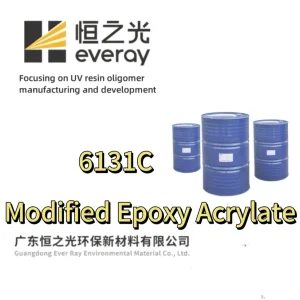
Synthesized via the addition reaction of acrylic acid with bisphenol-A diglycidyl ether (BADGE) or modified epoxy resins. Delivers rapid surface cure speed, high hardness (4H-6H Pencil Hardness), exceptional chemical resistance, and high gloss. Ideal for paper overprint varnishes (OPV), wood finishes, and rigid plastic coatings.
Formulated utilizing aliphatic diisocyanates (such as IPDI or HDI) reacted with polyols and hydroxyl-functional acrylates (HEA/HPA). Provides non-yellowing characteristics, weatherability (QUV testing >2000 hrs), high tensile elongation, and impact flexibility. Essential for 3C electronics, automotive clear coats, and exterior coatings.
Utilizes aromatic isocyanate building blocks (TDI or MDI). Delivers cost-effective toughness, superior tensile strength, and high abrasion resistance for interior wood flooring, industrial adhesives, and packaging ink varnishes where slight yellowing under UV light is acceptable.
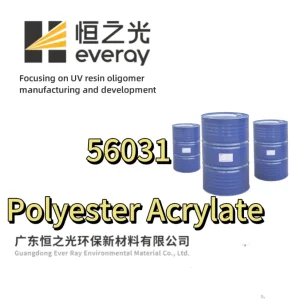
Polycondensation products of polybasic acids and polyhydric alcohols acrylated to yield low viscosity, excellent pigment wetting, and rapid curing. Amino acrylates incorporate tertiary amine synergists to effectively overcome oxygen inhibition during air-cured surface photopolymerization.
Dendritic macromolecular structures offering ultra-high acrylate functionality (>6-16 double bonds per molecule) with surprisingly low viscosity. Enables extremely rapid cure speeds, high crosslink density, scratch resistance, and minimal volumetric shrinkage.
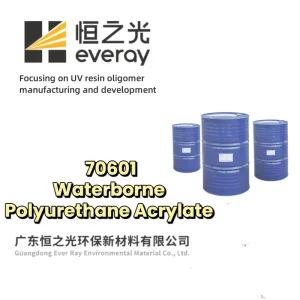
Self-emulsifying polyurethane acrylate anionic dispersions. Combines zero-VOC eco-compliance with UV curing speed. Produces matte-to-gloss flexible films on heat-sensitive substrates like genuine leather, vinyl, and luxury wood veneers.
A persistent technical barrier in free-radical UV photopolymerization is atmospheric oxygen inhibition. Atmospheric $\text{O}_2$ rapidly quenches triplet-state photoinitiators and scavenges propagating acrylic radicals, forming inactive peroxy radicals ($\text{ROO}^\bullet$). This results in surface tackiness, poor stain resistance, and incomplete conversion.
To overcome this, Guangdong Ever Ray's R&D roadmap integrates three key structural mechanisms into our custom OEM formulations:
Global chemical procurement strategies have shifted from simple unit-cost evaluation toward comprehensive supply chain resilience, raw material traceability, and manufacturing agility. Situated in Guangdong's Pearl River Delta industrial cluster, Guangdong Ever Ray Environmental Material Co., Ltd. operates a modern manufacturing footprint designed to absorb global supply shocks while maintaining ultra-competitive cost structures.
The manufacturing efficiency of a premier Chinese OEM resin factory relies on direct industrial integration with core petrochemical precursors. China accounts for a dominant share of global acrylic acid, acrylic ester monomers, epoxy resin (BADGE), and isocyanate capacity (IPDI/HDI/TDI). By maintaining direct pipeline and bulk tank truck logistics with tier-1 domestic chemical refiners alongside certified imported monomer stocks, Guangdong Ever Ray achieves three critical strategic advantages:
Direct volume sourcing buffers global chemical formulators against volatile monomer price fluctuations. Long-term raw material reserve agreements safeguard contracted batch pricing for global OEM partners.
With an extensive inventory of functional monomers and polyols on site, custom chemical modification from lab bench to 10-ton reactor scale can be executed within 7 to 14 business days.
Operating out of the Dawan Industrial Park in Yunfu, Guangdong, the plant features multi-line automated reactors running 24/7 with dedicated backup power and zero environmental compliance downtime risks.
Furthermore, rigorous Quality Assurance (QA) protocols govern every batch prior to export release. Below is our standard multi-stage quality gate process for contract OEM resin production:
Quality Gate 1: Incoming Raw Material Testing (IQC) — Gas chromatography (GC) for monomer purity; Karl Fischer titration for moisture content (<0.05%).
Quality Gate 2: Synthesis In-Process Control (IPC) — Real-time acid value titration, viscosity monitoring via cone-and-plate viscometers, and double bond conversion via FTIR.
Quality Gate 3: Final Product Certificate of Analysis (COA) — Full spectral scan, color indexing, optical transparency, thermal stability (TGA), and application performance validation on target substrates.
Quality Gate 4: Retained Batch Packaging — Sealed retention samples kept for 24 months with full batch traceability to raw material lot numbers.
OEM resins must perform across diverse regional manufacturing environments, curing equipment configurations (high-pressure mercury lamps vs. LED 365nm/395nm arrays), and regional regulatory frameworks. Below are five key localized application scenarios engineered by Guangdong Ever Ray's technical teams:
In high-end consumer electronics manufacturing across East Asia and North America, smartphone housings, notebook enclosures, and wearable devices require UV coatings that adhere to difficult engineering plastics (PC, ABS, PMMA, and treated metal alloys). Furthermore, UV vacuum metallization topcoats must survive harsh thermal cycling without micro-cracking or delamination.
OEM Resin Solution: Utilizing Aromatic PA UV-Resin 7113A and Polycarbonate Acrylate 72203A. These oligomers feature controlled inter-chain flexibility, outstanding vacuum-deposited aluminum film adhesion, and resistance to synthetic perspiration, alcohol rubs, and thermal shock (-40°C to +85°C cycling).
European flooring manufacturers operate high-speed roller coating lines running at speeds over 40 m/min. The requirement calls for low-viscosity primers with deep wood-pore penetration, followed by ultra-hard, scratch-resistant topcoats that retain clarity under heavy foot traffic.
OEM Resin Solution: Formulation utilizing Bisphenol A Epoxy Acrylate 9105M-80 blended with Hyperbranched Acrylate 4600. This system provides fast cure under low energy UV lamps, exceptional taber abrasion resistance, and high stain resistance against household chemicals and coffee test reagents.
Modern flexographic, lithographic offset, and screen printing presses demand UV inks with high pigment loading, superior ink-water balance, low misting, and low odor for secondary food packaging compliance.
OEM Resin Solution: Utilizing 7317 UV Resin for specialized wrinkle/snowflake visual effects, combined with Low Viscosity Polyester Acrylate 56031 for high pigment wetting in flexo and gravure inks.
SLA, DLP, and LCD 3D printing platforms require resins with low viscosity (<500 mPa·s), sharp critical exposure threshold ($E_c$), minimal volumetric shrinkage stress, and high heat deflection temperature (HDT).
OEM Resin Solution: Custom synthesized Waterborne 70601 UV Resin and customized aliphatic urethane acrylate monomers that allow precision dimensional accuracy, high tensile strength, and excellent green-state strength prior to UV post-curing.
Cosmetics formulators require low-odor, low-heat-exotherm, skin-friendly aliphatic urethane acrylate oligomers that bond securely to the natural nail plate without causing thermal pain during LED lamp curing.
OEM Resin Solution: Utilizing Durable 7296C UV Resin, offering solvent-free purity, low skin irritation potential, fast soak-off capability, and long-lasting gloss retention.
Navigating the global regulatory environment is a mandatory component of international chemical OEM partnerships. Guangdong Ever Ray Environmental Material Co., Ltd. provides full regulatory support to ensure smooth import clearance across Europe, North America, Latin America, and the Asia-Pacific region.
Our standard oligomers comply with major global inventories: EU REACH (Registration, Evaluation, Authorisation and Restriction of Chemicals), US EPA TSCA, China IECSC, Korea K-REACH, and Japan ENCS.
Every shipment is accompanied by multi-language 16-section GHS Safety Data Sheets (SDS), Technical Data Sheets (TDS), and lot-specific Certificates of Analysis (COA) confirming spec parameters.
Supplied in UN-certified steel drums (200kg net weight), plastic drums (50kg), or 1000kg IBC totes with nitrogen-headspace blanketing to prevent premature polymerization during tropical ocean transit.
Explore our specialized acrylate oligomers engineered for demanding industrial coating, graphic ink, and adhesive formulations.
In-depth answers to critical technical, synthesis customization, and commercial questions surrounding OEM resin supply.