High-Quality Polyester Epoxy Resin Products & Industrial Curing Solutions

An Industry Technical Whitepaper on Advanced Epoxy Acrylate & Polyester Acrylate Oligomers for Next-Generation UV/EB Coatings, High-Precision Inks, and Structural Adhesives.

Primary Product Showcase

Featured Polyester & Epoxy Acrylate Oligomers

Precision-engineered UV-curable oligomers delivering high double-bond conversion, superior film hardness, and optimal pigment wetting across industrial manufacturing lines.
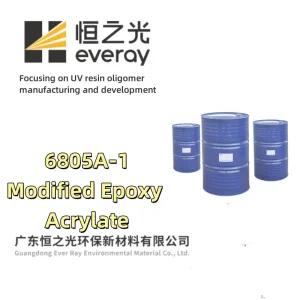
High-Quality 6805A-1 UV-resin in UV Offset Printing
High-Quality 6805A-1 UV-resin in UV Offset Printing Suppliers, Product
View Technical Details
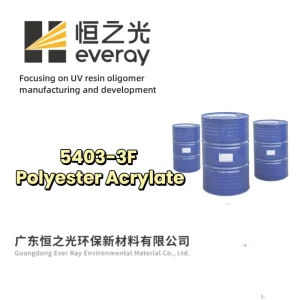
Wholesale 5403-3F Polyester Acrylate
Wholesale 5403-3F Polyester Acrylate, which can achieve the best water-ink balance in UV ink Factory, Products
View Technical Details
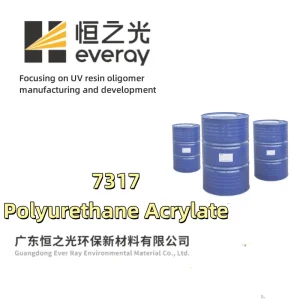
Wholesale 7317 UV resin professional in UV ink
Wholesale 7317 UV resin professional in UV ink-wrinkle and snowflake effects Supplier, Factories
View Technical Details
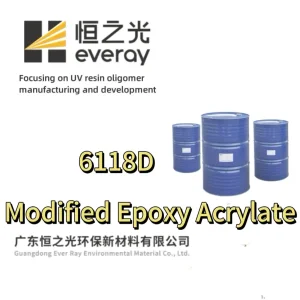
High Gloss Fast Curing Modified Epoxy Acrylate Resin
Buy High Gloss Fast Curing Modified Epoxy Acrylate Resin (UV Oligomer) Factories, Products
View Technical Details
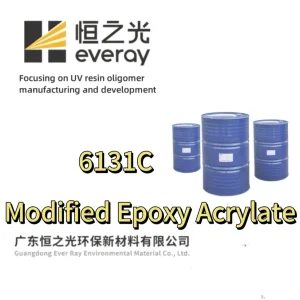
Modified Epoxy Acrylate Oligomer High Flexibility
High-Quality Fast Curing Modified Epoxy Acrylate Oligomer - High Flexibility Acrylic Resin for UV Plastic Coating & Furniture Manufacturer, Factory
View Technical Details
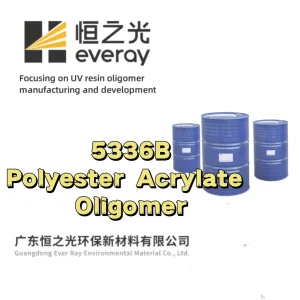
5336B High-Performance Polyester Acrylate Resin
Buy 5336B High-Performance Polyester Acrylate Resin | Ultra-Fast Cure for UV Offset & Flexo Inks Suppliers, Product
View Technical Details
6203F UV resin for UV metal coating
Buy 6203F UV resin for UV metal coating and printing ink Suppliers, Products
View Technical Details
61163 High Solid Low Viscosity Anti-Yellowing Resin
Wholesale 61163 High Solid Low Viscosity Anti-Yellowing Modified Epoxy Acrylate Resin For UV Coating Suppliers, Factory
View Technical Details
Polymer Chemistry & Mechanics

Macro Industry Solutions: Polymer Science of Polyester Epoxy Resins

In modern photopolymer chemistry, bridging the gap between ultra-fast radical curing speed and long-term film durability requires a sophisticated balance of oligomer architecture. Polyester acrylate and epoxy acrylate resin networks serve as the core backbone of industrial radiation-curable coatings.

🧪

Epoxy Acrylate Oligomer Fundamentals

Epoxy acrylates are synthesized via the ring-opening reaction of acrylic acid with epoxy resins—most commonly Bisphenol-A Diglycidyl Ether (DGEBA). This chemical pathway retains the rigid aromatic rings of the bisphenol-A core while attaching reactive acrylate functional groups at terminal positions.

  • High Reactivity & Curing Speed: Terminal acrylate double bonds enable instantaneous free-radical photopolymerization under UV/LED irradiation.
  • Exceptional Tensile Strength & Hardness: Aromatic backbones deliver pencil hardness up to 3H–5H on rigid substrates.
  • Chemical Resistance: Dense crosslinking networks resist aggressive industrial solvents, MEK rubs, alkali, and acidic compounds.
  • Modification Flexibility: Modification with fatty acids, polyurethane blocks, or silanes mitigates brittleness and enhances substrate wetting.
⚙️

Polyester Acrylate Oligomer Mechanics

Polyester acrylates are prepared by reacting polyols with polybasic acids, followed by esterification with acrylic acid. Their hyper-tunable molecular structure permits precise control over functionality (from 2-functional up to 6-functional) and chain elasticity.

  • Superior Pigment Wetting & Rheology: Low viscosity and polar ester linkages enable optimal dispersion of organic/inorganic pigments.
  • Optimal Water-Ink Balance: Indispensable for UV offset inks where lithographic fountain solution interaction must remain balanced.
  • Flexibility & Toughness: Polyester segments introduce elastic flexibility, accommodating thermal expansion in flexible packaging and metal coatings.
  • Low Shrinkage Stress: Minimizes volumetric shrinkage upon curing, ensuring strong intercoat and interfacial adhesion.
2,000+
mJ/cm² UV LED Line Speed Capability
< 1%
Volumetric Shrinkage in Modified Grades
100%
Solid Content / Zero-VOC Compliance
> 200
MEK Rub Resistance Cycles
Performance Engineering

Technical Comparison Matrix: Polyester vs. Epoxy Acrylate

Selecting the ideal resin for UV-curable formulations requires evaluating trade-offs between mechanical hardness, viscosity profile, pigment compatibility, and yellowing resistance.

Performance Parameter Standard Bisphenol-A Epoxy Acrylate Modified Epoxy Acrylate (e.g., 6160M-3) Multifunctional Polyester Acrylate Modified Polyester Acrylate (e.g., 5403-3F)
Curing Speed (UV-LED / Mercury) Ultra-Fast (>35 m/min) Fast to Ultra-Fast Fast (Functionality dependent) Balanced / Rapid Surface Cure
Pencil Hardness (Glass/Metal) 3H - 5H 2H - 4H H - 3H HB - 2H
Elongation at Break (%) < 2% (Rigid) 5% - 15% (Flexible) 10% - 35% 15% - 40%
Pigment Wetting Ability Moderate Good Exceptional Industry Leader (Offset/Flexo)
Viscosity Profile (mPa.s @ 25°C) High (40,000 - 100,000) Low to Medium (2,000 - 15,000) Medium (1,000 - 8,000) Low (500 - 3,500)
Substrate Adhesion (Plastic/Metal) Requires primer on non-polar plastics Superior on PVC, ABS, PC Good on paper, board, treated films Excellent on treated PE/PET, aluminium
Anti-Yellowing Index (ΔE) Fair (Interior applications) High Anti-Yellowing Grades Available Good Excellent

Formulation Gain Tip: Blending Modified Epoxy Acrylate (for fast deep-cure hardness) with Hyperbranched Polyester Acrylate (for low viscosity and oxygen-inhibition resistance) produces a synergistic system that achieves maximum cure speed under low-energy 395nm UV LED lamps without sacrificing flexibility or clarity.

Market Integration

Global Commercial & Industrial Market Landscape

The global shift toward zero-VOC manufacturing, fast cycle times, and automated production line efficiency has positioned UV-curable polyester and epoxy acrylate resins at the core of high-value industrial sectors.

📱

3C Electronics & Consumer Hardware

High-end consumer electronics (smartphones, laptops, wearables) require protective UV topcoats that withstand daily abrasion, cosmetics immersion, and drop impacts.

Our modified epoxy acrylate resins provide hard-coat capability over Polycarbonate (PC) and PMMA housings, preventing micro-scratches and yellowing over extended operating lifespans.

🖨️

UV Offset, Flexo & Screen Printing Inks

High-speed commercial printing presses operate at line speeds exceeding 300 meters per minute. Polyester acrylates are essential for maintaining stable water-ink balance in offset lithography.

Grade 5403-3F provides superior lithographic performance, preventing emulsification and dot gain while ensuring high color intensity and rapid surface drying.

🛋️

Wood Finishing & PVC/SPC Flooring

Rigid core PVC flooring, Luxury Vinyl Tile (LVT), and architectural wood paneling rely on automated UV coating lines for sealing, grain filling, and anti-scratch topcoats.

Low-shrinkage modified oligomers (such as 1290H) bond strongly to vinyl layers, offering extreme stain resistance, anti-slip textures, and flame retardancy.

📦

Overprint Varnishes (OPV) & Packaging

In food packaging, folding cartons, and luxury cosmetic boxes, UV overprint varnishes must deliver high gloss, crack resistance during die-cutting, and ultra-low odor/migration.

Low-viscosity modified epoxy acrylates allow 100% solid roller coater application without thermal solvent evaporation steps, accelerating turnaround times.

🚗

Automotive Interior Coatings

Automotive trim components require UV-cured coatings that pass stringent thermal cycling tests (-40°C to +85°C) and resist sunlight UV degradation without fogging.

Dual-cure (UV + thermal or moisture) modified acrylate oligomers ensure complete crosslinking even in recessed shadow areas of complex 3D interior parts.

⚡

Electronic Potting & Optoelectronics

Printed Circuit Boards (PCBs) and optical sensors utilize low-shrinkage epoxy acrylate oligomers for conformal coating, potting, and wire tacking.

Products like 73008 ensure exceptional moisture barrier properties, high dielectric strength, and thermal resistance up to 180°C continuous operation.

Quality & Global Supply Assurance

Localized Support, Compliance & Supply Chain Assurance

Navigating global chemical supply chains requires strict adherence to international regulatory standards, robust batch consistency management, and localized technical service support.

🌿 Regulatory Standards & Compliance

Our complete polyester and epoxy acrylate portfolio is manufactured under ISO 9001:2015 Quality Management Systems and ISO 14001 Environmental Management Systems.

  • REACH Registration: Registered status for key monomer/oligomer building blocks exported into the European Union.
  • RoHS & Heavy Metal Free: Fully compliant with Directive 2011/65/EU; zero halogenated additives, lead, cadmium, mercury, or hexavalent chromium.
  • Low VOC & Zero Solvent Emission: Designed for 100% reactive solids formulations, eliminating atmospheric volatile organic compound discharge.
  • Nestlé Guidance & EuPIA Compliance: Select photoinitiator-free oligomers meet stringent low-migration requirements for non-food-contact packaging surfaces.

🛡️ Batch Consistency & Global Logistics

For large-scale formulators, batch-to-batch variation in viscosity or double-bond concentration can interrupt automated production lines. We guarantee structural predictability.

  • Rigorous QC Controls: Every production batch undergoes Gel Permeation Chromatography (GPC), acid value determination, color measuring (AHA/Gardner), and rotational rheology testing.
  • Viscosity Tolerance Assurance: Tight specifications ($\pm 5\%$ viscosity variance max) eliminate the need for line operator re-formulation.
  • Export Packaging Options: 20kg steel pails, 200kg drums, and 1000kg IBC totes equipped with UV-opaque barriers to prevent premature polymerization in transit.
  • Technical Application Support: Dedicated coating laboratories in Guangdong assist clients worldwide with custom formulation matching, lamp spectral pairing, and substrate troubleshooting.
Formulation Engineering

Localized Application Scenarios & Technical Strategies

Real-world chemical engineering scenarios demonstrating how formulators combine oligomers, reactive diluents, and photoinitiators to achieve optimal end-use characteristics.

Scenario A: High-Speed Paper UV Varnish

Challenge: Excessive viscosity causing orange-peel defect on high-speed gravure coating lines (>150 m/min).

Solution Strategy: Utilize 6300 Low Viscosity Modified Epoxy Acrylate combined with 20% TPGDA monomer and 4% TPO/ITX photoinitiator blend.

Result: Smooth surface leveling, 95+ Gloss units at 60°, and zero paper curl due to reduced volumetric shrinkage.

Scenario B: Specialty Effect Inks (Wrinkle/Snowflake)

Challenge: Achieving controlled micro-surface wrinkling for decorative luxury packaging without compromising substrate adhesion.

Solution Strategy: Formulate with 7317 Special Effect UV Resin, regulating dual-wavelength surface vs. deep cure kinetics (254nm surface cure + 365nm body cure).

Result: Uniform, tactile snowflake patterns with high scuff resistance and crisp image definition.

Scenario C: Scratch-Resistant Plastic Hardcoats

Challenge: ABS and PMMA consumer electronic parts failing 0000# steel wool abrasion testing.

Solution Strategy: Incorporate 4600 Hyperbranched Acrylic UV Resin blended with 61163 Anti-Yellowing Modified Epoxy Acrylate.

Result: STEEL WOOL 1000g load > 500 cycles with zero visible hazing; pencil hardness elevated from HB to 3H.

Future Innovations

Technology Roadmap & Future Outlook (2026–2030)

As energy regulations tighten and LED-UV curing systems replace medium-pressure mercury lamps globally, the chemical architecture of polyester and epoxy acrylates is undergoing rapid evolutionary shifts.

1. LED-UV (365nm / 395nm) Long-Wavelength Curing Optimization

Traditional mercury lamps emit broad UV-A, UV-B, and UV-C radiation. Modern energy-efficient LED systems emit narrow-band 385nm or 395nm wavelengths. Because surface cure can suffer under long wavelengths due to oxygen inhibition, our next-generation polyester acrylates incorporate amine-modified synergist structures directly into the polymer chain, accelerating surface dry times without photoinitiator blooming.

2. Bio-Based & Sustainable Carbon Backbones

Aligned with carbon neutrality targets, our chemical R&D team is replacing petroleum-derived polyols and bisphenols with plant-derived bio-polyols (caster oil, succinic acid, bio-glycerol). Future polyester acrylates target >40% renewable bio-carbon content while matching the performance of conventional synthetic counterparts.

3. Waterborne UV-Curable Dispersions (PUDs)

Combining the safety of water dilutability with the speed of UV curing, waterborne polyurethane and polyester acrylates eliminate organic reactive diluents completely. This technology is becoming the dominant choice for premium wood coatings, automotive leather finishes, and low-odor nail gel polishes.

4. Dual-Cure (UV + Thermal / Moisture) Systems

For complex 3D components with shadowed geometry where UV light cannot penetrate, hybrid epoxy acrylates featuring secondary moisture-curing or thermal-isocyanate groups ensure complete crosslinking throughout non-illuminated cavity zones.

Technical Knowledge Base

Frequently Asked Questions (FAQ)

Expert insights from our chemical application lab answering common technical, formulation, and procurement questions regarding polyester and epoxy acrylate resins.

Q1: What is the primary difference between Bisphenol-A Epoxy Acrylate and Polyester Acrylate?
Bisphenol-A Epoxy Acrylate features a rigid aromatic backbone delivering maximum hardness (3H–5H), fast cure speed, and high chemical resistance, but higher viscosity and brittleness. Polyester Acrylates possess ester linkages that provide better pigment wetting, superior flexibility, low shrinkage, and lower intrinsic viscosity, making them ideal for inks, OPVs, and flexible coatings.
Q2: How do I overcome oxygen inhibition in surface curing under LED 395nm lamps?
Atmospheric oxygen quenches free radicals at the coating surface, causing stickiness. You can overcome this by: 1) Incorporating amine-modified acrylate oligomers or active amine synergists (e.g., amine acrylates); 2) Increasing photoinitiator concentration with high UV-A absorption (e.g., TPO or DETX); 3) Blending hyperbranched polyester acrylates to raise double-bond crosslinking density.
Q3: Which oligomers are recommended for UV Lithographic Offset Printing Inks?
Polyester acrylate grades such as 5403-3F and 5336B are engineered specifically for UV offset inks. They offer low acid values, superior pigment dispersion, and precise lipophilic-hydrophilic balance to prevent emulsification during continuous fountain solution contact on high-speed presses.
Q4: What is the shelf life and proper storage condition for these UV oligomers?
When stored in original unopened UV-opaque drums at temperatures between 10°C and 30°C away from direct sunlight and heat sources, our epoxy and polyester acrylate oligomers remain stable for a minimum of 12 months. Avoid exposure to daylight or ambient UV lighting during handling to prevent spontaneous polymerization.
Q5: Can customized resin modifications be requested for specific substrate adhesion?
Yes. Our R&D application team in Guangdong specializes in custom synthesis, altering hydroxyl numbers, viscosity ranges, double-bond functionality, or grafting flexible elastomeric segments to meet specific adhesion requirements on non-polar plastics (PP, PE, PET), untreated metals, or delicate electronic components.
Extended Product Portfolio

Specialty UV Acrylate Resins & Functional Oligomers

Discover specialized modified epoxy acrylates, hyperbranched acrylic resins, and low-shrinkage polyurethane acrylates for advanced coating, varnish, and electronic applications.
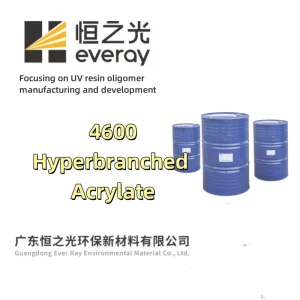
Wholesale Scratch resistant 4600 hyperbranched acrylic UV resin
Wholesale Scratch resistant 4600 hyperbranched acrylic UV resin :suitable for varnish and ink Suppliers, Factory
View Technical Details
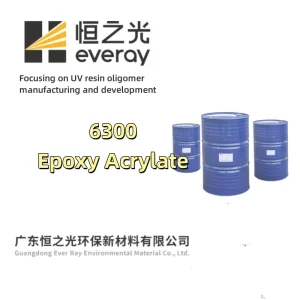
Low viscosity 6300 modified epoxy acrylate UV resin
Buy Low viscosity 6300 modified epoxy acrylate UV resin for UV paper varnish Manufacturers, Supplier
View Technical Details
Fast curing modified epoxy acrylate 6160M-3
Wholesale 6160M-3: Fast curing modified epoxy acrylate for improved performance Manufacturer, Suppliers
View Technical Details
Low Shrinkage High Flexibility Polyurethane Acrylate Resin
Wholesale Low Shrinkage High Flexibility UV Curing Polyurethane Acrylate Resin for Nail Gel, Leather and Wood Manufacturer, Products
View Technical Details
Low shrinkage 1290H for PVC floor coating
High-Quality Low shrinkage 1290H can apply for PVC floor coating applications Suppliers, Factory
View Technical Details
5218 Polyester Acrylate UV Resin
High-Quality 5218 Polyester Acrylate UV Resin: Excellent Adhesion and Pigment Compatibility Manufacturers, Supplier
View Technical Details
Durable 7200F Polyurethane Acrylate
Wholesale Durable 7200F polyurethane acrylate: suitable for heat-resistant and cold-resistant UV coatings Suppliers, Products
View Technical Details
73008 Low-Shrinkage Polyurethane Acrylate Resin
Buy 73008 Low-Shrinkage Polyurethane Acrylate Resin for Electronic Potting & Metal Coating | High Temp Anti-Yellowing UV Oligomer Manufacturers, Factory
View Technical Details