Industrial-grade raw material solutions engineered for high-performance UV/EB coatings, graphic inks, and advanced adhesive formulations.
Understanding the molecular architecture, esterification mechanisms, and backbone customization of liquid polyurethane oligomers for industrial UV/EB radiation curing.
Synthesized utilizing aliphatic diisocyanates such as Isophorone Diisocyanate (IPDI) or Hexamethylene Diisocyanate (HDI). Engineered specifically for exceptional outdoor durability, non-yellowing characteristics, and optical clarity under intense UV radiation.
Formulated with aromatic polyisocyanates including Toluene Diisocyanate (TDI) or Methylene Diphenyl Diisocyanate (MDI). Optimized for heavy industrial applications requiring maximum mechanical toughness and ultra-fast curing reaction speeds.
Advanced dendritic polyols capped with acrylic acid esters. These unique structures deliver high acrylate functionality without causing the excessive viscosity spikes typical of linear high-molecular-weight polymers.
| Oligomer Chemical Class | Viscosity Range (mPa·s @ 25°C) | Glass Transition Temp (Tg °C) | Tensile Strength (MPa) | Primary Industrial Application Field |
|---|---|---|---|---|
| Aliphatic Urethane Acrylate (PUA) | 5,000 – 65,000 | -20 to +65 | 25 – 60 | Automotive Clearcoats, 3C Electronics, Nail Gels |
| Aromatic Urethane Acrylate (PUA) | 10,000 – 120,000 | +15 to +85 | 40 – 85 | Wood Flooring, Vacuum Electroplating Primers |
| Epoxy Acrylate Oligomer | 15,000 – 200,000 | +35 to +95 | 50 – 95 | Paper Overprint Varnishes, PCB Solder Masks |
| Polyester Acrylate Oligomer | 500 – 15,000 | -30 to +40 | 15 – 45 | Offset Inks, Flexographic Inks, Lithography |
| Waterborne Urethane Acrylate | 50 – 800 | 0 to +50 | 20 – 50 | Eco-Friendly Wood Coatings, Leather Finishes |
An executive summary of environmental regulations, energy transition mandates, and modern chemical supply chain requirements impacting polyurethane liquid purchasing.
Global regulatory frameworks such as the European Green Deal, US EPA Title V rules, and China's strict GB/T volatile organic compound guidelines are compelling chemical formulators to migrate rapidly away from solvent-borne polyurethane systems.
Liquid Polyurethane Acrylates (100% solids) serve as the primary replacement technology. Because these liquids undergo instantaneous photopolymerization without solvent evaporation, manufacturing facilities drastically reduce greenhouse gas emissions while saving thermal energy required by conventional heat-drying tunnels.
Traditional high-pressure mercury lamps are rapidly being phased out worldwide due to energy inefficiency and environmental hazards associated with mercury waste (Minamata Convention). Modern UV curing lines rely heavily on energy-efficient UV-LED arrays operating at 365nm, 385nm, 395nm, and 405nm.
As a leading supplier, our synthetic urethane liquid formulations are tailored with modified surface reactivity to match the narrow emission spectra of UV-LED chips, overcoming surface tacky problems caused by oxygen inhibition without requiring nitrogen inerting chambers.
Bridging the gap between raw material synthesis, chemical batch consistency, and high-volume industrial application stability.
The Challenge: Fluctuations in resin viscosity, color shade (Pt-Co index), and acid values between shipments lead to formulation downtime and inconsistent line speeds for downstream formulators.
Our Solution: Automated continuous synthesis reactors equipped with real-time Fourier-Transform Infrared (FTIR) spectroscopy monitoring to guarantee narrow viscosity windows (±5%) and constant double-bond conversions.
The Challenge: Achieving permanent adhesion on non-polar plastic substrates like Polypropylene (PP), Polyethylene (PE), untreated PET, and smooth metal alloys without primer treatment.
Our Solution: Special functional polyurethane acrylates modified with acidic functional monomers (phosphate esters/carboxyl-terminated) that establish covalent bonds and hydrogen bonding across difficult substrate interfaces.
The Challenge: High acrylic double-bond conversion causes crosslinking volumetric shrinkage up to 8-10%, triggering film curling, micro-cracking, and loss of dimensional accuracy in 3D printing and thin films.
Our Solution: Polyether/polyester backbone elongation paired with ring-opening or hyperbranched structures that absorb polymerization stress, lowering total shrinkage to under 2.5%.
Tailored liquid polyurethane resin formulations optimized for high-speed manufacturing environments across global industrial sectors.
Modern mobile phones, automotive touch displays, and interior control panels require coatings that pass rigorous scratch resistance tests (Steel Wool 0000 # 2000 cycles under 1kg load) while maintaining optical clarity.
Recommended Solution: Blending our multi-functional aliphatic polyurethane acrylates (such as PUA 7291B) with specialty modified acrylate monomers. This yields surface pencil hardness exceeding 3H-4H alongside self-healing elastic memory properties that prevent micro-scratch accumulation.
Flexographic, offset, and UV inkjet printing require liquid resins with precise rheology control, high pigment wetting capability, and rapid curing speed to prevent ink misting on high-speed presses running at 300+ meters per minute.
Recommended Solution: Low-viscosity polyester acrylates combined with amine-modified acrylate synergists. These systems exhibit thixotropic behavior, excellent ink-water balance in offset lithography, and zero pigment flocculation across carbon black and organic pigments.
Laminating optical displays (LOCA), bonding medical devices, and glass-to-metal assemblies require bubble-free liquid polyurethane resins that exhibit high optical transparency (> 99% light transmittance) and low thermal expansion coefficients.
Recommended Solution: Pure acrylate and aliphatic polyurethane liquid resins engineered with minimal chemical impurities. They pass 85°C / 85% RH accelerated aging tests without yellowing, delamination, or loss of bond strength.
Vat photopolymerization technologies (SLA, DLP, LCD) demand low-viscosity liquid resins (< 500 mPa·s at 25°C) that cure rapidly upon exposure to 405nm light sources while delivering engineering-grade mechanical properties (ABS-like toughness or high heat deflection temperature).
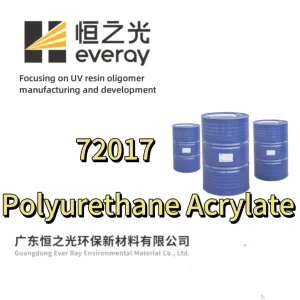
Recommended Solution: Photo-Thermal Dual-Curing Polyurethane Acrylate Oligomers (e.g., Grade 72017), which combine instant light curing with thermal post-curing to achieve high tensile elongation, heat resistance (> 120°C), and isotropic mechanical performance.
Ensuring complete safety compliance, chemical registration, and on-site engineering support for seamless international operations.
Our raw material supply chains comply fully with international chemical inventories, ensuring trouble-free customs clearance and downstream distribution:
Flexible supply options packaged in industrial steel drums (200kg net), IBC totes (1000kg net), or ISO tanks for high-volume manufacturing facilities. All export containers feature moisture-proof seals, nitrogen blanket protection, and full hazard classification labeling compliant with IMDG/IATA codes.
Our experienced application engineers provide direct formulation assistance, including photoinitiator selection matching, diluent monomer ratio optimization, contact angle measurement, and dynamic mechanical thermal analysis (DMTA) testing.
Pioneering the future of eco-friendly polymer chemistry through bio-based feedstocks, dual-cure mechanisms, and intelligent self-healing resins.
Integrating renewable plant-based polyols (castor oil, soybean derivatives) into polyurethane oligomer synthesis, achieving bio-based carbon content up to 45-60% without sacrificing mechanical strength.
Expanding photo-thermal and photo-moisture dual curing systems designed to solve deep-shadow cure issues in complex 3D electronic assemblies and thick industrial composite laminates.
Developing dynamic covalent bond networks (Diels-Alder linkages/hydrogen bond clusters) within urethane acrylates that enable thermal- or light-assisted scratch repair for premium automotive surfaces.
Ultra-pure, low-outgassing aliphatic urethane liquids with barrier properties preventing moisture vapor transmission (WVTR < 10⁻⁴ g/m²/day) for flexible displays.
In-depth responses to critical chemical engineering, formulation design, and procurement inquiries.
Browse our extended catalog of high-durability, fast-curing monomers, and modified epoxy resins.