High-purity oligomers, reactive diluents, and modified acrylate resins synthesized for industrial-scale additive manufacturing, UV wood finishes, vacuum metallization, and high-speed offset inks.
The global additive manufacturing (AM) sector has fundamentally shifted from rapid prototyping into high-volume industrial end-use production. This paradigm transformation demands that chemical synthesis factories supply photopolymers, polyurethane acrylates (PUA), epoxy acrylates, and functional monomer formulations engineered to match the mechanical, thermal, and optical performance of traditional injection-molded thermoplastics (such as ABS, Polycarbonate, and PEEK).
Modern photopolymerization processes—spanning Stereolithography (SLA), Digital Light Processing (DLP), Liquid Crystal Display (LCD) masked stereolithography, and Multi-Jet/PolyJet deposition—depend intimately on the chemical architecture of the underlying oligomers. As OEM machine manufacturers scale throughput using high-irradiance UV LED arrays (365nm, 385nm, 395nm, and 405nm), material science must solve historical trade-offs: balancing rapid photo-curing kinetics with ultra-low volumetric shrinkage, preventing yellowing under long-term solar UV exposure, and maintaining structural integrity across extreme thermal cycles.
Formulations tailored for rapid layer exposure down to 0.8 seconds per 50-micron lift. Designed for high-intensity 395nm/405nm optical engines with zero parasitic light scattering.
Specialty polyester acrylates engineered for 172nm excimer laser curing, creating micro-folded surface topologies that deliver soft-touch feel and ultra-matte low-gloss aesthetics.
Modified epoxy and aliphatic urethane oligomers providing heat deflection temperatures (HDT) exceeding 140°C with high tensile strength (65–85 MPa) for functional engineering components.
Enterprise chemical buyers and procurement managers for Tier-1 additive manufacturing centers, industrial coating plants, and UV printing ink manufacturers face complex challenges when scaling supply chains. Unstable monomer purity, lot-to-lot viscosity fluctuations, and regulatory non-compliance can halt automated production lines and ruin expensive print heads.
Our manufacturing infrastructure in Guangdong, China, addresses these global procurement metrics through rigorous chemical quality assurance systems, direct factory transparency, and scalable packaging protocols:
| Procurement Parameter | Industry Standard Limit | Our Factory Guarantee Specification | Impact on Enterprise Manufacturing |
|---|---|---|---|
| Batch Viscosity Tolerance | ± 10% to 15% cP | < ± 3.0% cP (Brookfield at 25°C) | Prevents printer recoater jamming and ensures consistent layer levelling. |
| Acid Value (mg KOH/g) | < 3.0 mg KOH/g | ≤ 0.5 – 1.0 mg KOH/g | Eliminates corrosive damage to resin tanks and printing nozzles. |
| Color (Gardner Scale) | ≤ 2.0 Gardner | ≤ 0.5 Gardner (Water-clear transparency) | Ensures non-yellowing performance in optical lenses and clear varnishes. |
| Monomer Purity & Conversion | 92.0% purity | ≥ 98.5% Active Acrylate Oligomer Content | Guarantees rapid curing speed and low residual volatile organic odor (VOCs). |
| Global Chemical Compliance | Regional SDS only | REACH, SVHC, RoHS, TSCA, K-REACH | Allows seamless international distribution across EU, NA, and APAC markets. |
From 25kg steel drums for R&D testing to 200kg tight-head drums and 1,000kg UN-rated IBC Totes for bulk chemical mixing. All containers are nitrogen-flushed and UV-shielded for a verified 12-month shelf-life stability.
Our application engineers tailor functional groups, acrylate degree (mono-, di-, tri-, or hexa-functional), and viscosity index to match proprietary additive manufacturing resin systems and OEM hardware specifications.
Selecting the correct oligomer base is critical to achieving specific physical characteristics in additive manufacturing materials, wood sealers, UV vacuum metalizing primers, and graphic art inks. Below is an engineering comparison of our main synthetic resin lines:
Derived from Bisphenol-A and Novolac epoxides. Features maximum cure speed, ultra-high surface hardness (up to 4H Pencil), and exceptional chemical/solvent resistance.
Synthesized with Aliphatic or Aromatic isocyanates. Provides toughness, impact resistance, flexibility, and non-yellowing optical clarity under outdoor UV exposure.
Synthesized via multi-functional polyols and esterification. Excellent pigment wetting behavior, low kinematic viscosity, and high reactivity for high-speed ink formulation.
Engineered chemical formulations tailored for high-demand industrial production environments.
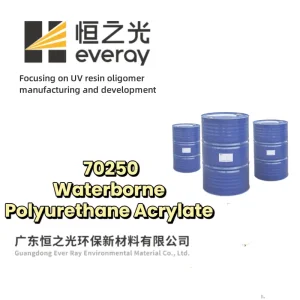
Our 70250 and modified polyurethane acrylate resins form the backbone of rigid, tough, and dental-grade 3D printing photopolymers. Featuring minimal volume contraction during polymerization, these materials deliver pin-point dimensional accuracy (±0.05mm) on 4K/8K LCD and DLP printing systems. Ideal for engineering prototypes, investment casting models, and structural electronic enclosures.
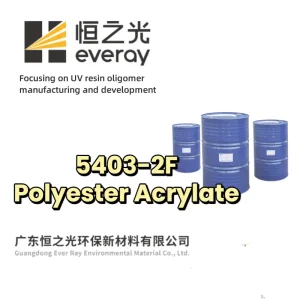
Resin grades 5403-2F, 5403DF, and 6100D are specifically engineered for high-speed lithographic offset and flexographic printing presses. They provide exceptional pigment dispersion properties, rapid surface cure to eliminate ink offset on rollers, and optimal water-ink balance during long-run printing cycles on paper, foil, and synthetic films.
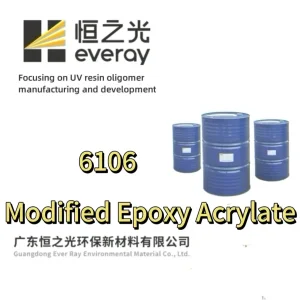
With the global move toward energy-efficient LED-UV curing lamps (395nm), our Polyester Acrylate 5501 and Epoxy Acrylate 6102 enable deep through-cure in thick pigmented wood coatings, parquet flooring sealers, and furniture topcoats. Delivering scratch resistance, high gloss retention, and immediate stackability at line speeds exceeding 40 m/min.
Aromatic PA 7113A and modified acrylate monomers deliver exceptional inter-layer adhesion to challenging plastic substrates including ABS, Polycarbonate, PMMA, and untreated PET. Designed to withstand thermal stress during high-vacuum aluminum deposition while maintaining pristine optical clarity and mirror-like metallic brilliance.
Expanding into international markets requires strict adherence to regional chemical regulations and localized technical assistance. As a premier manufacturer in Guangdong, China, our chemical production facilities comply with international standards to ensure uninterrupted global distribution.
Fully compliant with the European Chemicals Agency (ECHA) REACH registration standards. Free from banned Substances of Very High Concern (SVHC), heavy metals, halogenated solvents, and toxic photoinitiator residues.
Our production lines operate under certified Quality and Environmental Management Systems. Every synthesis batch undergoes Gas Chromatography (GC), Gel Permeation Chromatography (GPC), and Fourier-Transform Infrared Spectroscopy (FTIR) testing.
We provide full Technical Data Sheets (TDS), Safety Data Sheets (SDS in 16 languages), Certificate of Analysis (COA) per drum, and offer direct formulation guidance from our R&D polymer chemistry team.
As additive manufacturing scales into digital factory production, our chemical synthesis laboratory is pioneering three core technological fronts:
Developing plant-derived oligomers and reactive diluents with bio-renewable carbon content exceeding 60%, drastically reducing the carbon footprint of photopolymer 3D printing and industrial coatings.
Synthesizing dual-stage crosslinking resins that allow shadow-area curing in complex 3D printed geometries and thick industrial electronic encapsulants via secondary thermal bump activation.
Utilizing predictive machine learning models to simulate molecular crosslinking kinetics, viscosity indices, and Glass Transition Temperatures ($T_g$) prior to physical pilot batch reactor production.
High-performance modified epoxy acrylates, specialty skin-feel polyurethanes, water-transfer printing resins, and high-reactivity ink oligomers engineered for rigorous industrial end-uses.

Detailed answers to technical chemistry, minimum order quantities (MOQ), photoinitiator pairing, and global logistics queries.
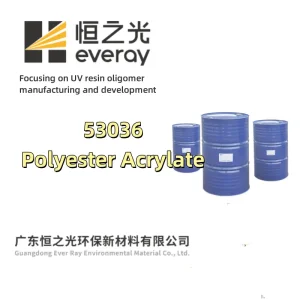
We synthesize epoxy acrylate oligomers (such as 6100D, 6102, 6106), aliphatic and aromatic polyurethane acrylates (7113A, 7402, 7317), polyester acrylates (5403-2F, 53036, 5501), amino acrylates, active amine synergists, and hyperbranched functional monomers. Our R&D lab formulates photopolymers tailored for SLA, DLP, LCD, and Inkjet 3D printing equipment operating at 365nm, 385nm, 395nm, and 405nm light engine wavelengths.
Volumetric shrinkage occurs during free-radical polymerization when van der Waals distances transition into covalent bonds. By introducing ring-opening modified epoxy acrylates, hyperbranched high-density oligomers, and controlling monomer functionality ratios, our factory keeps linear and volumetric shrinkage under 1.2%–1.5%, ensuring long-term dimensional stability and micro-detail resolution in printed parts.
Our Aliphatic Polyurethane Acrylate (AUA) series (including Anti-Yellowing PUA grades) is specifically engineered for outdoor applications. Formulated with aliphatic cycloaliphatic or hexamethylene diisocyanate backbones, these resins resist UV discoloration, chalking, and micro-cracking even after 2,000+ hours of QUV accelerated weathering tests.
Yes. Kinematic viscosity can be custom-synthesized or cut with low-odor reactive diluents (such as TPGDA, DPVDA, HDDA, or TMPTA) to meet target specifications ranging from 15 cP (for high-speed UV Inkjet heads at 60°C) to 50,000 cP (for heavy paste SLA stereolithography resin vats).
For standard stock oligomers, our sample testing MOQ starts at 25kg steel drums. Standard commercial orders are supplied in 200kg drums or 1,000kg IBC Totes. Factory production lead time is typically 5 to 7 business days from order confirmation, with direct sea/air freight dispatch from Shenzhen or Guangzhou ports.
Atmospheric oxygen acts as a free-radical scavenger, leading to tacky surface layers in thin coatings and prints. Our active amine synergists and amino acrylate oligomers transfer hydrogen atoms to peroxy radicals, forming active alkylamino radicals that continue chain propagation, resulting in tack-free surface cure under standard atmospheric conditions.
Every single shipment is supplied with a lot-specific Certificate of Analysis (COA) detailing tested viscosity, acid value, color scale, density, and refractive index. Fully compliant GHS-formatted Safety Data Sheets (SDS) and Technical Data Sheets (TDS) are available for immediate download upon request.
