Direct factory supply of certified UV-curable, epoxy-acrylate, and specialty thermosetting resins engineered for optical clarity, fast curing, and chemical resistance.
Analyzing cross-industry shifts in clear cast thermosetting polymers, optical clarity metrics, and deep-pour engineering standards across global supply chains.
Industrial applications in micro-electronics, LED encapsulation, and luxury furniture require near-glass optical clarity. Enterprise purchasers require strict Gardner Color Index scale verification (<0.5) to prevent baseline yellowing during storage and batch blending.
Thick-pour casting projects (5cm to 10cm depth) present severe risk of exotherm runaway ($T_{max} > 160^\circ\text{C}$), causing structural thermal cracking, internal stress strain, and yellowing. OEM formulations utilize modified cycloaliphatic amines to damp peak enthalpy.
Sustained solar exposure causes free-radical oxidation of bisphenol aromatic rings. Global procurement teams mandate synergistic UV stabilization (incorporating Hindered Amine Light Stabilizers [HALS] and Benzotriazole absorbers) to maintain long-term outdoor stability.
| Resin Polymer Matrix Type | Refractive Index ($n_D$) | Viscosity at $25^\circ\text{C}$ (mPa·s) | Shore D Hardness | Primary Industrial Application |
|---|---|---|---|---|
| Standard DGEBA Bisphenol-A | 1.540 – 1.560 | 11,000 – 14,000 | 82 – 86 D | General clear casting, river tables, adhesive primers |
| Low-Viscosity DGEBF Bisphenol-F | 1.530 – 1.550 | 2,500 – 4,500 | 80 – 84 D | Bubble-free deep pour, intricate mold casting, carbon composites |
| Cycloaliphatic Epoxy (Non-Aromatic) | 1.490 – 1.510 | 250 – 600 | 84 – 88 D | Outdoor LED encapsulants, high-UV resistant optic lenses |
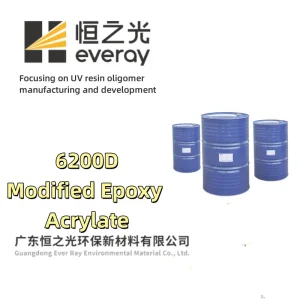
| Modified Epoxy-Acrylate Hybrid | 1.515 – 1.535 | 800 – 2,200 | 78 – 85 D | Dual-cure fast assembly, optical potting, UV-shielded coats |
A rigorous examination of stoichiometry, degassing physics, crosslinking kinetics, and UV degradation mitigation in commercial thermosetting systems.
Precision stoichiometric balance between Epoxy Equivalent Weight ($EEW$) and Amine Hydrogen Equivalent Weight ($AHEW$) is crucial. Off-stoichiometric ratios induce unreacted amine blushes, lowering Tg (Glass Transition Temperature) below $65^\circ\text{C}$ and causing tacky surfaces or optical haze.
Micro-bubble entrapment reduces mechanical tensile strength and optical transmittance. Formulations integrate silicone-free polyacrylate deaerators and fluorocarbon levelling agents, reducing surface tension to $22-26\text{ mN/m}$, allowing rapid self-degassing in ambient or light vacuum conditions.
By pairing fast-reacting Isophorone Diamine (IPDA) with long-chain Polyetheramines (Jeffamine D-230/D-400 series), formulators achieve a stepped crosslinking profile. This extends pot life up to 8 hours while maintaining full 48-hour cure hardness without exothermic yellowing.
Amine blushing occurs when unreacted primary amines react with atmospheric carbon dioxide ($CO_2$) and moisture to form carbamate salts. B2B casting suppliers eliminate this defect by pre-reacting hardeners into amine adducts and enforcing controlled humidity blending environments ($RH < 55\%$) during factory drum packaging.
Strategic chemical synthesis trajectories transforming industrial clear casting resins over the next decade.
Replacing 20-40% of petroleum-derived DGEBA with epoxidized plant oils (ENSO/EGLO) while preserving mechanical toughness and $Tg > 75^\circ\text{C}$.
Elimination of SVHC (Substances of Very High Concern) amine compounds in compliance with strict EU REACH Annex XVII mandates.
Instant photo-initiated surface gelation within 5 seconds under 365nm LED, followed by complete dark ambient thermal post-curing.
Dynamic reversible covalent bonds (Diels-Alder networks) allowing surface micro-scratches to self-repair under mild thermal stimulus ($60^\circ\text{C}$).
Explore our wholesale catalog of high-adhesion acrylates, hyperbranched UV resins, and specialized coatings for industrial packaging, electronics, and automotive substrates.
Evaluating vendor quality systems, factory batch consistency, and global logistics infrastructure for high-volume clear resin procurement.
Leading ISO 9001 certified chemical manufacturing plants conduct Gel Permeation Chromatography (GPC) to verify molecular weight distribution ($M_w/M_n$), Gas Chromatography-Mass Spectrometry (GC-MS) for trace VOC detection, and rotational viscometry for strict viscosity tolerance ($\pm 50\text{ mPa·s}$).
To prevent moisture absorption and premature micro-gelation during ocean transit, liquid clear epoxy resins and polyamine hardeners are drummed under high-purity dry nitrogen purge ($N_2 > 99.99\%$) into steel drums, IBC totes (1,000kg), or temperature-regulated Flexitanks.
Full regulatory documentation including Safety Data Sheets (SDS) adhering to GHS Revision 8, REACH registration certificates, RoHS 3.0 heavy metal screening, and FDA 21 CFR 175.300 food-contact compliance for protective topcoats.
Bridging direct factory chemical synthesis with field-level technical consulting for OEM manufacturing clients worldwide.
Factory engineers adjust reactive diluent ratios to tailor resin viscosity anywhere between $300\text{ mPa·s}$ (ultra-fluid injection casting) and $25,000\text{ mPa·s}$ (high-thixotropy doming resins).
Customization of aromatic-to-aliphatic monomer ratios to achieve exact refractive index matching ($n_D 1.48 - 1.58$) for specialized optical assemblies and clear LED encapsulation lenses.
Our application laboratories provide full compatibility evaluation on customer-supplied substrates (hardwoods, carbon fiber weaves, glass slides, PMMA) with complete thermal shock and cycle testing (ISO 16750-4).
Technical guidance and commercial purchasing insights for prospective enterprise clients and formulation engineers.
Partner directly with leading Chinese thermosetting resin chemical factories for direct pricing, custom formulation support, and reliable bulk global logistics.
Contact OEM Chemical Sales Engineering