Direct supply from Guangdong Ever Ray Environmental Material Co., Ltd. Optimized for DLP, SLA, UV Coatings, and Specialty Industrial Applications.
Buy Low heat release 72583 polyurethane UV resin for nail extension glue and 3C coating Supplier, Product
View Product Details
Buy 56031 Low Viscosity High Reactivity Polyester Acrylate Resin for UV Gravure Varnish, Flexo Ink & Snow Effect Coatings Factory, Products
View Product Details
Wholesale Low Shrinkage High Flexibility UV Curing Polyurethane Acrylate Resin for Nail Gel, Leather and Wood Manufacturer, Products
View Product Details
Buy Low viscosity 6300 modified epoxy acrylate UV resin for UV paper varnish Manufacturers, Supplier
View Product Details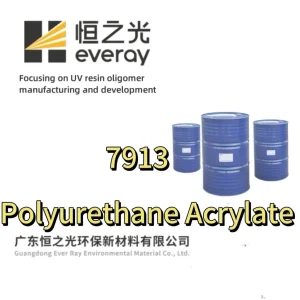
Wholesale 7913 High Reactivity Anti-fouling & Abrasion Resistant Polyurethane Acrylate UV Resin Factories, Product
View Product Details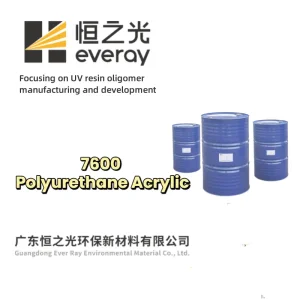
High-Quality Multifunctional 7600 polyurethane acrylate oligomer for UV coatings and inks Factory, Factories
View Product Details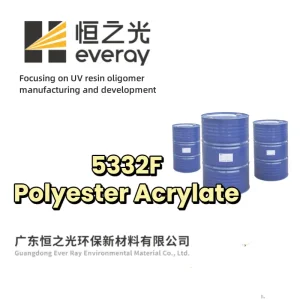
High-Quality Polyester Acrylate 5332F – The Premium Choice for Offset Inks Manufacturers, Supplier
View Product Details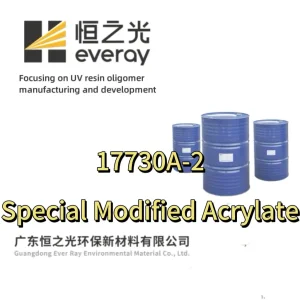
Wholesale 17730A-2 Special Modified Acrylate Resin High Water Resistance & Leveling Anti-Yellowing for Glass UV Coating & Ink Manufacturer, Products
View Product DetailsFrom Rapid Prototyping to High-Volume Precision Production: Why Photopolymer Chemistry Is the Core Bottleneck.
Digital Light Processing (DLP) additive manufacturing has transcended its historical designation as a purely rapid-prototyping modality. Today, it stands as a cornerstone technology for direct, high-throughput manufacturing across sectors ranging from digital dentistry and microfluidics to advanced aerospace componentry and consumer electronics. Unlike Stereolithography (SLA), which uses a point-focused laser beam to vector-scan across a vat of liquid polymer, DLP projects an entire 2D pixelated image frame (using a Digital Micromirror Device, or DMD chip) onto the photopolymer layer simultaneously. This fundamental difference enables ultra-fast layer cycle times, uniform optical resolution down to sub-20-micron pixel pitches, and unmatched surface finish quality.
However, the rapid industrial adoption of DLP 3D printing hardware has exposed a significant gap: conventional off-the-shelf resins frequently fail to meet the harsh mechanical, thermal, and chemical endurance requirements of end-use industrial applications. Standard photopolymer formulations exhibit issues such as high volumetric shrinkage, brittle fracture mechanics, thermal deformation under low heat deflection temperatures (HDT), and severe oxygen inhibition at pixel margins. For industrial procurement teams and chemical formulators, sourcing from a specialized Wholesale DLP Resin Supplier capable of custom monomer/oligomer modification is essential for bridging this performance bridge.
Industrial DLP engines require photopolymer resins with carefully controlled light attenuation parameters ($D_p$ and $E_c$). Tailored photo-absorber blends prevent X/Y light bleeding, preserving microscopic channel geometry in microfluidic chips and crisp margins in dental dies.
To maximize factory throughput, DLP resins must reach conversion thresholds within 0.8 to 2.5 seconds per 50-micron layer exposure under 385nm or 405nm UV-LED engines, without inducing excessive exothermic stress or thermal distortion.
From elastomeric shore 40A bellows to ultra-rigid glass-reinforced structures with tensile moduli exceeding 3.5 GPa, photopolymer formulations must match the engineering metrics of injection-molded ABS, Polycarbonate, and Polypropylene.
Demystifying the Resin Formulation Matrix: Acrylates, Polyurethanes, and Epoxy Blends for Target Engineering Metrics.
The core performance of any DLP resin is governed by the underlying molecular architecture of its oligomers and reactive diluents. At Guangdong Ever Ray Environmental Material Co., Ltd., our synthetic chemists engineer custom resin backbones that precisely manage crosslink density, glass transition temperature ($T_g$), and kinetic conversion rates during UV polymerization.
Commercial DLP formulations generally rely on three foundational oligomer chemistries, often hybridised to achieve synergistic physical attributes:
| Oligomer Class | Key Molecular Attributes | Primary Mechanical Advantages | Target Application Domains |
|---|---|---|---|
| Aliphatic Urethane Acrylate (Aliphatic PUA) | Isocyanate backbone free of aromatic rings; tailored hydrogen bonding. | Exceptional non-yellowing, weatherability, high elongation, elastic memory, high impact resistance. | 3C device housings, flexible dental aligners, outdoor enclosures, clear optical prototypes. |
| Aromatic Urethane Acrylate (Aromatic PUA) | TDI/MDI aromatic structure with compact acrylic functional groups. | High tensile strength, rapid cure kinetics, superior abrasion resistance, cost efficiency. | Industrial tooling, rigid automotive brackets, structural snap-fits, floor coatings. |
| Modified Epoxy Acrylate | Bisphenol-A or novolac epoxy backbone functionalized with acrylic acid. | Ultra-high modulus, extreme surface hardness (up to 4H pencil), low cost, chemical inertness. | High-temperature tooling, chemical-resistant fluidic valves, printed circuit board primers. |
| Polyester Acrylate & Hyperbranched Oligomers | Multi-functional ester linkages with branched terminal acrylate units. | Low viscosity dilutive effect, rapid cure rate, reduced oxygen inhibition, superior pigment wetting. | DLP ceramic/metal slurry binders, high-pigment colored resins, overprint varnishes. |
To surpass the intrinsic mechanical boundaries of traditional single-stage radical UV-curing, EVER RAY’s R&D department is actively pioneering several critical photopolymer technological pathways:
By pairing a fast UV DLP printing step (forming a green-state geometry) with a secondary thermal baking step, latent amine or epoxy chemistries are activated. This secondary network formation increases Izod impact strength from 25 J/m to over 80 J/m and boosts Heat Deflection Temperature (HDT) beyond 180°C.
Standard acrylate polymerization results in 5% to 8% volumetric shrinkage due to Van der Waals forces converting to covalent bonds. Incorporating expandable spiro-orthoester (SOE) monomers and hyperbranched structures drops shrinkage to <1.2%, maintaining absolute dimensional fidelity in large-format printing.
Tailored Photopolymer Resins Formulated for Rigorous Substrate and Process Standards.
High-precision DLP printing demands resins with zero toxicity, autoclave resistance, and sub-50-micron crispness. Our bio-compatible dental series is optimized for direct-printed surgical guides, nightguards, indirectly bonded trays, and high-temperature vacuum forming models.
Lost-wax investment casting via DLP requires zero ash content residual during burn-out cycles to avoid casting porosity in gold, silver, and platinum. EVER RAY's castable DLP resin series integrates nano-wax dispersants ensuring clean, carbon-free sublimation under 850°C furnace ramps.
Used extensively in mobile device prototyping, connector housings, and transparent microfluidic analytical chips. These resins must resist chemical exposure to alcohol, artificial sweat, and high-pressure fluidic flow without micro-cracking.
Unlocking Competitive Margins for Global Formulators through Backward Chemical Integration.
In the global chemical supply matrix, procurement stability and lot-to-lot consistency are as vital as physical property specifications. Operating from our state-of-the-art 40,000+ square meter production base in Dawan Industrial Park, Yunfu, Guangdong, Guangdong Ever Ray Environmental Material Co., Ltd. provides international buyers with an unmatched supply chain foundation.
The Guangdong chemical ecosystem represents the world's most densely integrated supply cluster for photoinitiators (TPO, BAPO, 184), active diluent monomers (HDDA, TMPTA, TPGDA), and raw chemical intermediates (epoxies, polyols, isocyanates). By maintaining direct, backward-integrated synthesis of core oligomers, EVER RAY eliminates multi-tier middleman markups, passing significant cost savings to global wholesale distributors and OEM partners.
Every batch of UV resin and photopolymer oligomer undergoes systematic analytical validation before containerized dispatch:
Whether you require a 200kg drum lot for specialized industrial trials or multi-container monthly shipments for established retail brands, our 10+ automated synthesis lines scale dynamically. Our in-house R&D team offers custom tinting, photo-absorber tuning, viscosity adjustments, and custom label drop-shipping under non-disclosure agreements (NDAs).
Ensuring Seamless International Logistics, Regulatory Safety, and On-Demand Technical Assistance.
Navigating global chemical export compliance requires strict adherence to international safety standards. EVER RAY ensures that all manufactured photopolymer resins and acrylate oligomers conform fully with regional chemical regulations across North America, the European Union, the Asia-Pacific region, and Latin America.
Our raw materials and finished photopolymers are free from Substances of Very High Concern (SVHC) as mandated by EU Regulation (EC) No 1907/2006 (REACH). Full registration dossiers and SDS documentation are supplied per chemical entity.
Formulated to comply with RoHS Directive 2011/65/EU. We minimize volatile organic compounds (VOCs) and low-boiling monomers, reducing odor and workplace exposure hazards in factory environments.
All liquid photopolymers are packaged in UV-opaque, UN-certified high-density polyethylene (HDPE) drums or steel pails, tested for air freight and ocean container shipment safety with complete MSDS and COA certificates.
Selected High-Performance Formulations for Flexo Inks, Coatings, Wood, Electronics Potting, and Precision DLP Applications.
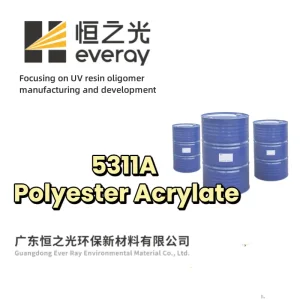
Buy Polyester Acrylate 5311A – A High-Efficiency and Durable UV Resin Choice Supplier, Factories
View Product Details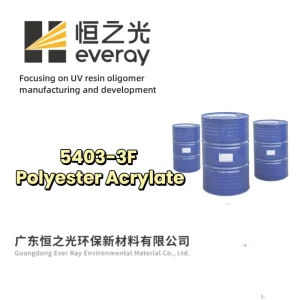
Wholesale 5403-3F Polyester Acrylate, which can achieve the best water-ink balance in UV ink Factory, Products
View Product Details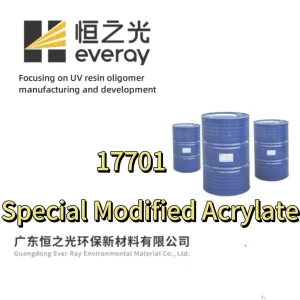
Buy 17701 Low Shrinkage Modified Acrylate Oligomer - Resin for Offset and Film Inks Factories, Product
View Product Details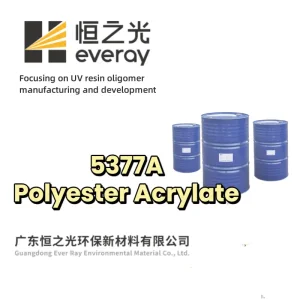
Buy Polyester Acrylate 5377A – The Ideal Choice for Flexographic UV Inks Manufacturer, Factories
View Product Details
Wholesale Polyester Acrylate 5502B–Fast Reactivity, High Hardness, Low Odor, and Excellent Heat Resistance Suppliers, Product
View Product Details
Wholesale Durable UV furniture coating: 7200-1 Aliphatic polyurethane acrylate UV Resin Manufacturers, Factories
View Product Details
Buy Bisphenol A Epoxy Acrylate Resin 9104: A Core Resin for High-Performance UV Coatings Manufacturers, Supplier
View Product Details
Buy 73008 Low-Shrinkage Polyurethane Acrylate Resin for Electronic Potting & Metal Coating | High Temp Anti-Yellowing UV Oligomer Manufacturers, Factory
View Product DetailsIn-Depth Technical and Commercial Answers for Chemical Procurement Managers and R&D Formulators.
DLP (Digital Light Processing) engines utilize a projector based on a Texas Instruments DMD micro-mirror chip, projecting high-intensity collimated light at specific wavelengths (typically 385nm or 405nm). LCD/MSLA printers use an array of UV LEDs masked by an LCD screen, which yields lower light intensity and less collimation. True DLP resins require tightly controlled light penetration depths ($D_p$) and optimized photo-absorber ratios to prevent pixel bleeding caused by the intense projected light frame, allowing much faster layer cure speeds (<1.5 seconds) compared to LCD formulations.
Volumetric shrinkage is mitigated through a multi-faceted chemical synthesis strategy: (1) Synthesizing high molecular weight urethane acrylates that lower double-bond density per unit volume; (2) Incorporating hyperbranched oligomers that reduce internal crosslinking stress; and (3) Formulating with specialized acrylic monomers featuring bulky alicyclic structures (such as IBOA or CD9054) that hinder tight molecular packing during the radical polymerization phase.
Yes. We regularly collaborate with additive manufacturing hardware manufacturers and industrial formulators under non-disclosure agreements (NDAs). We can adjust parameters including viscosity range (from 50 mPa.s for ultra-fast recoating up to 5,000 mPa.s for heavy paste resins), optical absorbance spectrum (matching 365nm, 385nm, or 405nm LED engines), mechanical toughness, and pigment dispersion stability.
For standard catalogue oligomers and base DLP resins, our MOQ starts at 200kg (one standard drum). For custom chemical synthesis or color-matched proprietary formulations, the standard pilot batch MOQ is typically 1,000kg. Standard lead times for containerized orders are 10 to 15 business days from our Yunfu production facility, with air-freight sample kits dispatched within 48 hours.
Our aliphatic urethane acrylate oligomers (such as the 7200 series) utilize pure aliphatic isocyanates (IPDI or HDI) devoid of aromatic phenyl rings. When subjected to QUV accelerated weathering testing (ASTM G154), coatings and 3D printed parts formulated with our aliphatic PUA exhibit a Delta E color shift of less than 2.0 after 1,000 hours of continuous UV-A radiation, rendering them ideal for optical lenses, clear automotive components, and topcoats.
