Explore our industrial-grade UV curable oligomers engineered for rapid curing, low shrinkage, superior chemical resistance, and extreme substrate adhesion.
A comprehensive analysis of how UV-curable acrylate oligomers and modified engineering resins are revolutionizing global manufacturing by replacing thermal thermoplastics.
Traditional engineering plastics such as Polycarbonate (PC), Acrylonitrile Butadiene Styrene (ABS), Polypropylene (PP), and Polyamides (PA) rely on high-energy thermal melting and injection molding processes. Modern manufacturing lines increasingly mandate surface modification, structural bonding, and rapid additive manufacturing using light-curable photopolymer matrices.
By synthesizing specialized Epoxy Acrylates, Aliphatic Urethane Acrylates (PUA), Polyester Acrylates, and functionalized monomers, our factory delivers liquid engineering resins that cure instantaneously under UV-LED radiation, forming highly crosslinked thermoset networks with superior mechanical strength, thermal stability, and dielectric performance.
Our R&D framework focuses on optimizing four critical molecular metrics to achieve specific industrial performance benchmarks:
| Oligomer Family | Cure Speed | Shore Hardness | Flexibility & Elongation | Yellowing Resistance | Primary Target Application |
|---|---|---|---|---|---|
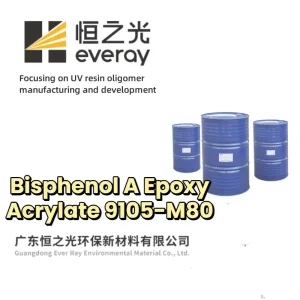
| Epoxy Acrylate (e.g., 9105M-80) | Ultra-Fast | 80D – 88D | Low (< 5%) | Moderate | Wood finish, Paper OPV, Hardcoat primers |
| Aliphatic Urethane Acrylate (e.g., 7911) | Moderate-Fast | 65D – 82D | High (15% – 120%) | Exceptional (Delta E < 1.0) | 3C Electronics, Automotive clearcoats, Nail Gel |
| Aromatic Urethane Acrylate (e.g., 7402) | Fast | 75D – 85D | Moderate (5% – 25%) | Standard | Industrial floorings, PVC edge-banding, Inks |
| Waterborne UV Resin (e.g., 70601) | Water Evap + Fast UV | 50D – 75D | Very High (>150%) | High | Eco-leather, Low-VOC wood finish, 3D printing |
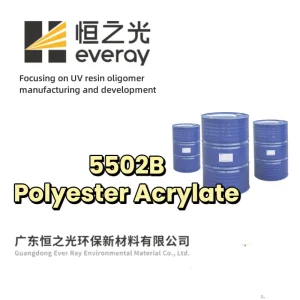
| Polyester Acrylate (e.g., 5502B) | Fast | 70D – 80D | Moderate (5% – 15%) | Standard | UV offset inks, Gravure varnishes, Excimer lasers |
Pioneering the next era of light-cured material science through green chemistry, dual-cure mechanism design, and advanced additive manufacturing oligomers.
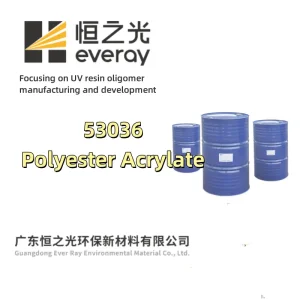
Integrating micro-phase separation kinetics into polyester acrylate systems (e.g., Grade 53036). Excimer 172nm irradiation creates instant micro-folds on the resin surface prior to full UV curing, achieving super-soft touch, zero-glare, anti-fingerprint, and scratch-resistant coatings for premium automotive interiors without matting agents.
Eliminating shadow-zone curing defects in complex 3D assembly parts. Our dual-cure polyurethane acrylate oligomers combine radical photo-polymerization with secondary moisture-curing or thermal-curing functional groups, ensuring full structural strength behind opaque automotive components and multi-layer electronic PCBs.
Transitioning from petrochemical feedstocks to bio-based polyols derived from castor oil, succinic acid, and lignin. Target: Achieving >40% bio-based carbon content in UV oligomers by 2028 while outperforming synthetic resins in mechanical toughness and thermal resistance.
Formulating ultra-low viscosity photopolymer resins with isotropic mechanical properties. Designed for industrial 3D printing of functional end-use engineering parts, optical lenses, elastomeric shoe soles, and biocompatible medical housings.
How our engineering plastic resin formulations are applied across high-precision global supply chains.
Applied in smart cockpit display covers, headlamp lens hardcoats, and EV battery module potting. Requires extreme weatherability (QUV >1000h), zero yellowing, thermal shock resistance (-40°C to 120°C), and strong adhesion to polycarbonate and optical PMMA.
Protective topcoats for smartphones, laptops, smartwatches, and TWS earbuds. Our hyperbranched urethane acrylates provide steel-wool scratch resistance (5000+ cycles), sweat resistance, and oleophobic/anti-fingerprint characteristics over metallic vacuum-plated (NCVM) plastic substrates.
High-throughput roll-coating systems demand rapid curing under low-energy UV lamps. Epoxy acrylates paired with reactive amine synergists eliminate surface tacky layers caused by oxygen inhibition, delivering anti-abrasion floorings and luxury vinyl tiles (LVT).
Formulated for food-contact packaging, cosmetic containers, and paper OPVs. Low-odor, low-migration polyester acrylates and modified epoxy acrylates deliver ultra-high optical clarity, high gloss (>95 GU), and rapid flexographic or gravure printability.
Low-extractable, non-cytotoxic light-curable resins for needle bonding, catheter coatings, and optical fiber cladding. Engineered for rapid UV curing with biocompatibility verification pathways.
Replacing toxic NMP/solvent-based polyurethane dispersions with zero-VOC waterborne UV resin emulsions (e.g., Grade 70251). Provides soft touch, flame retardance, high flex fatigue resistance (>100,000 flexes), and superior grain retention for automotive leather.
Direct factory supply from Guangdong chemical innovation hubs—offering cost leadership, strategic raw material integration, and reliable global distribution.
Operating a massive 40,000+ m² modern production facility in Yunfu, Guangdong, with sales headquarters in Jiangmen, Guangdong Ever Ray Environmental Material Co., Ltd. eliminates middleman price inflations while assuring complete batch traceability.
Located within China’s major petrochemical corridor, securing stable, direct bulk pipelines for Acrylic Acid, Isocyanates (IPDI/TDI/HDI), Epoxides, and Polyols at preferred baseline costs.
DCS-controlled reactor vessels maintain thermal gradients within ±0.5°C, ensuring identical molecular weight distribution, viscosity, acid value, and color index across every multi-ton batch.
From 200kg pilot drums to full 20-ton ISO tank container shipments, our production lines adapt seamlessly to client demand spikes with lead times under 7 business days.
Navigating environmental regulations, solvent substitution mandates, and regional manufacturing compliance standards.
Global manufacturers in the EU and North America are under aggressive regulatory pressure to reduce Scope 1 and Scope 2 emissions. Replacing traditional thermal curing lines (which consume massive natural gas for 150°C ovens) with UV-LED curing chambers reduces energy consumption by up to 75% and cuts carbon footprint exponentially.
Strict volatile organic compound (VOC) limits set by the US EPA, EU REACH, and China GB38508-2020 make solvent-borne coatings commercially unviable. 100% solid UV oligomers and waterborne UV resins emit zero organic solvents during cure, providing safer factory environments and simplified environmental permitting.
Every resin batch shipped from EVER RAY is backed by comprehensive regulatory documentation, including EU REACH registration/compliance, RoHS 3.0, WEEE, TSCA, and PFAS-free chemistry declarations, ensuring seamless customs clearance across European, American, and Asian sea ports.
We do not merely supply raw materials—we partner with your chemical formulation engineers to solve complex application challenges.
Adjusting resin viscosity using specific reactive diluent blends to fit your application method—whether spray, roller, curtain coating, flexo, or screen printing.
Modifying backbone polarity and acid value to achieve 5B lattice cross-hatch adhesion on untreated PP, PET, PMMA, Aluminum, or glass.
Providing detailed Technical Data Sheets (TDS), Safety Data Sheets (SDS - 16 sections), Certificates of Analysis (COA), and starting point formulations.
Rapid international express dispatch for 1kg – 5kg test samples with expert phone/online guidance from our senior application engineers.
In-depth technical and commercial insights answered by our chemical engineering team.
Discover additional high-reactivity oligomers, waterborne UV dispersions, excimer-compatible polyester acrylates, and specialty diluents.