High-performance reactive oligomers engineered for rapid radiation curing, superior scratch resistance, and robust crosslinking across industrial substrates.
An expert overview of how modified epoxy acrylates, polyurethane acrylates (PUA), and photopolymer matrixes are re-shaping global manufacturing productivity.
The global commercial landscape for wholesale Epoxy Empourium manufacturers and synthetic factories has experienced a seismic technological shift. Driven by stringent global VOC (Volatile Organic Compound) limits, carbon neutral industrial targets, and the relentless demand for instantaneous line-curing speeds, photopolymer chemistry has evolved from a niche specialty into the primary coating, ink, and adhesive backbone for modern manufacturing.
At the center of this revolution are modified bisphenol-A epoxy acrylates, aliphatic urethane acrylates, and hyperbranched oligomers. Modern high-volume manufacturing facilities—spanning automotive assemblies, 3C consumer electronics (smartphones, laptops, wearables), flexible food packaging, and industrial parquet wood flooring—require liquid polymer precursors that deliver uncompromising scratch resistance, rapid radical polymerization under mercury or LED lamps, and absolute batch-to-batch chemical consistency.
Global formulators require direct access to synthesized raw materials. By controlling the esterification of epoxides with acrylic acid, direct manufacturers reduce supply chain latency and buffer against fluctuating raw chemical costs.
Transitioning from thermal-cured solvent-borne coatings to 100% solid content UV curable oligomers cuts factory energy consumption by up to 75%, eliminating thermal drying ovens entirely.
From difunctional epoxy acrylates providing rock-hard glass transition temperatures (Tg > 60°C) to hexafunctional aliphatic urethane acrylates engineered for scratch-resistant optical lenses.
A chemical engineering evaluation designed to guide polymer formulators in selecting optimal resin backbones based on cure kinetics, film flexibility, and substrate adhesion mechanisms.
| Chemical Oligomer Class | Cure Velocity (m/min) | Pencil Hardness | Elongation at Break (%) | Yellowing Resistance | Primary Industrial Application |
|---|---|---|---|---|---|
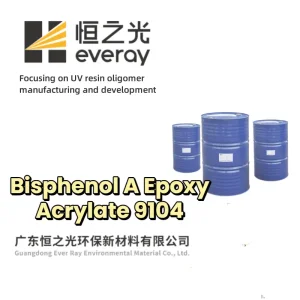
| Standard Bisphenol A Epoxy Acrylate (e.g., Grade 9104 / 9105A-80) | Ultra-Fast (>35 m/min) | 3H – 5H | 1% – 3% | Moderate (Interior Use) | Wood sealers, paper OPV varnishes, rigid plastic coatings, PCB etch resists. |
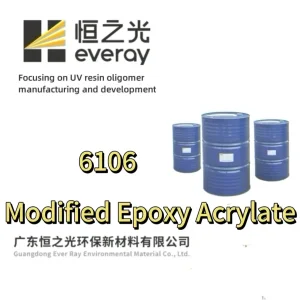
| Modified Epoxy Acrylate (e.g., Grade 6805A-1 / 6106) | Fast (25–30 m/min) | 2H – 4H | 5% – 12% | Good (Low Yellowing) | Flexible UV packaging inks, screen printing inks, high-adhesion metal primers. |
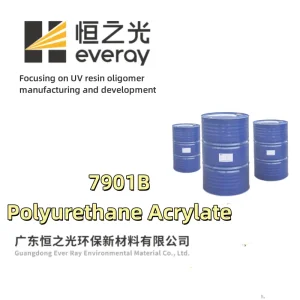
| Aliphatic Polyurethane Acrylate (e.g., Grade 7600 / 72923) | Moderate to Fast | H – 3H | 15% – 120% | Excellent (QUV Resistant) | 3C electronics topcoats, automotive interior trims, UV peelable adhesives, nail gel polishes. |
| Aromatic Polyurethane Acrylate (e.g., Grade 7113A) | Fast | 2H – 4H | 5% – 25% | Fair | Vacuum electroplating base/top coats, resilient floor lacquers, industrial adhesives. |
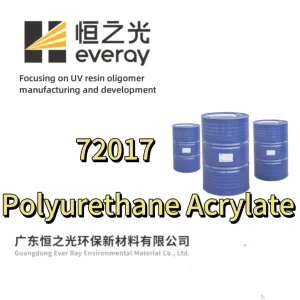
| Photo-Thermal Dual-Curing Oligomer (e.g., Grade 72017) | Controllable / Dual Stage | 2H – 4H | 10% – 45% | Very Good | 3D printing photopolymers (SLA/DLP), shadowed electronic encapsulation, optical bonding. |
A persistent challenge in thin-film UV curing is atmospheric oxygen inhibition, where free radicals generated by photoinitiators are scavenged by ambient oxygen to form unreactive peroxy radicals. Wholesale Epoxy Empourium manufacturers mitigate this by synthesizing amino-modified acrylate oligomers or integrating active amine synergists into the resin backbone. The tertiary amine structure donates a hydrogen atom to peroxy radicals, generating a new amine radical capable of initiating vinyl polymerization, ensuring tack-free surface curing even under low UV dose regimes.
Tailored photopolymer solutions formulated for specific manufacturing processes, substrates, and physical performance thresholds.
Substrates: Polycarbonate (PC), ABS, PMMA, Aluminum alloys.
Performance Matrix: High gloss, scratch resistance (>3H steel wool testing), chemical resistance to sweat/cosmetics, and superior intercoat adhesion with UV vacuum electroplating layers (utilizing specialized oligomers like Grade 7620 & 7113A).
Substrates: Solid timber, engineered wood, SPC/LVT vinyl flooring.
Performance Matrix: Fast sanding sealers and high-hardness topcoats. Epoxy acrylate resins (such as Grade 6100D-85 & 9105A-80) deliver immediate stackability on high-speed roller lines, saving factory floor space and minimizing dust contamination.
Substrates: Flexible PET/PE films, paperboard, metal cans.
Performance Matrix: Excellent pigment wetting properties, low viscosity shear response for flexo/offset presses, LED-UV compatibility (395nm wavelength absorption), and low-odor formulations complying with indirect food contact packaging guidelines.
Substrates: SLA, DLP, and LCD photopolymer 3D printers.
Performance Matrix: Low volumetric shrinkage (<1.5%), rapid gelation speed, and exceptional dimensional stability. Advanced dual-curing polyurethane acrylates (Grade 72017) allow initial photo-shaping followed by thermal post-curing for engineering-grade structural parts.
Substrates: Glass-to-glass, glass-to-metal, optical acrylics.
Performance Matrix: Crystal-clear transparency (refractive index matched >1.50), non-yellowing aliphatic polyurethanes, high peel strength, and rapid tack-free fixation under low-intensity UV light.
Substrates: Automotive interiors, high-end consumer hardware.
Performance Matrix: Incorporating modified fluorine/silicone segments (Grade 1291B-1 & Polycarbonate Acrylate 72203A) to provide permanent anti-fingerprint properties, stain repulsion, and luxurious matte soft-touch tactile feels.
How leading wholesale epoxy resin synthesis factories are evolving to meet futuristic environmental standards and advanced manufacturing integration.
Traditional medium-pressure mercury lamps consume excessive electricity and generate ozone. Wholesale chemical synthesis is transitioning toward LED-UV dedicated oligomers tuned specifically for narrow-band long-wave light source absorption, reducing thermal radiation on heat-sensitive substrates like thin plastic films.
By incorporating ionic or non-ionic hydrophilic groups into the polyurethane acrylate backbone, formulators can synthesize zero-VOC waterborne UV dispersions. This bridges the gap between traditional water-based coatings (slow drying) and 100% solid UV coatings (high viscosity), enabling easy water dilution without monomer irritation.
Strategic chemical manufacturers are incorporating bio-succinic acid, cardanol derivatives, and soybean oil epoxides into the epoxy acrylate synthesis process. Replacing petroleum-derived bisphenol-A with renewable plant-derived carbon reduces total life-cycle carbon footprint while maintaining rapid radical curing kinetics.
Hyperbranched acrylate oligomers offer ultra-high chemical functionality (>8 double bonds per molecule) combined with surprisingly low Newtonian viscosity. Emerging research incorporates dynamic reversible bonds (Diels-Alder chemistry or disulfide exchange) into UV coatings, enabling surface micro-scratches to self-heal upon ambient thermal exposure.
An established, R&D-driven China UV resin manufacturer providing chemical synthesis, customized formulation matching, and factory-direct wholesale export since 2006.
Operating out of our primary production base in Dawan Industrial Park, Yunfu, Guangdong, and sales headquarters in Jiangmen, EVER RAY enforces rigorous batch control protocols. Every lot of incoming raw material (epichlorohydrin, bisphenol A, acrylic acid, polyols, and isocyanates) undergoes GC-MS and FTIR chemical screening. Every outgoing drum of finished epoxy acrylate or polyurethane acrylate oligomer is certified for viscosity, color index (Gardner scale), acid value, density, and double-bond reactivity. Technical Data Sheets (TDS), Safety Data Sheets (SDS), and Certificates of Analysis (COA) are provided alongside every shipment to streamline your quality audit process.
Addressing essential procurement, chemical compatibility, and technical formulation queries.
Explore additional high-performance modified epoxy acrylates, photo-thermal dual curing resins, and vacuum metallization oligomers.
Request complimentary lab samples, full Technical Data Sheets (TDS), Safety Data Sheets (SDS), and direct factory wholesale quotes from our engineering team.
