
Engineered for extreme hardness, high chemical resistance, and rapid UV curing across diverse industrial coating and printing substrates.
An authoritative technical breakdown of bisphenol-A epoxy acrylate synthesis, photo-polymerization dynamics, and cross-linking density mechanisms.
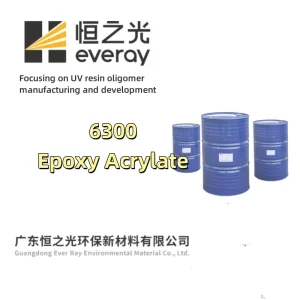
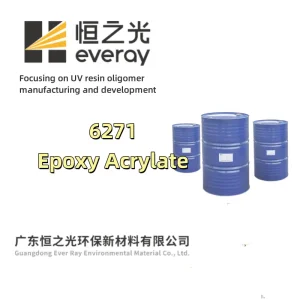
In modern industrial chemistry, Epoxy Acrylate Oligomers represent the core backbone of radiation-curable systems. Formulated primarily via the ring-opening esterification of Bisphenol-A diglycidyl ether (DGEBA) with acrylic acid, these oligomers combine the superior chemical resistance, thermal stability, and mechanical toughness inherent to epoxy backbones with the instantaneous free-radical polymerization capability of acrylate functional groups.
Terminal acrylate double bonds convert rapidly upon UV exposure ($365-395\text{ nm}$), achieving tack-free surface curing in fractions of a second under industrial medium-pressure mercury or LED lamps.
Dense aromatic backbone structures deliver exceptional barrier resistance against MEK, acid-alkali etching, alcohol wiping, moisture immersion, and industrial solvents.
Cross-linked polymer matrices consistently yield pencil hardness levels between 2H and 5H, making them indispensable for wood flooring primers, 3C electronic housings, and metal lacquers.
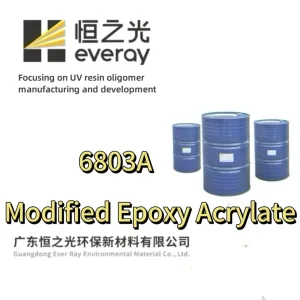
Standard standard bisphenol-A epoxy acrylate resins exhibit a high viscosity profile (typically $15,000 - 35,000\text{ mPa}\cdot\text{s}$ at $25^\circ\text{C}$), necessitating combination with reactive diluents such as TPGDA, TMPTA, or HDDA. Modified epoxy acrylates incorporate fatty acid chains, polyols, or amine adducts to mitigate polymerization shrinkage, enhance film flexibility, and lower viscosity for improved flow and leveling.
| Resin Type | Viscosity ($mPa\cdot s @ 25^\circ C$) | Functionality | Tg ($^\circ C$) | Primary Industrial Utility |
|---|---|---|---|---|
| Standard BPA Epoxy Acrylate (e.g., 9105A-80) | 18,000 – 30,000 | 2.0 | 65 – 85 | High-gloss OPV, UV Offset Inks, Wood Sanding Sealers |
| Modified Epoxy Acrylate (e.g., 6805A-1) | 3,000 – 8,000 | 2.0 – 2.5 | 45 – 60 | Flexographic Inks, Plastic Coatings, Paper Varnishes |
| Flexible Epoxy Acrylate (e.g., 6116) | 5,000 – 12,000 | 2.0 | 25 – 40 | Metal Can Coatings, Vacuum Electroplating, Flexible Plastics |
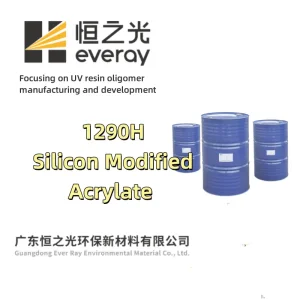
| Low-Shrinkage Flooring Oligomer (e.g., 1290H) | 8,000 – 15,000 | 2.5 – 3.0 | 50 – 70 | PVC / SPC Luxury Vinyl Tile Coatings, Wear Layers |
Leveraging Guangdong’s advanced chemical industrial clusters to deliver cost-optimized, highly consistent, and scalable UV curable raw materials globally.
Direct integration with major domestic producers of Bisphenol-A, Epichlorohydrin, and Acrylic Acid insulates our production pipeline from raw material price volatility, ensuring stable global export pricing.
Multi-ton glass-lined reactor units equipped with real-time infrared spectroscopy monitoring ensure precise control over acid values ($<1.0\text{ mg KOH/g}$) and molecular weight distribution (MWD).
Equipped for worldwide freight in 200kg steel drums, 1,000kg IBC totes, and bulk ISO tanks. Full dangerous goods (DG) compliant packaging and rapid port dispatch via Shenzhen and Guangzhou hubs.
How tier-1 coating chemical manufacturers optimize total cost of ownership (TCO) and eliminate supply risk through direct factory partnerships.
Global formulators of UV coatings, graphic inks, and industrial adhesives operate under tight margin tolerances and strict end-user service-level agreements (SLAs). Procuring wholesale epoxy resin directly from verified Chinese chemical plants offers quantifiable commercial and technical advantages:
Eliminating third-party chemical trading markups reduces raw material spend by 15% to 30%, giving chemical blenders a distinct pricing edge in tender bids.
Our R&D team fine-tunes acrylic double bond density, hydroxyl numbers, viscosity indices, and color values (Gardner $<1$) tailored to your exact application equipment.
Serving as an audited primary or secondary raw material supplier safeguards multinational operations against local supply chain bottlenecks or regional plant outages.
Meeting rigorous global chemical control legislations to ensure seamless cross-border import and environmental safety.
Our products conform to EU REACH (including SVHC monitoring), US TSCA inventory compliance, and K-REACH regulations, supported by complete GHS Safety Data Sheets (SDS).
Formulated to meet EU Directive 2015/863 (RoHS 3.0), eliminating heavy metals, phthalates, and halogenated compounds to support green chemical manufacturing initiatives.
Regional technical service engineers across North America, Europe, and Southeast Asia assist clients with on-site batch blending, troubleshooting oxygen inhibition, and line speed optimization.
Tailored chemical performance profiles matching key end-use industrial sector requirements.
Modified epoxy acrylate resins formulated for PC, ABS, and PMMA substrates deliver high scratch resistance, sweat resistance, and pass stringent thermal shock testing cycles.
High-solids UV sanding sealers utilize standard bisphenol-A oligomers to penetrate wood pores, providing outstanding grain filling, rapid mechanical sanding capability, and adhesion strength.
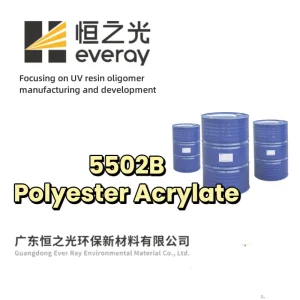
Polyester and epoxy acrylate blends provide superior pigment wetting, excellent ink-water balance on lithographic presses, and high color density without misting at high press speeds.
Specialty modified oligomers prevent thermal delamination, ensuring strong adhesion between metalized aluminum vapor layers and underlying plastic components.
Low-shrinkage epoxy oligomers (e.g., 1290H) engineered for luxury vinyl tiles provide stain resistance, non-yellowing characteristics, and extreme abrasion protection under heavy foot traffic.
Low-viscosity modified oligomers blended for SLA/DLP/LCD photopolymer resins yield dimensional accuracy, high tensile modulus, and minimal volumetric curl during layer curing.
Pioneering green energy curing chemistries, bio-based feedstocks, and advanced photopolymer technology.
Formulating epoxy acrylates optimized for narrow-spectrum UV-LED light sources requires specific photoinitiator synergists and high-reactivity oligomer designs to eliminate surface tackiness.
Integrating plant-derived epoxidized soybean oil (ESO) and renewable cardanol-based building blocks into acrylate synthesis lowers carbon footprints while preserving chemical resistance.
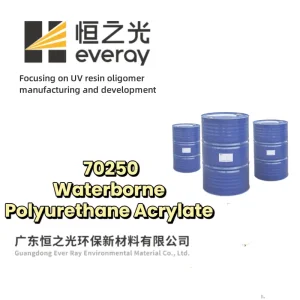
Combining zero VOC emission profiles with rapid UV curing speed, waterborne UV dispersions (WPUA) are replacing solvent-borne lacquers in premium leather, wood, and plastic finishing.
Explore our extended industrial resin series engineered for specific mechanical, optical, and adhesive demands.
In-depth technical answers addressing chemical behavior, dilution ratios, storage stability, and application engineering.