Direct factory supply of radiation-curable and industrial-grade epoxy acrylate, polyester, and polyurethane resins formulated for extreme precision.
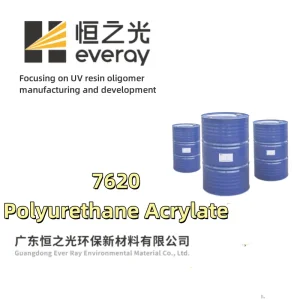
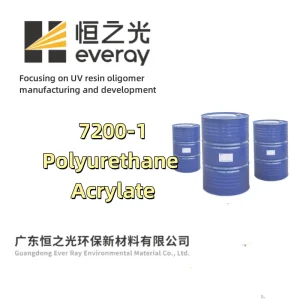
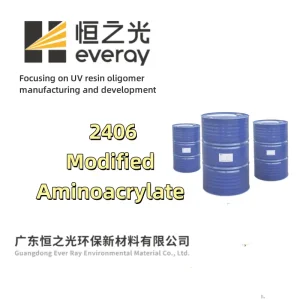
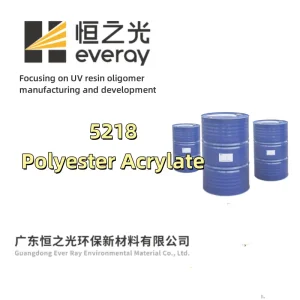
Understanding the chemical kinetics, Epoxide Equivalent Weight (EEW) balance, and photopolymerization behavior required for global industrial manufacturing.
In modern industrial polymer chemistry, epoxy resin manufacturing stands as a pillar of advanced material engineering. The synthesis of epoxy thermosets—ranging from standard Bisphenol A diglycidyl ether (BADGE) prepolymers to highly specialized modified epoxy acrylate oligomers—requires meticulous stoichiometry, precise temperature ramp profiles, and rigorous ring-opening esterification control. As global demand escalates across electronics, aerospace structural composites, high-speed graphics printing, and automotive coatings, tier-one procurement teams require wholesale manufacturing partners who combine massive chemical synthesis capacity with zero-defect quality control.
At the core of high-grade epoxy acrylate synthesis is the controlled reaction between aromatic or aliphatic epoxy backbones and acrylic acid. By converting epoxide groups into terminal acrylate functionality, manufacturers create prepolymers that exhibit rapid radical crosslinking under ultraviolet (UV) or electron beam (EB) irradiation, while retaining the outstanding mechanical toughness, chemical inertness, and substrate adhesion inherent to epoxy matrices.
Technical Insight: Optimizing Epoxide Equivalent Weight (EEW) and minimizing residual acid values (<2 mg KOH/g) are crucial for ensuring long-term shelf stability and avoiding viscosity drift during storage in international containerized freight.
How next-generation polymer chemistry is addressing decarbonization, LED-UV photon energy efficiency, and dual-cure mechanisms.
To meet stringent European Green Deal mandates and global carbon-neutrality targets, manufacturing processes are shifting toward bio-derived epoxides. By synthesizing glycidyl ethers from cardanol, epoxidized soybean oil (ESO), and bio-based succinic acid, modern plants are reducing fossil-carbon dependency by up to 45% without sacrificing crosslink density or thermal resistance ($T_g$).
Traditional mercury arc curing lamps are rapidly being replaced by energy-efficient LED-UV curing systems. Epoxy resin formulation science has evolved to optimize photoinitiator absorption profiles at 365nm and 395nm wavelengths. Hyperbranched oligomers with high acrylic functionality allow rapid surface and deep-layer curing at dramatically lower light intensities, mitigating oxygen inhibition.
In complex 3D assembly, electronics encapsulation, and shadow-area applications, standard UV light cannot penetrate fully. Future-proof resin manufacturing focuses on dual-cure chemistry: combining UV-initiated free-radical acrylic polymerization with secondary thermal or moisture-curing epoxy/isocyanate groups, guaranteeing 100% conversion across deep three-dimensional geometries.
Tailored molecular structures designed to solve structural, chemical, and operational bottlenecks across global markets.
For printed circuit board (PCB) solder masks, microelectronic glob-top sealants, and semiconductor die-attach adhesives, resin purity is non-negotiable. Wholesale synthesized epoxy acrylates undergo secondary ion-exchange purification to ensure ultra-low halogen content (<900 ppm total Cl/Br). This eliminates dielectric breakdown and prevents ionic corrosion under high temperature and humidity stress testing (HAST).
In carbon-fiber reinforced polymers (CFRP) and lightweight automotive body panels, custom epoxy matrices deliver high tensile elongation, fracture toughness, and glass transition temperatures ($T_g > 150^\circ\text{C}$). They withstand severe thermal cycling from $-40^\circ\text{C}$ to $+120^\circ\text{C}$ without micro-cracking or interfacial delamination.
Energy-curable packaging inks require low-viscosity, high-reactivity oligomers with exceptional pigment wetting capability. Modified polyester acrylates and epoxy acrylates provide optimal rheological water-ink balance in offset lithography, fast cure on non-porous plastic films (PET, BOPP), and zero solvent emission for food-contact packaging overprint varnishes (OPV).
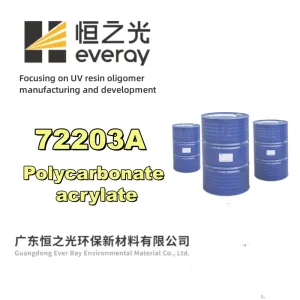
In high-gloss consumer electronics housings, cosmetic caps, and metallic trim, vacuum electroplating primer UV coatings demand ultra-high surface hardness (2H–4H pencil hardness), superior levelability, and crystal-clear transparency. Specialized polycarbonates and aliphatic polyurethane acrylates prevent yellowing under intense outdoor UV exposure.
How advanced automation, localized chemical clusters, and direct factory sourcing drive cost performance for global buyers.
Operating inside the modern Dawan Industrial Park in Guangdong, chemical synthesis lines utilize distributed control systems (DCS). Closed-loop monitoring automatically regulates exotherm spikes during acrylic acid addition, maintaining reaction temperatures within $\pm 0.5^\circ\text{C}$ to lock in precise molecular weight distribution.
Direct physical proximity to world-class petrochemical hubs (sourcing Epichlorohydrin, Bisphenol A, Acrylic Acid, and Isocyanates directly) shields international clients from global commodity volatility, assuring unbroken bulk delivery schedules year-round.
From 50kg lab trial batches to 20 metric ton industrial production reactors, intermediate scale-up protocols guarantee identical viscosity, color index (Gardner <1), and reactivity profiles when formulas transition into mass manufacturing.
Comparative analytical parameters across key commercial resin grades to assist procurement officers and chemical engineers in selecting optimal formulations.
| Resin Chemistry Grade | Viscosity (cPs @ 25°C) | Functionality | Glass Transition ($T_g$) | Primary Key Characteristics | Target Substrates |
|---|---|---|---|---|---|
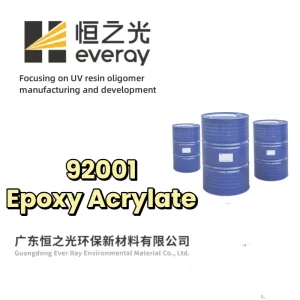
| Bisphenol A Epoxy Acrylate (e.g., 9105A) | 18,000 - 25,000 | 2.0 | +65°C | Fast cure speed, ultra-high gloss, high chemical/solvent resistance | Wood finishes, Paper OPV, Hard plastics |
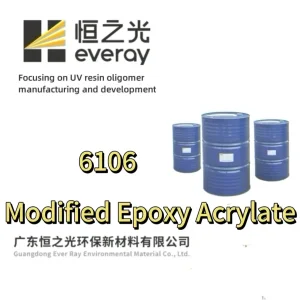
| Modified Epoxy Acrylate (e.g., 6106) | 8,000 - 15,000 | 2.2 | +45°C | Yellowing resistant, improved flexibility, reduced curing shrinkage | Plastic coatings, Vacuum electroplating |
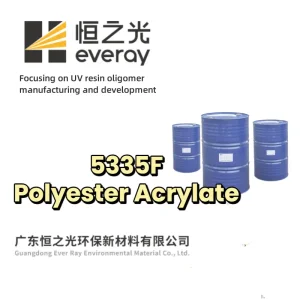
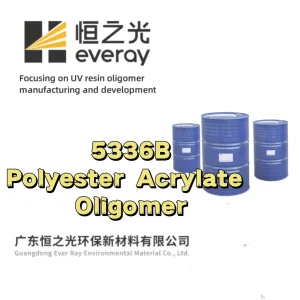
| Polyester Acrylate (e.g., 5335F) | 3,000 - 6,000 | 3.0 - 4.0 | +35°C | Superior pigment wetting, low tack, lithographic ink stability | UV offset inks, Flexo packaging inks |
| Aliphatic Polyurethane Acrylate (e.g., 7200-1) | 12,000 - 20,000 | 2.0 - 3.0 | +55°C | Non-yellowing weatherability, high impact resistance, flex-durability | 3C electronics, Outdoor films, Furniture |
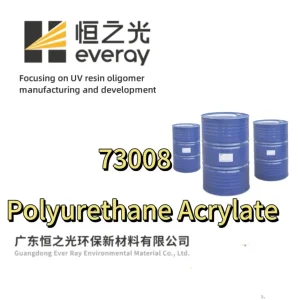
| Pure Acrylate / Low Shrinkage (e.g., 73008) | 5,000 - 10,000 | 2.0 | +20°C | Extreme adhesion, optical clarity, ultra-low volumetric shrinkage | Glass primers, Optical adhesives, Metals |
Procuring raw resin chemicals internationally requires navigating strict regulatory frameworks, hazmat export packaging protocols, and inventory shelf-life management. Direct wholesale chemical manufacturing partners mitigate these friction points by implementing standardized ISO 9001/14001 Quality Management Systems, providing UN-approved heavy-duty steel drum packaging (200kg) or IBC totes (1000kg), and integrating temperature-stable inhibitor blends (such as MEHQ) to ensure 12+ month shelf stability in ambient transit.
Ensuring seamless market entry into European, North American, and Asia-Pacific markets with total regulatory compliance.
All exported raw resin materials comply fully with EU REACH, US TSCA Inventory, UK REACH, China IECSC, and Korea K-REACH regulations. Comprehensive Safety Data Sheets (SDS) in 20+ languages formatted to GHS Revision 8 standards accompany every shipment.
Resins are systematically screened for Substance of Very High Concern (SVHC) list items, Heavy Metals (RoHS 3 directive compliance), Phthalates, Organotins, and volatile aromatic hydrocarbons (BTEX), assuring suitability for consumer goods, toys, and food-contact packaging.
Beyond raw material sales, technical teams provide localized formulation troubleshooting, custom viscosity matching, reactive diluent optimization, and UV cure speed diagnostics directly to client lab and factory teams worldwide.
Factory-direct solutions tailored for packaging varnishes, soft-touch coatings, vacuum electroplating, and electronics potting.
Expert insights on chemical properties, MOQ flexibility, custom synthesis, and international shipping protocols.
