Precision-engineered oligomers for coatings, adhesives, printing inks, and structural potting systems direct from Guangdong facility.
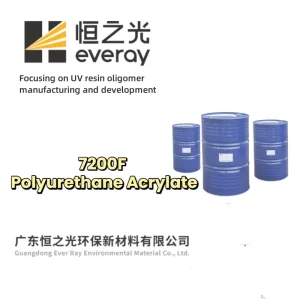
Wholesale Durable 7200F polyurethane acrylate: suitable for heat-resistant and cold-resistant UV coatings
View Product Specs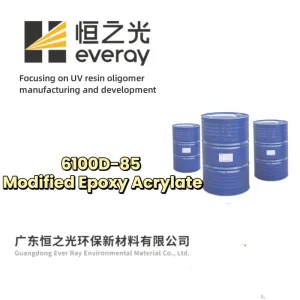
Buy High adhesion 6100D-85 epoxy acrylate for UV wood coating applications, etc. Suppliers, Factory
View Product Specs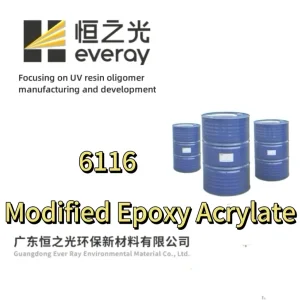
High-Quality 6116 Low Viscosity UV Curing Epoxy Oligomer, High Flexibility Acrylic Resin for Matte Wood & Ink Coatings
View Product Specs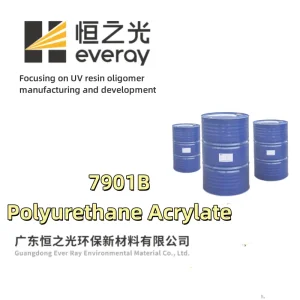
Buy 7901B UV-resin for industrial coatings Manufacturers, Factories
View Product Specs
Buy Polyester Acrylate 5319A-1–A Reliable Solution for High-Performance UV Coatings Manufacturer, Products
View Product Specs
Wholesale Anti-Yellowing Polyurethane Acrylate Oligomer-High Flexibility UV Resin for Adhesive and Nail Gel
View Product Specs
High-Quality Fast-reacting 5103 polyester acrylate UV resin, very suitable for plastic coatings Manufacturer
View Product Specs
Buy 61003A Fast Curing Tough Yellowing Resistant Modified Epoxy Acrylate Resin - UV Oligomer for Potting & Varnish
View Product SpecsA comprehensive analysis of molecular toughening, glass transition modulation, and dynamic stress dissipation in elastomeric epoxy resin matrices.
Standard bisphenol-A diglycidyl ether (DGEBA) epoxy resins feature a rigid aromatic backbone, offering superior tensile strength ($>70\text{ MPa}$) but demonstrating brittle behavior under impact ($<2.5\text{ kJ/m}^2$). Flexible epoxy resins modify this fundamental architecture by incorporating long-chain aliphatic polyether, polyester, or dimer acid segments into the prepolymer matrix. This lowers the crosslink density, shifts the glass transition temperature ($T_g$) below ambient operating conditions (down to $-40^\circ\text{C}$), and facilitates significant segment movement under mechanical load.
When subjected to extreme thermal cycling or structural fatigue, rigid epoxies develop micro-cracks due to mismatching Coefficients of Thermal Expansion (CTE) across heterogeneous substrates (such as copper-to-FR4 or aluminum-to-glass). Flexible epoxy chemistry absorbs peak strain energy through internal rubbery domains. This elastic deformation prevents interfacial delamination and micro-fracturing in critical electronics potting and structural adhesive bonds.
| Performance Parameter | Standard Unmodified Epoxy | Polyether Modified Flexible Epoxy | Polyurethane Acrylate Modified (UV/Dual) |
|---|---|---|---|
| Tensile Modulus (MPa) | 2,800 – 3,500 | 150 – 600 | 400 – 1,200 |
| Elongation at Break (%) | 1.5% – 3.5% | 45% – 160% | 25% – 90% |
| Glass Transition Temp ($T_g$) | +110°C to +150°C | -35°C to +15°C | -20°C to +45°C |
| Thermal Shock (-40°C to +125°C) | Fails (<50 cycles) | Passes (>1,500 cycles) | Passes (>1,000 cycles) |
| Viscosity @ 25°C (mPa.s) | 12,000 – 15,000 | 500 – 2,500 | 1,500 – 6,000 |
Market drivers, regional manufacturing demands, and key economic catalysts shaping global flexible epoxy consumption.
Driven by rapid expansion in Electric Vehicle (EV) powertrain assembly and aerospace avionics, North American tier-1 OEMs require high-volume wholesale flexible epoxies. The primary focus centres on flame-retardant (UL94 V-0 certified), thermal-shock-resistant potting materials for battery management systems (BMS) and power electronics modules.
Strict European Chemical Agency (ECHA) REACH restrictions and low-VOC mandates have accelerated transition away from solvent-borne systems. Formulators demand solvent-free, waterborne, or UV-curable modified flexible epoxy acrylates for heavy-duty industrial flooring, wind turbine blade edge protection, and architectural joint sealants.
As the manufacturing hub for global consumer electronics, semiconductors, and display technologies, APAC accounts for over 58% of global flexible epoxy demand. Flexible underfills, optical clear adhesives (OCA), and conformal coatings rely on low-outgassing flexible epoxy oligomers to protect wafer-level packages and micro-LED displays.
Tailored elastomeric epoxy formulations fulfilling stringent operating conditions across key technical verticals.
Flexible epoxies serve as essential thermal interface materials (TIM) and structural sealants. Used for bonding battery cells to cold plates, they accommodate micro-expansion during charge cycles without loss of adhesion or thermal transfer efficiency.
In wearable devices and foldable OLED smartphones, flexible epoxies protect delicate conductive traces. Their high bendability (withstanding $>100,000$ flexure cycles at $1.5\text{mm}$ bend radius) prevents circuit rupture under dynamic bending.
Formulated with modified epoxy acrylate chemistry, optical-grade flexible resins achieve refractive index matching ($n_D \approx 1.51$) with near-zero shrink stress, protecting airborne radar displays from thermal distortion at $-55^\circ\text{C}$ altitudes.
Civil engineering applications utilize wholesale flexible epoxy systems for concrete crack injection and dynamic expansion joint sealing. They deliver high chemical resistance against salt spray, oils, and industrial solvents while yielding $80\%$ strain capability.
Pioneering sustainable chemistry, dual-cure mechanism advancements, and self-healing polymeric networks.
Next-gen flexible epoxies merge UV radiation curing for rapid surface fixing (curing in $<2$ seconds) with secondary thermal or moisture-cure mechanisms. This solves the shadow-curing limitation in complex 3D electronic geometries while maintaining high elastic memory and vibration damping properties.
Transitioning from petroleum-derived polyols to plant-based building blocks (cardanol, modified castor oil, and lignin derivative epoxides). Modern eco-flexible epoxies achieve up to 65% bio-based carbon content without compromising glass transition performance or chemical resistance.
Incorporating Diels-Alder adducts or disulfide linkages into the flexible epoxy matrix allows the cured resin to heal structural micro-cracks under localized thermal stimulus ($80^\circ\text{C} – 100^\circ\text{C}$), extending the service life of sealed industrial assets.
Engineering hyperbranched modified epoxy oligomers to lower resin viscosity down to $<300\text{ mPa.s}$ without requiring toxic reactive diluents or volatile solvents, maximizing filler loading capacity for thermally conductive potting compounds ($>3.0\text{ W/m.K}$).
Direct factory integration, raw material security, and strict quality control standards from our Yunfu, Guangdong production base.
Operating out of a modern 40,000+ square meter industrial complex in Dawan Industrial Park, Yunfu, Guangdong, Guangdong Ever Ray Environmental Material Co., Ltd. runs 10+ automated stainless-steel reactor lines dedicated to oligomer synthesis.
Leveraging Guangdong’s complete petrochemical cluster, our facility secures high-purity epichlorohydrin, polyether polyols, and acrylic acids. Multi-stage testing via Gel Permeation Chromatography (GPC) and HPLC guarantees lot-to-lot consistency in epoxy value and molecular weight distribution.
Direct factory dispatch with complete dangerous goods packaging compliance (UN-rated steel drums, 1000L IBC tanks, and ISO tanks). Strategically positioned near Guangzhou and Shenzhen ports for rapid international shipment dispatch.
Global environmental standard conformity backed by experienced formulation engineering support.
Every wholesale flexible epoxy grade supplied by Ever Ray complies with major international environmental and safety standards:
We don't just supply raw materials; we partner with formulation teams globally:
In-depth answers to critical chemical, application, and purchasing inquiries from senior engineers and procurement managers.
Explore our specialized range of 3D printing resins, high-impact polymers, flexo ink oligomers, and active diluents.
Buy 71209A-1 ABS-Like Engineering Resin: High Strength Meets High Impact Resistance Manufacturers, Suppliers
View Product Specs
Buy A Versatile Solution for High-Efficiency Curing Applications: Epoxy Acrylate 92001 Manufacturers, Product
View Product Specs
Buy 5336B High-Performance Polyester Acrylate Resin | Ultra-Fast Cure for UV Offset & Flexo Inks Suppliers
View Product Specs
High-Quality 7411B UV Resin: Ideal low viscosity, high solids solution for matte UV applications Supplier
View Product Specs
Buy 72017 Photo-Thermal Dual-Curing Polyurethane Acrylate Resin | Low Shrinkage & High Toughness Oligomer for 3D Printing
View Product Specs
Buy 6203F UV resin for UV metal coating and printing ink Suppliers, Products
View Product Specs
Wholesale 5320 polyester acrylate: optimal ink wettability and high gloss Manufacturer, Factories
View Product Specs
Buy 5338 UV resin as oligomer and active diluent, reasonable Manufacturer, Products
View Product Specs