Engineered for superior bending resistance, low volumetric shrinkage, and exceptional intercoat adhesion on plastics, glass, metals, and flexible films.
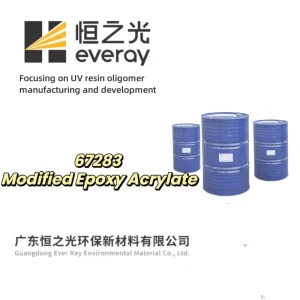
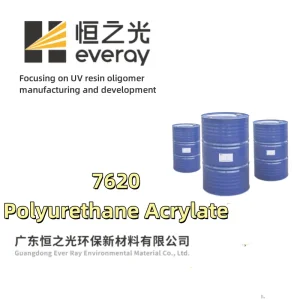
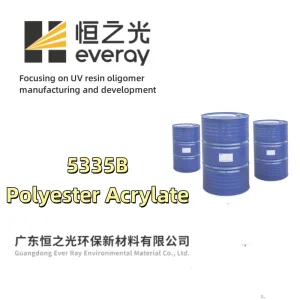
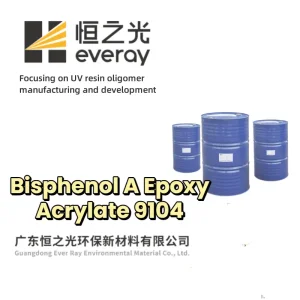
Guangdong Ever Ray Environmental Material Co., Ltd. - Empowering Global Formulators Since 2006
At Guangdong Ever Ray Environmental Material Co., Ltd., we specialize in solving the fundamental chemical dilemma of ultraviolet curing systems: achieving high flexibility and tensile elongation without compromising surface hardness and cure speed. By optimizing polymer backbones through aliphatic polyether, polyester, and modified epoxy segments, our R&D team customizes glass transition temperatures ($T_g$) ranging from -40°C to +60°C.
Our synthesis laboratory utilizes state-of-the-art analytical equipment including Gel Permeation Chromatography (GPC), Fourier Transform Infrared Spectroscopy (FTIR), and Brookfield Viscometers to ensure narrow molecular weight distribution ($M_w/M_n$) and zero batch-to-batch property drift.
Headquartered in Jiangmen City with an expansive 40,000+ square meter production base situated in Dawan Industrial Park, Yunfu City, Guangdong Province, Ever Ray houses over 10 automated synthesis lines. Our facility delivers a comprehensive portfolio of Epoxy Acrylate Oligomers, Aliphatic & Aromatic Polyurethane Acrylates, Polyester Acrylates, Waterborne UV Resins, and Active Amine Synergists.
Every batch undergoes rigorous quality assurance protocol, verifying parameters such as monomer conversion rate, residual acrylic acid content (< 0.1%), color scale (Gardner ≤ 1), and viscosity tolerance (within ±5% of target standard).
Understanding the Shift Toward High-Performance Elastomers, LED-UV Compatibility, and Zero-VOC Systems
Global manufacturing lines are rapidly transitioning from traditional medium-pressure mercury lamps to energy-efficient LED-UV curing light sources. Modern flexible UV resins must be tailored for long-wave UV-A absorption peak matching. Formulations incorporating modified hyperbranched polyols and specialty photoinitiator synergists overcome depth-cure bottlenecks in thick flexible films, mitigating surface tackiness caused by atmospheric oxygen inhibition.
Demand for optical clear adhesives (OCA) and protective coatings in 3C consumer electronics (foldable smartphones, flexible OLED displays) requires non-yellowing oligomers. By replacing aromatic diisocyanates (TDI/MDI) with hydrogenated aliphatic structures (IPDI/HDI) and incorporating sterically hindered amine light stabilizers (HALS), our aliphatic urethane acrylates demonstrate $\Delta E < 1.0$ after 1,000 hours of accelerated QUV weathering tests.
Strict global chemical regulations (EU REACH, TSCA, China GB/T standards) are phasing out volatile low-molecular-weight reactive diluents (such as TPGDA or HDDA) due to skin irritation and high vapor pressure. The industry trend focuses on high-functionality, low-viscosity polyester acrylates and hyperbranched oligomers that achieve workable application viscosity without excess reactive monomer dilution.
| Oligomer Chemical Class | Elongation at Break (%) | Tensile Strength (MPa) | Glass Transition ($T_g$, °C) | Cure Speed (m/min) | Yellowing Resistance | Primary Application Area |
|---|---|---|---|---|---|---|
| Aliphatic Urethane Acrylate (2-Func) | 150% - 350% | 12 - 25 | -35 to +10 | Moderate (15-25) | Excellent (Grade 5) | Flexible Films, Optical Coatings, 3C Electronics |
| Aliphatic Urethane Acrylate (6-Func) | 15% - 40% | 45 - 75 | +45 to +85 | Very Fast (35-60) | Excellent (Grade 5) | Scratch-Resistant Hardcoats, Anti-Glare Displays |
| Modified Epoxy Acrylate (Flexible) | 40% - 110% | 25 - 45 | +10 to +35 | Fast (25-45) | Good (Grade 3-4) | Vacuum Electroplating, Wood Finish, Metal Primers |
| Polyester Acrylate Oligomer | 30% - 90% | 15 - 35 | -10 to +25 | Very Fast (40-70) | Moderate (Grade 3) | UV Printing Inks, Flexo Inks, Overprint Varnishes |
| Pure Acrylate / Specialty Oligomers | 80% - 220% | 10 - 30 | -20 to +15 | Moderate (15-30) | Good (Grade 4) | UV Structural Adhesives, Pressure Sensitive Tapes |
How Ever Ray Eliminates Supply Chain Risks, Quality Variances, and Technical Bottlenecks for Global Formulators
High crosslink density UV oligomers suffer from high volumetric shrinkage (up to 8-12%), causing thin flexible substrates like PET, PC, and PVC to curl or delaminate upon exposure to UV light.
Ever Ray Solution: We engineer flexible UV resins incorporating long-chain polyether and aliphatic polyester flexible bridges. By controlling double bond density (acryloxy value) and molecular flexibility, our resins drop cure shrinkage below 2.5%, preventing substrate deformation while ensuring 5B cross-hatch tape adhesion.
Procurement managers frequently experience batch-to-batch viscosity fluctuation from low-cost vendors, forcing coating line operators to re-adjust formula dilutions and risking solvent imbalance.
Ever Ray Solution: Utilizing computerized DCS automated reactor system control, polymerization temperatures are regulated within $\pm 0.5^\circ\text{C}$. Every lot shipped is backed by a Certificate of Analysis (COA) specifying viscosity control within strict narrow windows (e.g., $15,000 \pm 1,000\text{ mPa.s}$ at $25^\circ\text{C}$).
Flexible UV coatings applied on automotive interiors or outdoor electronics crack under extreme thermal shock or turn yellow under UV sun exposure.
Ever Ray Solution: Grades such as our 7200F Polyurethane Acrylate are engineered specifically to withstand repeated thermal cycling tests ($-40^\circ\text{C}$ to $+85^\circ\text{C}$) without micro-cracking or loss of elasticity, maintaining coating integrity across rigorous environmental stress tests.
International buyers face chemical shipping delays, hazardous material documentation issues, and inconsistent stock availability.
Ever Ray Solution: We maintain steady raw material safety reserves and maintain dangerous goods shipping qualifications. With standard export packaging (200kg steel drums, 1000kg IBC totes, ISO tanks), export orders ship reliably within 7 to 14 business days worldwide.
Tailored Chemical Formulations for High-Growth Manufacturing Sectors
In smartphone housings, tablet covers, and wearable device bands, coatings must absorb mechanical impact without cracking. Ever Ray's flexible urethane acrylates provide soft-touch feel, scratch resistance (pencil hardness 2H-3H when blended), and bendability over curved glass and polycarbonate bezels.
Fast-line offset, flexographic, and gravure inks on aluminum foil, BOPP, and polyethylene films demand rapid UV response alongside high stretchability. Our low-viscosity polyester acrylates (5403-3F series) optimize pigment wetting and deliver high color yield without ink film flaking during bag forming and die-cutting.
Automotive trim parts, membrane switches, and flexible printed circuits (FPC) operate in demanding temperature windows. Ever Ray resin formulations provide exceptional chemical resistance to gasoline, ethanol, engine oils, and cleaning fluids, maintaining elastomeric compliance from $-40^\circ\text{C}$ to $+120^\circ\text{C}$.
UV primers and topcoats for plastic PVD metalizing (gold, chrome, silver vacuum deposition) require dense adhesion without stress cracking. Our modified epoxy acrylate resin solutions (7620 & 1730) bridge plastic substrate expansion and metallic layer rigidity, ensuring mirror gloss retention.
For SLA/DLP/LCD desktop and industrial 3D printing, rigid resins produce brittle parts. Ever Ray supplies high-toughness, flexible acrylate oligomers that allow formulators to craft rubber-like, high-impact, elastomeric 3D printing filaments and resins with rapid layer exposure cure speeds.
Inorganic surfaces possess high surface energy and moisture sensitivity. Specialty resins like 17730A-2 combine silane-modified acrylate functionality with anti-yellowing attributes, passing boiling water immersion tests (>2 hours) with zero adhesion loss on tempered glass.
Ensuring Seamless International Compliance, Environmental Integrity, and On-Site Application Engineering
Navigating complex international environmental law is essential for global chemical procurement. Ever Ray manufactures all flexible UV resins in accordance with strict international environmental regulations:
We provide more than just raw material supply; we partner directly with your R&D lab to optimize end-user formulations:
Pioneering Next-Generation Bio-Based Flexible Acrylates and Self-Healing Elastomeric Polymers
Replacing petroleum-based polyols with bio-based cardanol, soybean oil, and succinic acid derivatives. Our current bio-content flexible UV oligomers reach up to 45% renewable carbon content without sacrificing UV reaction kinetics or film toughness.
Combining UV radical polymerisation with secondary moisture-cure (silane/isocyanate) or thermal shadow-cure functionality. Designed for complex 3D electronic assemblies where UV light cannot penetrate shadowed geometric crevices.
Integrating dynamic hydrogen bonding and reversible Diels-Alder chemical networks into polyurethane acrylate backbones. Micro-scratches on flexible display coatings auto-repair at room temperature within 60 minutes.
Expert Answers to Critical Formulation and Procurement Questions
Explore Our Specialized Formulations for Vacuum Metalizing, Offset Inks, Wood Coatings, and Structural Adhesives
Looking for a reliable factory-direct supplier to engineer custom flexible oligomers, reduce batch variance, or request bulk quotation? Our expert chemical application team is ready to assist your lab.
Request Technical Datasheets & Free Samples