Explore our technical-grade high gloss epoxy resins, fast-curing modified acrylates, and specialty oligomers engineered for demanding industrial coatings, UV overprint varnishes, and precision electronics.
In modern surface chemistry and radiation-curing technology, high gloss epoxy resins—specifically Bisphenol-A based epoxy acrylates and chemically modified epoxy oligomers—represent the pinnacle of hardness, chemical resistance, and optical brilliance. As global manufacturing transitions toward ultra-low VOC (Volatile Organic Compound) standards and energy-efficient LED-UV curing protocols, industrial procurement teams must understand the fundamental polymer synthesis, structural characteristics, and performance parameters that separate standard commercial epoxies from advanced high-gloss modified acrylate oligomers.
The primary challenge faced by coating formulators and B2B buyers is balancing extreme hardness with flexible adhesion, low shrinkage, and yellowing resistance. Raw Bisphenol-A Diglycidyl Ether (BADGE) diacrylates provide unmatched tensile strength and scratch resistance but are inherently brittle and prone to photo-yellowing upon prolonged outdoor UV exposure due to aromatic ring oxidation. Advanced chemical modification—incorporating aliphatic polyurethane segments, polyester flexibilizers, or hyperbranched acrylate structures—resolves these limitations, delivering tailored resins designed for specific industrial substrates including consumer electronics plastics, hardwood flooring, metallic foils, and packaging paperboard.
To optimize procurement decisions and formulation design, the table below provides a comprehensive technical comparison between unmodified Bisphenol-A epoxy acrylate, modified high-gloss epoxy acrylate, aliphatic polyurethane acrylate (PUA), and polyester acrylate oligomers.
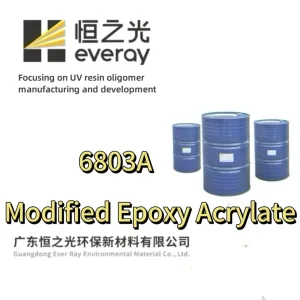
| Performance Criterion | Standard Epoxy Acrylate (e.g., 9104) | Modified High-Gloss Epoxy (e.g., 6803A) | Aliphatic PUA (e.g., 72923) | Polyester Acrylate (e.g., 5405B) |
|---|---|---|---|---|
| Cure Speed (UV Mercury) | Ultra-Fast (> 35 m/min) | Very Fast (25-35 m/min) | Moderate (15-25 m/min) | Fast (20-30 m/min) |
| Surface Gloss (60° GU) | 90 - 95 GU | 95 - 99 GU | 85 - 92 GU | 88 - 94 GU |
| Pencil Hardness (Glass/Steel) | 3H - 5H | 2H - 4H | HB - 2H | F - 2H |
| Substrate Flexibility | Low (Rigid) | Moderate / Tunable | High / Elastic | Moderate |
| Yellowing Resistance | Poor (Interior Only) | Good (Modified) | Exceptional (Outdoor Grade) | Fair to Good |
| Chemical / MEK Resistance | Excellent (>200 rubs) | Superior (>200 rubs) | Good (100-150 rubs) | Moderate (80-120 rubs) |
| Commercial Cost Index | Economy / Base | Mid-Tier Value | Premium / High-End | Cost-Effective |
Global supply chains for specialty radiation-curable chemicals have underwent a massive structural shift over the past decade. China has transformed from a primary producer of basic chemical commodities into the world's leading innovation hub for synthesized acrylic monomers, modified epoxy acrylates, and custom oligomeric resins. Sourcing directly from top-tier Chinese chemical manufacturing complexes provides distinct technical, logistical, and financial benefits for global industrial buyers.
Leading Guangdong chemical manufacturing facilities operate in close proximity to major petrochemical refineries producing essential raw building blocks—including Epichlorohydrin, Bisphenol-A, Acrylic Acid, and specialized Isocyanates. This deep vertical integration eliminates raw material supply volatility, reduces intermediate transportation overheads, and guarantees batch consistency even during global raw material crunches.
Modern Chinese resin producers employ high-capacity automated batch reactors equipped with continuous vacuum distillation, molecular weight distribution monitoring (GPC), and online viscosity tuning. Advanced R&D labs staffed by PhD chemical engineers facilitate rapid custom synthesis, allowing buyers to request precise adjustments to hydroxy value, refractive index, oligomer molecular weight, and monomer dilution ratios.
Operating production bases exceeding 40,000 m² with multi-line continuous synthesis setups enables Chinese factories to deliver high gloss epoxy acrylates at unbeatable price-to-performance ratios. Foreign chemical brands frequently source intermediate oligomers from domestic Chinese suppliers under OEM agreements, proving the world-class quality and structural cost benefits offered directly by direct factories.
For multi-national enterprise procurement managers, raw material qualification requires meeting stringent international quality control (QC) standards and regional environmental regulations. Acquiring high gloss epoxy oligomers demands detailed analytical verification before factory gate dispatch.
Every batch of wholesale epoxy acrylate resin must undergo standardized laboratory testing protocols, with certified Certificates of Analysis (COA) provided for the following core parameter spectrums:
| Test Parameter | Standard Test Method | Target Spec Range (Example: 6803A) | Impact on Final Coating |
|---|---|---|---|
| Viscosity (25°C, mPa.s) | ASTM D2196 (Rotational) | 15,000 - 30,000 mPa.s / 800 - 1,500 (Diluted) | Controls application leveling, film thickness & flow |
| Color Index (Gardner) | ASTM D1544 | ≤ 1.0 (Water-Clear) | Ensures clear, uncolored topcoat transparency |
| Acid Value (mg KOH/g) | ASTM D974 (Titration) | ≤ 2.0 mg KOH/g | Dictates storage stability & pigment compatibility |
| Refractive Index (nD25) | ASTM D1218 (Abbe Refractometer) | 1.520 - 1.545 | Directly influences specular gloss & image clarity (DOI) |
| Inhibitor Content (MEHQ) | HPLC Analysis | 200 - 500 ppm | Prevents premature gelation in storage tanks |
Global chemical export requires rigorous regulatory compliance. Exported high gloss epoxy resins and acrylate monomers must adhere strictly to European Union REACH regulations (Registration, Evaluation, Authorization and Restriction of Chemicals), maintaining SVHC (Substances of Very High Concern) content below 0.1% w/w. Furthermore, coatings destined for consumer electronics and food-contact packaging must pass RoHS 2.0 (Directive 2011/65/EU) heavy metal testing and comply with strict low-migration printing ink guidelines (such as Nestle Guidance and Swiss Ordinance) when formulated for indirect packaging contact.
The industrial coatings market is experiencing an accelerated technological evolution. Formulators are moving away from traditional solvent-borne thermal coatings toward ultra-high-efficiency radiation curable systems. Understanding these macro market trends allows enterprise buyers to future-proof their product formulations and secure long-term raw material supply contracts.
Conventional medium-pressure mercury lamps generate excessive heat and high energy costs. The market is shifting rapidly toward LED-UV curing systems operating at 365nm, 385nm, and 395nm monochromatic wavelengths. Next-generation high gloss epoxy acrylates are molecularly engineered for elevated reactivity under long-wavelength LED lamps, eliminating surface tackiness caused by atmospheric oxygen inhibition without requiring expensive nitrogen inerting chambers.
Combining the eco-friendly benefits of water-dispersible resins with the rapid curing speed of UV chemistry, Waterborne Polyurethane Acrylates (WPUA) and Waterborne Epoxy Acrylate dispersions allow formulators to reduce application viscosity using pure water rather than monomeric diluent reactive esters, drastically lowering skin irritation (PII ratings) and odor in delicate applications such as wood furniture and cosmetics packaging.
To reduce reliance on petroleum derivatives, advanced chemical factories are synthesizing bio-based epoxy resins derived from plant oils (such as epoxidized soybean oil acrylates) and hyperbranched polyesters. These low-viscosity, high-functionality structures provide extremely high crosslinking density with minimal volumetric cure shrinkage, preventing coating distortion on flexible plastic films.
High gloss epoxy resins and specialty acrylate oligomers serve as key binding agents across diverse end-use manufacturing sectors. Below are localized technical implementation scenarios demonstrating how specific resin choices resolve real-world production challenges.
Challenge: Smartphones, laptops, and automotive interior panels on PC, ABS, and PMMA substrates require glass-like gloss combined with extreme scratch and drop-impact resistance.
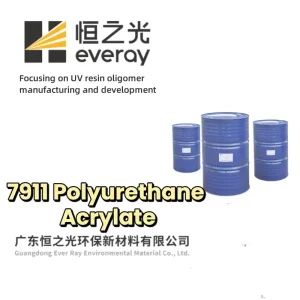
Solution: Blending modified epoxy acrylates (such as Grade 6106 or 6803A) with aliphatic polyurethane acrylates (Grade 7911) yields a high-build topcoat achieving 4H pencil hardness, superior chemical rub resistance against hand creams and alcohol wipes, and perfect optical clarity.
Challenge: Luxury hardwood and SPC/LVT vinyl flooring require fast line speed coatings resistant to heavy foot traffic, household chemicals, and hot water spills.
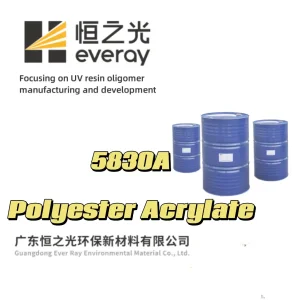
Solution: Utilizing high-hydroxyl polyester acrylate (Grade 5830A) or low-viscosity epoxy acrylate (Grade 1262B) as base coats provides exceptional grain fullness, rapid sanding capability, and superior water-boiling resistance without film delamination.
Challenge: High-speed offset and flexographic commercial printing demand inks with ideal water-ink balance, rapid surface drying, and vibrant color development.
Solution: Incorporating polyester acrylates (Grade 5403-3F or 5336) alongside amine synergist oligomers ensures optimal pigment wetting, zero ink emulsification, and instant gloss curing on paper board and metalized packaging foils.
Even high-grade epoxy resins can experience performance defects if formulation components, curing energy, or substrate surface preparation are misaligned. The troubleshooting matrix below addresses the four most common defect modes encountered in industrial coating lines.
| Observed Defect Mode | Root Cause Chemistry | Corrective Action & Formulation Adjustment |
|---|---|---|
| Surface Tacky / Poor Surface Cure | Atmospheric oxygen scavenging free radicals during photo-polymerization. | Add amine synergist oligomer (e.g., active amine 5650F), increase type I photoinitiator dose, or switch to LED-specific photoinitiators (TPO/819). |
| Coating Wrinkling / Orange Peel | Imbalance in surface vs deep layer curing speed; poor wetting tension. | Incorporate polyether-modified silicone leveling agents; replace fast tri-functional monomers with di-functional diluents (e.g., TPGDA). |
| Loss of Adhesion / Flaking | Excessive cure shrinkage creating high internal shear stress at substrate interface. | Blend in low-shrinkage pure acrylate oligomers or flexible polyurethane acrylate; reduce total crosslinking density. |
| Post-Cure Yellowing | Thermal degradation or photo-oxidation of aromatic ring structures under UV radiation. | Transition from standard Bisphenol-A epoxies to modified non-yellowing acrylates (Grade 72923 or aliphatic PUA); replace amine photoinitiators. |
Find authoritative answers to technical, commercial, and operational questions commonly raised by global procurement leaders and R&D formulation chemists when sourcing high gloss epoxy acrylates from factory partners.
Discover our high-adhesion bisphenol-A epoxy resins, non-yellowing polyurethane oligomers, low-viscosity floor coating resins, and specialized anti-fouling acrylates designed for global export.
Partner with China's leading wholesale high gloss epoxy and UV oligomer manufacturer. Accelerate your product development with lab-verified technical data sheets (TDS), safety data sheets (SDS), free 1kg testing samples, and factory-direct volume pricing.
Contact OEM/ODM Chemical Engineers