Explore our premium factory-direct UV oligomers, modified epoxy acrylates, and specialty curing agents optimized for rapid polymerization and superior mechanical durability.
Understanding the molecular dynamics, cross-linking density, and structural performance of wholesale high-viscosity epoxy acrylates and modified oligomers.
In modern polymer chemical engineering, high viscosity epoxy resins and their radiation-curable derivatives—such as bisphenol-A epoxy acrylates, novolac epoxy acrylates, and modified polyolefin-epoxy hybrids—form the structural backbone of high-performance industrial coatings, structural adhesives, 3D printing photopolymers, and electronic encapsulants. Controlling viscosity in raw oligomeric formulations is not merely a physical handling property; it directly dictates film build thickness, thixotropic index, pigment suspension stability, cross-linking kinetics, and final mechanical integrity.
High viscosity formulations utilize tailored hydrogen bonding and polar hydroxyl interactions along the epoxy backbone to achieve high zero-shear viscosity, preventing pigment settling and sag on vertical substrates while maintaining shear-thinning behavior under high-speed spray or roller application.
Acrylated high-viscosity epoxies possess double-bond functionality ($C=C$) attached to rigid aromatic rings. Upon UV/EB exposure or peroxide initiation, they exhibit free-radical polymerization rates up to 5x faster than aliphatic ester backbones, achieving glass transition temperatures ($T_g$) over 90°C in seconds.
Residual hydroxyl groups ($-OH$) along the epoxy ester backbone provide intense hydrogen bonding with metal oxides, glass silanols, and polar plastic substrates (PC, ABS, treated PET), drastically minimizing volumetric shrinkage internal stress during cross-linking.
Selecting the optimal wholesale high-viscosity epoxy requires formulators to evaluate the precise chemistry of the polymer backbone. The matrix below illustrates technical trade-offs across common chemical classes engineered by leading Chinese chemical synthesis plants:
| Epoxy Chemical Class | Viscosity Range (mPa.s @ 25°C) | Tensile Strength (MPa) | Glass Transition ($T_g$) | Primary Industrial Application |
|---|---|---|---|---|
| Standard Bisphenol-A Epoxy Acrylate | 40,000 - 80,000 | 65 - 85 | 65°C - 85°C | Wood topcoats, paper varnishes, general offset inks |
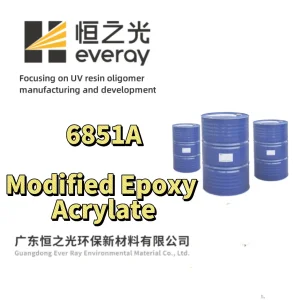
| High-Viscosity Modified Epoxy Acrylate | 100,000 - 250,000 | 80 - 110 | 85°C - 110°C | Shadowless adhesives, structural UV potting, solder mask |
| Epoxy Novolac Acrylate | 150,000 - 400,000 | 95 - 130 | 120°C - 150°C | High thermal resistance coatings, chemical-resistant linings |
| Fatty Acid / Polyol Modified Epoxy | 15,000 - 45,000 | 35 - 55 | 40°C - 60°C | Flexible plastic coatings, flexo inks, vacuum plating primers |
Why leading multinational chemical distributors, coating formulators, and industrial end-users source wholesale epoxy oligomers directly from Guangdong manufacturing clusters.
China has evolved into the world's epicenter for radiation-curable materials and high-performance synthetic resins. Factories situated in Guangdong Province, such as Guangdong Ever Ray Environmental Material Co., Ltd., leverage vertically integrated raw material supply chains, advanced high-shear synthesis reactors, and strict batch-to-batch quality control protocols that redefine global cost-to-performance standards.
Direct access to regional petrochemical hubs producing Epichlorohydrin (ECH), Bisphenol-A (BPA), Acrylic Acid, and specialized glycidyl ethers minimizes precursor cost fluctuations and guarantees uninterrupted multi-ton bulk production runs.
Utilizing computer-controlled vacuum distillation and precise catalyst dosing, Chinese manufacturers adjust oligomer chain length, epoxy conversion percentage, and residual inhibitor (HQ/MEHQ) levels to match exact OEM specification profiles.
Fully compliant with REACH registration, RoHS standards, and TSCA inventories. Chemical export packaging includes heavy-duty steel drums, IBC totes, and temperature-monitored ISO tank containers designed for global ocean transit.
Key market drivers transforming high-viscosity epoxy resin synthesis and UV-curing application technology worldwide.
Traditional high-viscosity epoxies required intense 254nm-365nm mercury vapor lamp output to overcome oxygen inhibition. Modern modified epoxy acrylates incorporate active amine synergists or modified photoinitiators optimized for 385nm and 395nm LED-UV curing systems, reducing power consumption by up to 60% while ensuring deep-section through-cure.
For complex 3D electronic assemblies and opaque substrates where UV light cannot penetrate shadowed regions, high-viscosity dual-cure epoxies utilize a primary fast UV surface gelation followed by a secondary moisture or latent heat thermal cure mechanism, guaranteeing complete polymer matrix cross-linking in hidden cavities.
Environmental regulations (such as EU Directive 2004/42/EC and China GB 38507-2020) are accelerating the phase-out of solvent-borne resins. 100% solid high-viscosity epoxy acrylates eliminate volatile organic solvents entirely, reducing workplace VOC emissions to near-zero levels while maintaining ultra-high film build in a single coat.
Engineering customized high-viscosity resin systems for consumer electronics, automotive components, architectural wood finishes, and graphic arts packaging.
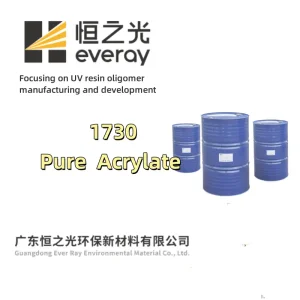
In mobile phone housings, laptop casings, and automotive interior trim, high-viscosity modified epoxy resins serve as foundational primer coats before vacuum metallization (PVD). They seal substrate micro-porosities, provide exceptional levelness, and withstand 500+ hours of salt-spray and thermal shock testing without micro-cracking.
Recommended Grade: 7620 / 1730 Series
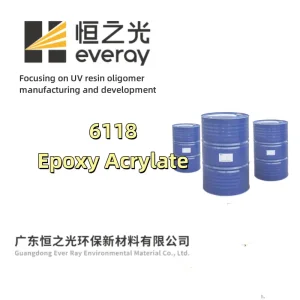
Industrial parquet and Stone Plastic Composite (SPC) flooring lines operate at cure speeds exceeding 30 meters per minute. High-viscosity epoxy acrylates are formulated into roller-coated sanding sealers and topcoats to provide 5H+ pencil hardness, scratch resistance, and zero swelling under water immersion.
Recommended Grade: 6118 / 6100D Series
Precision lens bonding, touchscreen glass-to-display lamination, and decorative glass furniture require shadowless UV adhesives with zero yellowing risk and ultra-low shrinkage. Modified epoxy acrylates combined with pure acrylate monomers yield bubble-free, optically clear joints with tensile shear strength over 15 MPa.
Recommended Grade: 6200D / 6271 Series
A rigorous protocol for R&D chemical engineers and procurement officers evaluating Chinese high-viscosity epoxy manufacturers.
Sourcing raw chemical materials across international borders demands thorough verification of chemical parameters, batch stability, and logistics compliance. Procurement teams should implement a 4-stage validation workflow prior to commercial contract execution:
Verify key physical constants: Viscosity at 25°C (Brookfield RTV), Acid Value (< 2.0 mg KOH/g), Color Index (Gardner < 1.0), Functionality ($f \ge 2$), and Density.
Request 500g lab samples for bench testing. Measure curing speed under target UV intensity ($mJ/cm^2$), pendulum hardness, cross-hatch adhesion (ASTM D3359), and solvent resistance (MEK double rubs).
Confirm ISO9001 certification, automated DCS reactor integration, incoming raw material inspection logs, and retention sample archives stored for a minimum of 24 months.
Execute a 1-ton pilot order in UN-approved 200kg steel drums or 1000kg IBC totes. Confirm nitrogen blanketing to prevent moisture contamination and viscosity drift during ocean freight.
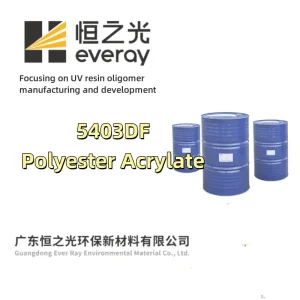
Discover our specialized functional oligomers, yellowing-resistant modified epoxies, and polyester acrylates formulated for demanding industrial applications.
Clear, technical answers to common inquiries regarding high-viscosity epoxy acrylates, viscosity reduction, yellowing resistance, and OEM custom synthesis.