Explore our factory-direct selection of aliphatic, aromatic, and modified oligomers optimized for fast UV curing, low volumetric shrinkage, and superior mechanical durability.
Understanding molecular design, hydrogen bonding networks, and synthesis pathways driving modern energy-curable polymer formulations globally.
Polyurethane Acrylate Oligomers (PUA) represent the pinnacle of radiation-cured polymer chemistry. By combining the exceptional toughness, flexibility, chemical resistance, and abrasion endurance of polyurethane backbones with the instantaneous free-radical polymerization capabilities of acrylate functional groups, PUA oligomers serve as the indispensable backbone for high-end UV/EB (Ultraviolet/Electron Beam) curable coatings, inks, adhesives, and additive manufacturing resins.
In commercial resin formulation, Polyurethane Acrylates are systematically categorized into two distinct families based on their diisocyanate building blocks: Aliphatic Polyurethane Acrylates and Aromatic Polyurethane Acrylates.
Synthesized using Isophorone Diisocyanate (IPDI) or Hexamethylene Diisocyanate (HDI). Offer non-yellowing QUV weatherability, exceptional flexibility, outdoor durability, and optical clarity for 3C electronics and automotive clearcoats.
Built upon Toluene Diisocyanate (TDI) or Methylene Diphenyl Diisocyanate (MDI). Deliver fast cure speeds, immense tensile strength, high hardness, and superior cost-efficiency for indoor wood, floor coatings, and industrial varnishes.
Polycarbonate diol-based PUA yields extreme hydrolysis resistance and soft-touch tactile qualities. Waterborne PUA dispersions eliminate volatile organic solvents entirely for ultra-low VOC regulatory compliance.
What grants Polyurethane Acrylate its unique balance of extreme hardness and flexural elasticity is the presence of repeating urethane linkages (-NH-COO-) within the polymer backbone. These urethane groups participate in extensive intermolecular and intramolecular hydrogen bonding. Upon UV irradiation, free-radical photoinitiators trigger the polymerization of terminal acrylate groups, creating a primary covalent crosslinked matrix. Simultaneously, the physical hydrogen bonds act as reversible structural "springs" that absorb strain energy, dissipate impact forces, and prevent crack propagation under severe mechanical deformation.
The global UV curing market is undergoing a structural shift towards LED-UV sources (365nm, 385nm, 395nm) and Electron Beam curing. Formulators require PUA oligomers engineered with optimized double-bond reactivity, low oxygen inhibition sensitivity, and reduced viscosity to eliminate hazardous monomer diluent overload.
Discover how Guangdong Ever Ray Environmental Material Co., Ltd. integrates state-of-the-art synthetic reactors, chemical supply chain density, and strict QC protocols to deliver unmatched OEM/ODM value.
Global buyers of wholesale polyurethane acrylate oligomers face severe challenges: batch-to-batch viscosity variance, residual NCO monomer hazard, color instability, and escalating raw material surcharges. Based in Guangdong, China—the global epicenter of chemical manufacturing and electronics supply chains—Guangdong Ever Ray Environmental Material Co., Ltd. (established in 2006) resolves these bottlenecks through vertical chemical integration and world-class scale.
Our expansive 40,000+ m² manufacturing facility in Dawan Industrial Park, Yunfu, operates 10+ automated stainless-steel reactor lines capable of handling precise exothermic polyaddition reactions under nitrogen blanketing.
Every synthetic batch undergoes real-time Fourier Transform Infrared Spectroscopy (FTIR) monitoring to confirm zero residual isocyanate (-NCO) group content (<0.1%), ensuring shelf stability and zero toxic release.
Direct pipeline and bulk tank access to top-tier diisocyanates (IPDI, HDI, TDI) and polyols allows us to eliminate trading markups and supply premium PUA resins at highly competitive wholesale factory prices.
To ensure seamless substitution into overseas production lines across North America, Europe, Southeast Asia, and the Middle East, every drum exported by Ever Ray passes rigorous laboratory testing:
| QC Parameter | Testing Instrument & Standard Method | Acceptance Criteria / Industrial Standard | Value to Formulators |
|---|---|---|---|
| Viscosity Control | Brookfield DV2T Viscometer (ASTM D2196, 25°C) | ±5% Target Tolerance Range | Guarantees steady flow & atomization in spray/roller coating lines |
| Color / Clarity | Gardner Color Scale (ASTM D1544) | ≤ 0.5 Gardner for Aliphatic Grades | Ensures non-yellowing high-transparency clear coats & nail gels |
| Residual Isocyanate | FTIR Spectrophotometer (NCO Peak @ 2270 cm⁻¹) | Absence of NCO absorption peak (<0.05%) | Prevents gelation in storage and guarantees operator safety |
| Acid Value | Potentiometric Titration (ISO 660, mg KOH/g) | < 2.0 mg KOH/g | Prevents premature reaction with pigments & metallic additives |
| Double Bond Conversion | Real-time Photo-DSC / UV Intensity Tracking | > 92% Acrylate C=C conversion under 365/395nm LED | Ensures fast line speeds and non-tacky surface cure |
From consumer electronics coatings to aerospace adhesives and SLA 3D printing photopolymers, custom PUA resins tailored to precise process windows.
Smartphones, tablets, and wearable housings (PMMA, Polycarbonate, ABS) require high pencil hardness (3H–5H), steel-wool scratch endurance, and chemical resistance to cosmetic oils and sweat.
Recommended Grade: Aliphatic Polyurethane Acrylate Oligomers with hyperbranched architecture.
Automotive dashboards, decorative films, and headlight lenses demand stringent QUV accelerated weathering resistance (ISO 4892-2) without yellowing or micro-cracking across temperature swings (-40°C to +120°C).
Recommended Grade: Polycarbonate-based Aliphatic PUA.
SLA, DLP, and LCD 3D printing resins demand ultralow volumetric shrinkage, rapid layer exposure response, high tensile strength, and high heat deflection temperature (HDT) for functional prototypes and midsoles.
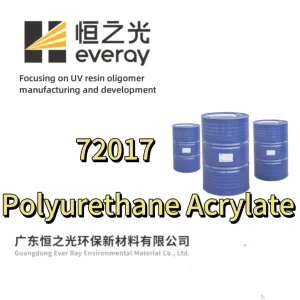
Recommended Grade: Model 72017 Photo-Thermal Dual-Curing PUA.
UV flexo, offset, and screen printing inks require exceptional pigment wetting, rapid water-ink balance in lithography, high gloss, and low odor for paper and flexible plastic substrates.
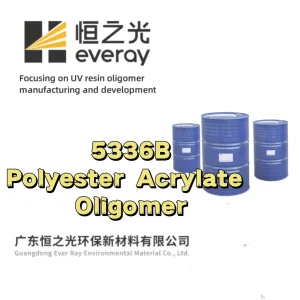
Recommended Grade: 5336B Polyester Acrylate & Active Amine Synergists.
Commercial flooring requires high Taber wear resistance, stain resistance (against iodine and household chemicals), fast line cure speeds (up to 40 m/min), and zero curl strain.
Recommended Grade: Model 1290H Low-Shrinkage Flooring Oligomer.
Cosmetic nail extension gels and topcoats demand zero exothermic heat peak burn under UV lamps (< 40°C exotherm), low skin irritation profile, high gloss retention, and easy soak-off flexibility.
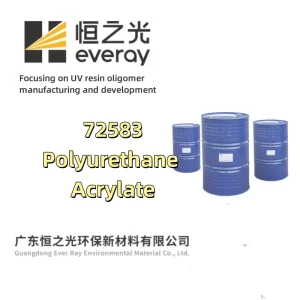
Recommended Grade: Low Heat Release 72583 Polyurethane UV Resin.
How next-generation radiation curable polymers are addressing decarbonization and hazardous chemical reduction without compromising technical performance.
As global ESG mandates intensify across North America and the European Union, formulators are actively replacing petroleum-derived polyols with renewable bio-based feedstocks derived from castor oil, bio-succinic acid, and soybean oil. Guangdong Ever Ray’s R&D laboratory has successfully synthesized bio-based PUA resins containing up to 45% bio-renewable carbon content, matching conventional petroleum-based aliphatic PUA in hardness, tensile strength, and clarity.
Traditional medium-pressure mercury lamps generate excessive heat and toxic ozone gas while consuming vast energy. LED-UV curing systems eliminate ozone and drastically reduce electricity consumption. However, long-wave UV LED light penetrates deeper but provides lower energy density at the surface, leading to potential oxygen inhibition. Ever Ray's latest generation of Amino Acrylate Oligomers and Active Amine Synergists act as hydrogen donors, suppressing oxygen quenching and enabling tack-free surface curing at lower LED dosages.
By incorporating hydrophilic carboxyl or ionic groups into the PUA polymer backbone, waterborne UV curable polyurethane dispersions achieve high molecular weight without high application viscosity. Water acts as the primary diluent, eliminating reactive acrylic monomer diluents and achieving zero VOC emissions. PUD systems excel in eco-friendly wood finishes, leather coatings, and high-end paper varnishes.
Discover specialty modified acrylates, high-adhesion monomers, and low-shrinkage oligomers engineered for metal, glass, plastic, and outdoor adhesive applications.
Expert answers regarding PUA chemical selection, storage stability, custom synthesis, and bulk procurement logistics.
Accelerate your product development with custom Polyurethane Acrylate chemistry, factory-direct wholesale pricing, and dedicated technical application support.
Request Technical Quotation & Free Samples