Direct factory supply featuring optimized viscosity profiles, rapid conversion kinetics, and superior crosslinking density for global manufacturing integration.
Navigating technical dynamics, raw material synthesis, and high-speed UV-curing innovations across global industrial supply chains.
In modern industrial manufacturing, the demand for high-performance wholesale resin adhesives and radiation-curable prepolymers has evolved beyond simple mechanical bonding. Global original equipment manufacturers (OEMs), chemical compounders, and industrial formulators require advanced molecular architectures that deliver sub-second photo-polymerization, exceptional lap shear strength, chemical inertness, and precise thermal tolerance.
As industrial automation accelerates, standard solvent-based adhesives are rapidly being phased out in favor of 100% solid-content UV-curable resin adhesives, epoxy acrylates, and aliphatic polyurethane acrylates (PUA). This paradigm shift is driven by stringent environmental regulations, such as VOC controls, REACH compliance, and decarbonization mandates, as well as the commercial necessity for faster line speeds and lower energy footprint during curing.
Essential operational metrics evaluated by chemical procurement directors, compliance officers, and R&D formulators.
Automated dispensing systems rely on strict viscosity windows (e.g., ±50 mPa.s at 25°C). Variations induce pump cavitation or dripping. Our automated batch reactors maintain exact rheological consistency.
Achieving >95% acrylate double-bond conversion under standard UV-LED energy doses (365nm/395nm) prevents unreacted monomer leaching, ensuring non-cytotoxic and low-odor cured profiles.
Substrates like untreated PET, Polycarbonate, Glass, anodized Aluminum, and LCP require tailored chemical functionality, such as carboxyl or phosphate ester modifications, to form durable covalent bonds.
Multi-ton production capacity in Guangdong, direct access to raw material stock, and robust hazardous-goods export compliance ensure seamless delivery across North America, Europe, and Asia-Pacific.
Tailored chemical formulations addressing harsh environment operations across advanced technology sectors.
Precision bonding for smartphone display stacks, compact camera modules (CCM), micro-speakers, and printed circuit board (PCB) conformal encapsulation. Requires high optical clarity (transmittance >99%), yellowing resistance under UV exposure, and zero halogen content.
Structural resin bonding for battery cell-to-pack (CTP) assemblies, sensor encapsulation, and automotive display glass laminations. Formulations deliver superior thermal shock resistance (-40°C to 125°C) and resistance to automotive fluids, electrolytes, and vibration fatigue.
High-durability primers, sanding sealers, and topcoats for SPC, PVC flooring, and luxury wood furniture. Utilizes epoxy acrylate oligomers combined with multifunctional acrylates to achieve high pencil hardness (>3H), scratch resistance, and immediate line stackability.
Specially synthesized low-viscosity resin oligomers engineered for SLA, DLP, and LCD 3D printers. Formulations balance high cure speed with low shrinkage stress, delivering high heat deflection temperature (HDT), tensile toughness, and fine detail resolution.
A comparative evaluation of polymer backbones, functional groups, and cured mechanical properties for formulators.
| Resin Chemistry | Key Functional Attributes | Cure Speed | Tensile / Hardness | Weatherability | Primary Industrial Use |
|---|---|---|---|---|---|
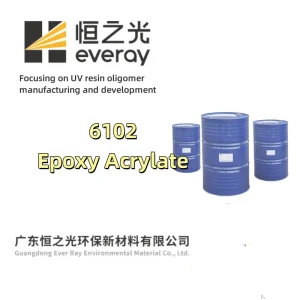
| Epoxy Acrylate (Standard) | Ultra-fast reactivity, high gloss, high modulus, budget efficient | Very High (<0.5s) | Shore D 85 - 90 | Moderate (Interior) | Wood Overprint Varnish, Paper Coatings, PCB Masking |
| Modified Epoxy Acrylate | Reduced viscosity, lower pigment inhibition, improved flexural strength | High | Shore D 80 - 85 | Moderate | UV Printing Inks, Metal Packaging, High-Speed Coatings |
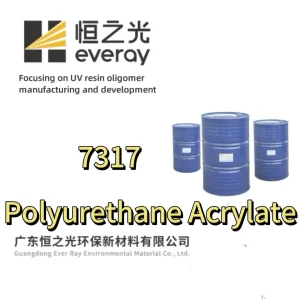
| Aliphatic Polyurethane Acrylate | Non-yellowing, extreme weatherability, exceptional flexibility & elongation | Moderate to High | Shore D 50 - 75 | Outstanding (Outdoor) | Outdoor PSA Tapes, Automotive Display Glass, 3C Topcoats |
| Aromatic Polyurethane Acrylate | High toughness, superior scratch resistance, cost-performance balanced | High | Shore D 75 - 85 | Fair (Interior) | PVC Floor Coatings, Leather Finish, Structural Adhesives |
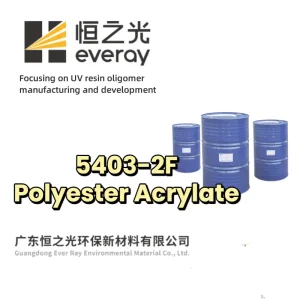
| Polyester Acrylate | Excellent pigment wetting, low viscosity, balanced flexibility | High | Shore D 65 - 80 | Good | Flexo & Offset Printing Inks, Plastic Packaging Primers |
| Hyperbranched / Pure Acrylate | Low volume shrinkage, ultra-high functionality, zero surface tack | Very High | Shore D 88+ | Excellent | Micro-electronic Potting, Optical Clear Adhesives (OCA) |
A primary chemical obstacle in high-speed acrylate radical polymerization is atmospheric oxygen inhibition. Unpaired electrons in atmospheric oxygen react with active free radicals generated by photoinitiators to form stable peroxyl radicals, terminating chain propagation prematurely and leaving an uncured, tacky surface layer.
To overcome this issue without requiring expensive nitrogen inerting blankets, our synthesis team incorporates active amine synergists and amino acrylate oligomers into formulation matrixes. The tertiary amine nitrogen atom donates a hydrogen atom to peroxyl radicals, regenerating an active alkyl radical capable of continuing crosslinking polymerization, thereby guaranteeing hard, dry surface finishes even under low UV intensity.
Pioneering bio-based synthetics, narrow-band UV-LED cure systems, and dual-cure mechanisms for next-generation manufacturing.
Shifting from high-pressure mercury lamps (broad spectrum) to energy-efficient 365nm, 385nm, and 395nm UV-LED sources requires resins engineered with heightened spectral responsiveness and tailored absorption profiles.
Integrating bio-derived polyols, soybean oil modifications, and cardanol derivatives into polyurethane acrylates to achieve >40% renewable carbon content without compromising hardness or thermal stability.
Designing dual-cure systems combining fast UV surface pinning with secondary moisture or thermal curing mechanisms for shadowed geometric areas in complex automotive and microelectronic assemblies.
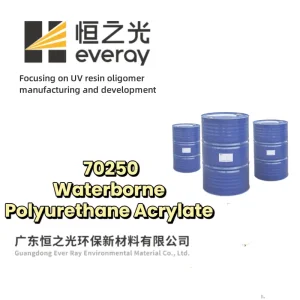
Advancing zero-VOC, water-dilutable UV polyurethane dispersions that combine the eco-friendly sprayability of waterborne systems with the rapid hardness build of photo-curing resins.
Rigorous quality control frameworks backed by complete international chemical certifications.
Established in 2006, Guangdong Ever Ray Environmental Material Co., Ltd. is a high-tech enterprise specializing in the R&D, synthesis, and wholesale manufacturing of UV curable resins and specialty acrylate oligomers. Operating a state-of-the-art 40,000+ m² production base in Yunfu, Guangdong with over 10 automated reaction lines, supported by an advanced sales and innovation center in Jiangmen City.
Holding over 10 national invention and utility patents, our chemical engineering teams ensure that every drum delivered meets exact specifications for color, viscosity, acid value, and reactivity.
Select from specialized chemical formulations for paper varnishes, electronic encapsulation, and furniture coatings.
Answers to common chemical engineering and sourcing inquiries from global formulators and purchasing directors.
Contact our application engineering team today to request custom sample testing, technical data sheets (TDS/SDS), or wholesale factory pricing.