Explore our factory-direct, laboratory-tested acrylate oligomers engineered for extreme scratch resistance, superior adhesion, ultra-fast curing, and chemical durability across coatings, packaging inks, electronics, and 3D printing matrixes.
In modern radiation-curing technology, selecting the precise chemical backbone for ultraviolet (UV) and electron-beam (EB) curable formulations determines the mechanical, thermal, and surface properties of the final product. As a primary China-based UV curable resin manufacturer since 2006, Guangdong Ever Ray Environmental Material Co., Ltd. bridges the gap between molecular synthesis and large-scale industrial execution.
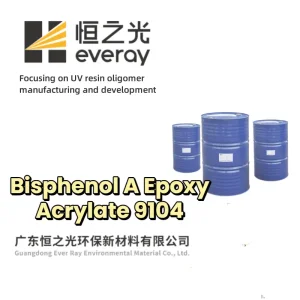
Synthesized through the ring-opening reaction of bisphenol-A diglycidyl ether (BADGE) with acrylic acid, epoxy acrylates provide exceptionally high crosslinking density, rapid surface cure, superior tensile strength, and outstanding chemical solvent resistance. Ideal for wood topcoats, paper varnishes, and electronic potting encasements.
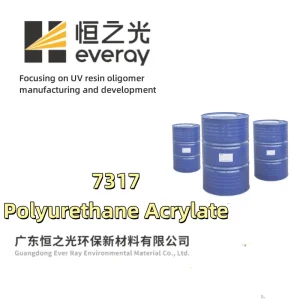
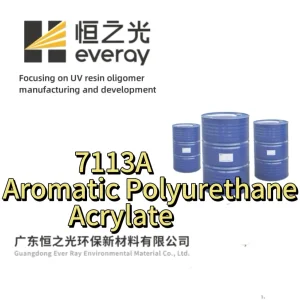
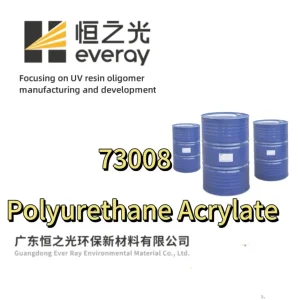
Engineered by reacting hydroxyl-terminated polyols with aliphatic or aromatic diisocyanates and hydroxy-functional acrylates (HEA/HPA). Aliphatic PUAs deliver unmatched non-yellowing weatherability ($\Delta E < 1.0$ post-QUV), extreme flexibility, and impact energy absorption for 3C automotive and premium nail lacquers.
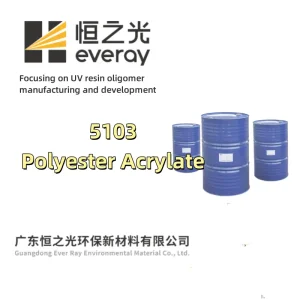
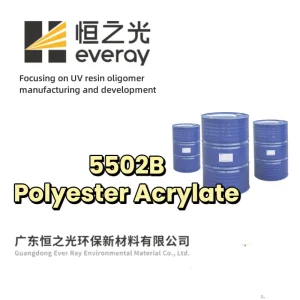
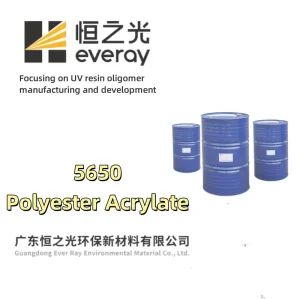
Combines low viscosity with excellent pigment wetting energetics. Designed specifically for UV offset inks, flexo printing, and 3D printing resins, our polyester acrylates eliminate the trade-off between rheological flow control and structural mechanical integrity.
As global environmental directives mandate lower volatile organic compound (VOC) emissions and reduced energy consumption, our R&D division focuses on five key technical breakthroughs driving the future of wholesale industrial resin supply:
Traditional silica matting agents degrade coating transparency and increase formulation viscosity. Our hyperbranched polyester acrylates (e.g., Grade 53036) leverage short-wavelength 172nm excimer radiation to induce surface micro-folding before bulk curing. This achieves a super-matte soft-touch skin feel with 0° gloss retention, finger-print resistance, and extreme scratch longevity without filler settlement.
Mercury arc lamps are rapidly being phased out under global energy transition mandates. LED-UV curing systems emit narrow spectra, often causing surface oxygen inhibition and tackiness. We modify our oligomer backbone functionality with active amine synergists (e.g., Series 09) and amino acrylates to accelerate surface hydrogen abstraction, enabling complete surface polymerization under low-energy LED lamps.
In thick electronic encapsulation and 3D additive manufacturing, rapid free-radical polymerization shrinkage induces volumetric stress, warping, and interfacial delamination. Our modified acrylate oligomers integrate secondary thermal or moisture dual-cure mechanisms, reducing shrinkage below 1.2% while assuring 100% cure in shadowed areas.
To meet global carbon neutrality goals, EVER RAY incorporates renewable feedstocks—including bio-derived polyols, soybean oil derivatives, and cardanol—into structural polyurethane and polyester acrylates. Our eco-series maintains >45% bio-based carbon content without compromising hardness or chemical resistance.
| Oligomer Chemical Class | Double Bond Functionality | Viscosity (mPa·s @ 25°C) | Glass Transition Temp (Tg) | Primary Industrial Applications |
|---|---|---|---|---|
| Standard Bisphenol-A Epoxy Acrylate | 2.0 | 15,000 - 45,000 | 65°C - 85°C | Wood sealers, paper overprint varnishes, PCB solder masks |
| Aliphatic Polyurethane Acrylate (6-Func) | 6.0 | 5,000 - 18,000 | 45°C - 95°C | 3C electronics hardcoats, automotive clear coats, nail gel topcoats |
| Low-Viscosity Polyester Acrylate | 4.0 | 500 - 2,500 | 15°C - 35°C | High-speed lithographic UV inks, flexo printing inks, plastic primers |
| Waterborne Polyurethane Acrylate (PUD) | N/A (35% Solid Dispersion) | 50 - 300 | -10°C - 40°C | Eco-friendly spray coating on flexible leather, plastics, and wood |
Our wholesale resin and epoxy solutions are engineered to fit directly into high-throughput industrial manufacturing lines. We solve core substrate adhesion and chemical endurance challenges across five global sectors:
Substrates like polycarbonate (PC), ABS, and PMMA require exceptional surface hardness without thermal distortion during curing. Our aromatic and aliphatic PUA oligomers (e.g., Grade 7296-1) offer extreme intercoat adhesion to Physical Vapor Deposition (PVD) aluminum and indium metal layers, resisting cosmetic alcohol wipe tests (>200 cycles) and artificial sweat exposure.
Offset press speeds exceeding 15,000 sheets/hour demand ultra-fast ink curing and perfect lithographic water-ink balance. Our modified polyester acrylates (e.g., Grade 5403-3F) deliver superior pigment dispersibility, zero misting at high press speeds, and robust resistance to water emulsion break down during continuous press operations.
Heavy industrial flooring lines require rapid line speeds (>40 m/min) and high abrasion resistance (Taber abrasion tests). EVER RAY’s modified epoxy acrylate resins (e.g., Grade 6100D-85) form deep-penetrating primers and scratch-resistant topcoats that prevent micro-cracking during wood swelling or structural impact.
Operating out of our modern chemical production facility in Dawan Industrial Park, Yunfu, Guangdong, EVER RAY leverages integrated automation to supply international procurement markets with uncompromised quality and cost efficiency.
Direct bulk sourcing of acrylic acid, polyols, and diisocyanates from global Tier-1 petrochemical manufacturers. Every batch undergoes gas chromatography and moisture testing prior to reactor charging.
Computer-controlled Distributed Control Systems (DCS) monitor reaction temperatures within ±0.5°C tolerances, preventing unreacted monomer residual accumulation and ensuring tight molecular weight distributions.
Continuous viscometry and colorimetry testing during esterification and acrylation guarantee batch-to-batch consistency ($\Delta E < 0.3$, viscosity tolerance ±5%).
Automated filling lines package products into UN-certified 200kg steel drums, 1,000kg IBC totes, or ISO tank containers equipped with temperature tracking for international ocean freight.
Securing raw material supply chains for multinational coating and chemical enterprises requires complete transparency, legal safety compliance, and rapid technical application response.
All EVER RAY UV resins fully comply with EU REACH, US TSCA, RoHS 3.0 (Directive 2015/863), and IEC 62321 heavy metal restrictions. We provide 16-section Safety Data Sheets (SDS) in multi-language formats and issue Certificates of Analysis (COA) for every shipment lot.
When standard commercial grades fall short of specialized curing requirements, our technical team modifies monomer ratios, viscosity specs, double-bond density, and refractive indices. We support OEM toll manufacturing and private label packaging under strict non-disclosure agreements (NDAs).
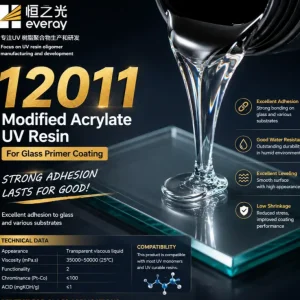
Review our secondary line of specialized radiation-curable compounds developed for skin-feel excimer applications, glass primers, electronics potting, and low-shrinkage offset ink formulations.
Clear engineering answers for chemical formulators, procurement officers, and technical R&D directors qualifying EVER RAY as a strategic resin supplier.
Epoxy acrylates are derived from bisphenol-A epoxy backbones reacted with acrylic acid. They deliver extreme hardness, ultra-fast curing speeds, high chemical resistance, and lower material costs. However, they lack outdoor weatherability due to aromatic yellowing. Aliphatic polyurethane acrylates (PUA) utilize non-aromatic diisocyanates (such as IPDI or HDI). They offer superior UV weatherability ($\Delta E < 1.0$), non-yellowing characteristics, and extreme elongation/flexibility, making them ideal for outdoor automotive clear coats, mobile electronics, and nail gels.
Oxygen inhibition occurs when atmospheric $O_2$ scavenges free radicals generated by photoinitiators, resulting in surface tackiness. We resolve this by synthesizing amino acrylates (Series 08) and active amine synergists (Series 09). The tertiary amine groups undergo rapid hydrogen abstraction, consuming localized oxygen molecules and creating alkylamino radicals that continue the polymerization chain even under ambient air conditions.
Yes. Many modern applications restrict volatile mono-functional reactive diluent monomers due to odor, skin irritation (PII index), or strict VOC limits. Our laboratory modifies oligomer molecular weight distribution (MWD) and incorporates internal ether/ester flexibilizing chains to produce self-diluting, low-viscosity oligomers (as low as 500 mPa·s at 25°C) that spray smoothly without monomer addition.
Every batch manufactured in our Yunfu facility is tested via inline BrookField viscometry, Fourier-Transform Infrared Spectroscopy (FTIR) for double-bond functional conversion, and color index meters. We retain batch retention samples for 24 months. Shipments are packaged in hermetically sealed UN steel drums with thermal stability testing to guarantee 12 months shelf life at storage temperatures up to 35°C.
You can contact our sales engineering team directly through any product button link on this page or via email at [email protected]. We provide comprehensive TDS, 16-section GHS SDS, cross-hatch adhesion test protocols (ASTM D3359), and starting point formulation guide sheets tailored to your substrate and lamp setup.