Engineered raw materials, low-shrinkage resins, and high-reactivity prepolymers direct from Guangdong manufacturing bases.
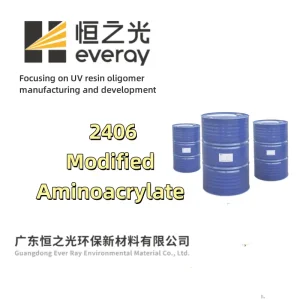
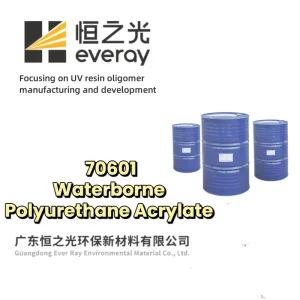
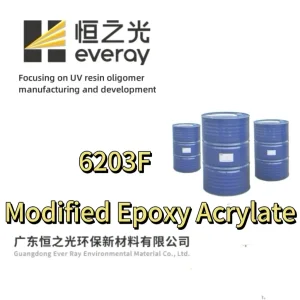
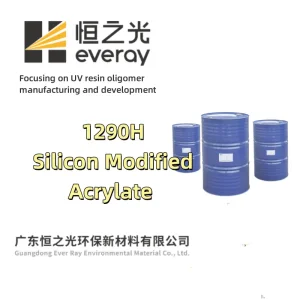
Analyzing structural light-curing polymer synthesis, cross-linking density control, and industrial application vectors.
The global industrial adhesive marketplace is undergoing a structural paradigm shift from solvent-borne thermosetting adhesives to ultra-fast, zero-VOC Ultraviolet (UV) and Electron Beam (EB) light-curable formulations. Modern manufacturing lines in consumer electronics, automotive sensors, optical communication modules, and medical assembly demand cycle times measured in seconds rather than hours. High-performance UV adhesives leverage free-radical or cationic photo-polymerization mechanisms to achieve instantaneous green strength, micron-level dimensional stability, and exceptional bond durability across heterogeneous substrates.
UV adhesives are no longer monolithic, single-purpose glues. Formulation engineering requires custom oligomers, specialty monomers, photoinitiators, and adhesion promoters optimized for specific thermal, mechanical, and optical environments:
Micro-dispensing applications in smartphone camera module alignment, linear vibrator potting, and speaker diaphragm bonding require low thermal expansion coefficients (CTE) and negligible volumetric shrinkage. Specialized urethane acrylate prepolymers eliminate internal strain on delicate optics while resisting drop-impact shear stresses.
Liquid Optical Clear Adhesives (LOCA) utilize hyper-refined, non-yellowing aliphatic polyurethane acrylates. These prepolymers offer precise refractive index matching (n = 1.48 to 1.52), >99% visible light transmission, zero haze, and bubble-free gap filling for OLED and TFT-LCD stack laminations.
Automotive LiDAR, RADAR sensor housing, and battery management system (BMS) sealants demand resistance to thermal shock cycles (-40°C to +150°C), glycol exposure, and moisture ingress. Dual-cure mechanics (UV + Moisture or UV + Thermal Heat) ensure 100% cure depth even in shadow zones unreachable by direct UV radiation.
Extending polymer horizons through bio-based building blocks, LED sub-365nm optimization, and zero-shadow dual-cure systems.
Legacy high-pressure mercury lamps generate excessive infrared heat, damaging heat-sensitive plastic substrates (e.g., PET, PC, PMMA). The global industry is migrating to energy-efficient LED UV curing units. Prepolymer synthesis now incorporates novel photoinitiator package matching and tailored acylphosphine oxide (TPO/819) sensitivities to guarantee deep-layer curing under single-wavelength LED sources.
For aerospace electronics and wearable medical devices, unreacted volatile acrylic monomers present contamination risks. Modern oligomers undergo molecular weight distribution tuning and hyperbranched architecture synthesis to eliminate extractable species, passing NASA Outgassing ASTM E595 standards and ISO 10993 cytotoxicity evaluations.
Combining free-radical acrylic curing with secondary heat-activated epoxy or atmospheric moisture-activated polyurethane mechanisms allows adhesives to fix within 2 seconds under UV light, while concealed undercut regions cure reliably over 24 hours, guaranteeing structural integrity across complex geometric parts.
| Resin Chemistry Class | Cure Mechanism | Typical Shore Hardness | Shrinkage Rate (%) | Key Performance Advantage |
|---|---|---|---|---|
| Epoxy Acrylate Oligomers | Free-Radical | 75D - 90D | 2.0% - 3.5% | Ultra-fast surface cure, high tensile strength, chemical barrier |
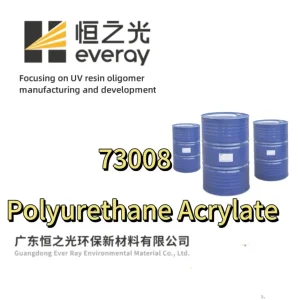
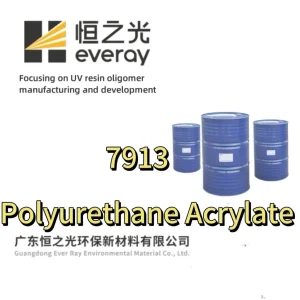
| Aliphatic Urethane Acrylates | Free-Radical / Dual-Cure | 40A - 75D | 0.8% - 1.8% | Non-yellowing, high flexibility, extreme thermal shock durability |
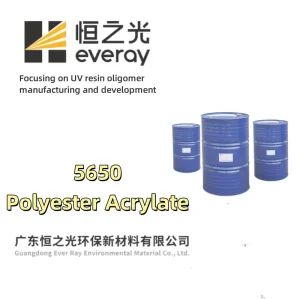
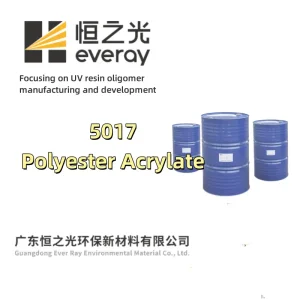
| Polyester Acrylate Resins | Free-Radical | 50D - 80D | 1.5% - 2.8% | Excellent pigment wetting, cost-effective, high gloss balance |
| Waterborne UV Dispersions | Evaporation + UV Cure | 30A - 60D | < 0.5% (post-evap) | Ultra-thin film capability, zero VOC, ideal for flexible spray coating |
Inside Guangdong Ever Ray Environmental Material Co., Ltd. – Modern resin chemistry manufacturing.
Sourcing raw materials or finished wholesale UV adhesives requires absolute confidence in batch-to-batch consistency, chemical purity, and long-term capacity reservation. Established in 2006, Guangdong Ever Ray Environmental Material Co., Ltd. operates as a leading high-tech enterprise specializing in UV curable resins, acrylate oligomers, and custom functional prepolymers.
Situated in Dawan Industrial Park, Yunfu, Guangdong, the modern production facility utilizes fully integrated DCS (Distributed Control System) synthesis reactors. This digital factory architecture enforces rigorous quality parameters across every production phase:
Streamlining raw material qualification for international formulators, OEM assembly plants, and chemical distributors.
Every shipment is accompanied by a comprehensive Certificate of Analysis (COA) specifying viscosity (mPa.s at 25°C), acid value (mg KOH/g), density, and refractive index. GHS-compliant Safety Data Sheets (SDS) and Technical Data Sheets (TDS) support rapid regulatory clearance.
When off-the-shelf oligomers fail specific line requirements, our in-house R&D team adjusts acrylic functionality (monofunctional to hexafunctional), backbone elasticity, and viscosity ranges within 7 to 10 working days, providing rapid prototype sampling for lab validation.
UV acrylates require thermal sensitivity management during ocean transit. Goods are shipped in specialized light-blocking steel drums, IBC totes, or UN-certified poly containers with anti-polymerization oxygen sparging and temperature monitoring indicators.
Ensuring compliance across European Union, North American, and Asia-Pacific regulatory regimes.
Navigating global chemical regulation requires absolute compliance with hazardous material standards, environmental directives, and worker safety mandates. Products manufactured by Guangdong Ever Ray Environmental Material Co., Ltd. strictly conform to international frameworks:
Core acrylic monomers and oligomer building blocks carry full EU REACH registration or SVHC (Substances of Very High Concern) non-containment certifications, facilitating seamless entry into European chemical markets.
All raw materials are tested for heavy metals (Pb, Cd, Hg, Cr VI) and restricted flame retardants (PBBs, PBDEs, phthalates), fulfilling Directive 2011/65/EU and IEC 61249-2-21 halogen-free criteria for microelectronics.
Waterborne UV resins and solvent-less oligomers comply with stringent regional air quality standards, including GB 33372-2020 (China VOC limits) and California SCAQMD Rule 1113.
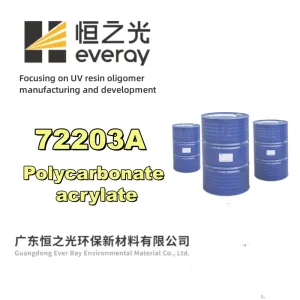
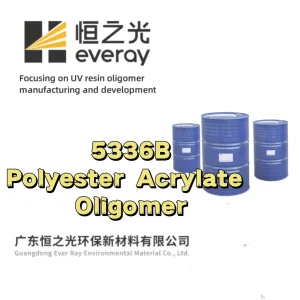
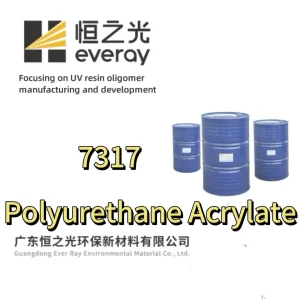
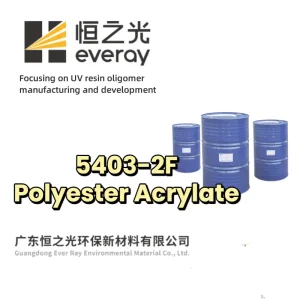
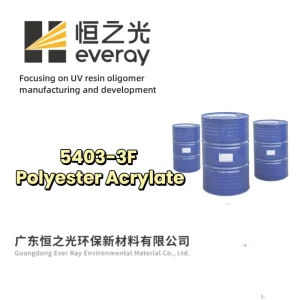
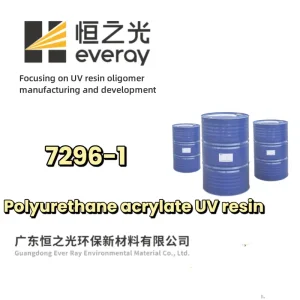
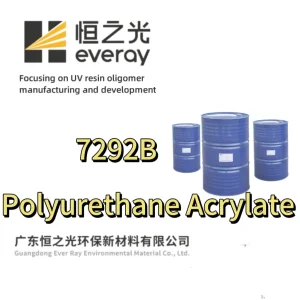
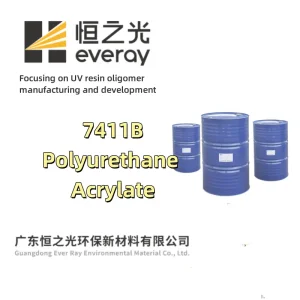
Explore specialized polymers designed for high thermal stability, anti-yellowing, and multi-substrate adhesion promotion.
Expert answers addressing chemistry, application parameters, custom synthesis, and bulk order logistics.
Epoxy acrylates offer rapid surface cure speeds, high cross-link density, exceptional chemical resistance, and high hardness (75D to 90D), making them cost-effective for rigid substrates and wood OPVs. However, they exhibit higher shrinkage (2-3.5%) and tend to yellow under direct UV exposure. Aliphatic polyurethane acrylates (PUA) provide superior non-yellowing characteristics, weather resistance, and low volumetric shrinkage (<1.5%), maintaining elongation and flexibility across extreme thermal shock cycles (-40°C to +120°C).
Atmospheric oxygen scavenges free radicals generated by photoinitiators, leading to tacky surface layers. EVER RAY formulates amino-modified acrylate oligomers and active amine synergists (such as active amine co-initiators). The amine moiety donates hydrogen atoms to peroxy radicals, converting them into non-inhibiting aminoalkyl radicals that resume photopolymerization, guaranteeing tack-free surface curing even under low-energy UV LED lamps.
Yes. Jet-dispensing and needle-dispensing equipment in 3C assembly require strict thixotropic index control and stable viscosity windows (e.g., 500 mPa.s to 12,000 mPa.s at 25°C). Our R&D lab custom-blends reactive diluents (such as IBOA, THFA, or TPGDA) and adjusts oligomer backbone molecular weight to meet exact viscosity, surface tension, and dispensing jetting frequencies.
All UV resins and oligomers should be stored in original sealed, light-blocking HDPE or lined steel drums at temperatures between 10°C and 28°C away from direct sunlight and atmospheric heat sources. Under recommended ambient conditions, sealed shelf life is 12 months. Dissolved oxygen acts as a natural stabilizer; therefore, containers should not be sparged with inert nitrogen during long-term storage.
Standard laboratory validation samples (1kg to 5kg pails) are dispatched within 3 business days via air freight alongside full SDS/TDS documentation. Commercial trial orders start at 200kg (single drum) up to 20-foot full container loads (16 to 18 Metric Tons) direct from our Yunfu production base.
