Direct factory supply engineered for extreme adhesion, low volumetric shrinkage, and rapid photo-polymerization across coatings, inks, and industrial adhesives.
A comprehensive analysis of bisphenol-A based oligomer synthesis, acrylic functionalization, crosslinking kinetic optimization, and radical polymer matrix stability.
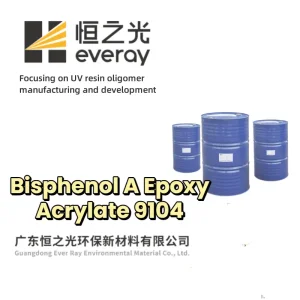
Standard epoxy acrylate oligomers are synthesized via the nucleophilic ring-opening esterification of Bisphenol-A diglycidyl ether (DGEBA) with acrylic acid in the presence of specialized organometallic catalysts. The resulting prepolymer combines the inherent rigid aromatic backbone of epoxy resins—delivering supreme hardness, chemical resistance, and thermal stability—with the ultra-fast free-radical polymerization kinetics of acrylate double bonds ($\text{C}=\text{C}$).
During UV curing, the transition from Van der Waals distances to covalent $\text{C}-\text{C}$ single bonds causes measurable volume contraction (often 5%–10% in unmodified acrylates), inducing internal stresses that degrade intercoat adhesion and cause substrate warping. Our specialized modified epoxy acrylates incorporate flexible polyether segments or hyperbranched aliphatics to cushion crosslinking stress while preserving high surface hardness (up to 4H–6H Pencil Hardness).
Atmospheric oxygen radical quenching is a fundamental obstacle in surface UV curing, frequently resulting in tacky surface films. By co-formulating our epoxy acrylates with amine-modified acrylate synergists, peroxide free-radicals are rapidly converted into active alkylamino radicals that consume oxygen locally, ensuring complete surface tack-free cure even under high-speed air-atmosphere conveyor lines.
| Oligomer Chemical Category | Viscosity (mPa.s @ 25°C) | Refractive Index ($n_D^{20}$) | Glass Transition ($T_g$, °C) | Primary Industrial Advantage |
|---|---|---|---|---|
| Standard Bisphenol-A Epoxy Acrylate | 18,000 – 35,000 | 1.5450 – 1.5550 | 65 – 85 | Ultra-fast cure speed, exceptional hardness, chemical barrier |
| Low-Shrinkage Modified Epoxy Acrylate | 8,000 – 18,000 | 1.5250 – 1.5380 | 45 – 60 | Superior metal/glass adhesion, reduced internal stress |
| Polyester Acrylate Oligomer | 2,000 – 8,000 | 1.4850 – 1.5100 | 15 – 40 | High pigment wetting efficiency, excellent flexibility |
| Aliphatic Polyurethane Acrylate | 5,000 – 25,000 | 1.4650 – 1.4900 | -10 – 55 | Zero thermal yellowing, long-term exterior weatherability |
Navigating energy efficiency mandates, VOC emission ceilings, and the industrial shift from Mercury Vapour to LED-UV (365nm - 395nm) curing setups.
Industrial coating lines globally are converting from conventional high-pressure mercury lamps to narrow-band LED-UV curing systems (365nm, 385nm, 395nm). This transition reduces electrical consumption by up to 70% and eliminates ozone emissions. However, LED lamps lack shortwave UVC output (200-280nm), requiring custom-engineered epoxy acrylates optimized for long-wave UVA photoinitiator absorption and surface curing efficiency.
With environmental regulatory frameworks such as EU REACH, South Korea K-REACH, and China GB38508-2020 strictly limiting Volatile Organic Compounds (VOCs), 100% solid solvent-free UV curable epoxy resin formulations represent the most economically viable compliant chemical technology for high-throughput manufacturing facilities.
From microelectronics encapsulate adhesives to high-speed architectural flooring lines, explore how our oligomer solutions perform under rigorous factory conditions.
Used in high-gloss topcoats for mobile device housings, notebook panels, and wearables. Formulated with our low-viscosity modified epoxy acrylates, finishes exhibit superior alcohol rub resistance (>500 double rubs with 99% IPA) and scratch resistance (4H pencil hardness on polycarbonate).
High-purity shadowless structural adhesives for glass-to-metal and lens assembly. Provides optical clarity (>99% visible transmittance), low refractive index distortion, and rapid curing under 365nm LED light in under 3 seconds.
Designed for rigid interior components exposed to intense sunlight and temperature fluctuations (-40°C to +85°C). Incorporates flexible urethane acrylate modifiers to pass stringent OEM thermal shock and humidity aging tests.
Used in roller-coated sanding sealers and topcoats for SPC, LVT, and natural hardwood flooring. High crosslink density protects against heavy foot traffic, household chemicals, and mechanical abrasion.
Advancing the boundaries of photopolymer chemistry through bio-based monomers, dual-cure hybrid systems, and water-dilutable UV polyurethane dispersions.
To address shadow regions on complex 3D automotive or electronic assemblies where direct UV radiation cannot penetrate, our R&D team is expanding dual-cure chemical architectures. These systems undergo instant initial UV surface pinning followed by moisture or thermal secondary polymerization, ensuring complete volumetric cure in unexposed recesses.
In line with global ESG requirements, we are integrating renewable carbon stocks derived from soybean oil, cardanol, and bio-succinic acid into our epoxy acrylate matrix. Our next-generation bio-based oligomers achieve up to 45% renewable carbon content without sacrificing cure speed, pencil hardness, or chemical resistance.
Combining the zero-VOC benefits of aqueous systems with the instant curing performance of radiation technology, our waterborne UV oligomer series allows formulators to achieve ultra-thin film weights on heat-sensitive plastic film substrates (PET, PVC, BOPP) with zero residual monomer odor.
Rigorous analytical quality control, global regulatory documentation, and custom technical support tailored to international manufacturing standards.
Every bulk production batch undergoes automated multi-point quality testing prior to drum filling:
We supply full regulatory packages for smooth international customs clearance and local industrial compliance:
High-reactivity formulations engineered for offset inks, peelable adhesives, non-yellowing clear coats, and shadowless bonding systems.
Detailed technical answers to common engineering, procurement, and formulation queries regarding wholesale UV cure epoxy resin supplies.
High-viscosity standard epoxy acrylates (often >20,000 mPa.s at 25°C) are typically diluted using reactive monomer diluents. For high speed and hardness, blend with trifunctional monomers such as Trimethylolpropane Triacrylate (TMPTA) or Pentaerythritol Triacrylate (PETA). For low volatility and reduced skin irritation, consider dipropylene glycol diacrylate (DPGDA) or tripropylene glycol diacrylate (TPGDA). Alternatively, select our pre-diluted grades (e.g., 6100D-85 containing 15% monomer diluent).
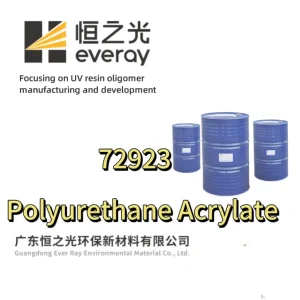
Yellowing primarily stems from two factors: thermal degradation of aromatic rings in Bisphenol-A epoxy structures and photo-oxidation of residual photoinitiator fragments (such as Type I aminoketones). For crystal-clear, weather-resistant topcoats, replace or blend aromatic epoxy acrylates with Aliphatic Polyurethane Acrylates (such as Grade 72923 or 72203A) and utilize non-yellowing photoinitiators like TPO or Omnirad 184 combined with Hindered Amine Light Stabilizers (HALS).
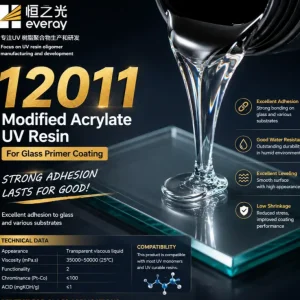
Non-polar substrates like untreated Polypropylene (PP) and Polyethylene (PE) possess low surface energy, making wetting difficult. To improve adhesion, incorporate specialty functionalized monomers containing carboxyl (-COOH) or phosphate ester functional groups (such as Grade 12011 or modified acrylic monomers). Furthermore, ensure surface energy exceeds 42 dynes/cm via corona treatment, flame treatment, or primer application before UV coating.
When stored in original unopened containers away from direct sunlight, heat sources, and strong oxidizers at temperatures between 10°C and 30°C, our UV acrylate oligomers carry a guaranteed shelf life of 12 months from the date of manufacture. Drums should be kept sealed to prevent moisture ingress and accidental exposure to ambient UV/light sources.
As a direct factory manufacturer, we offer flexible shipping options including full container loads (FCL), LCL palette shipments, ISO tanks, and flexitanks. We provide complete dangerous goods (DG) compliance documentation, UN-certified packaging, MSDS/SDS in multiple languages, and custom tariff classification support (HS Code 3907.30 / 3908.90) to streamline customs clearance globally.