Formulated to meet stringent European chemical protocols (REACH, SVHC, CLP) while supplying unmatched reactivity, photo-bleaching speed, and non-yellowing durability across French industrial production lines.
In modern industrial radiation curing, Active Amines (Amine Synergists) act as indispensable co-initiators that overcome the primary thermodynamic and chemical bottleneck of free-radical photo-curing: atmospheric oxygen inhibition. When UV formulations are exposed to ambient air during high-speed coating or flexographic/offset printing, ground-state triplet oxygen ($^3\text{O}_2$) scavenges propagating polymer radicals ($R^\bullet$), converting them into relatively unreactive peroxyl radicals ($ROO^\bullet$). This quenching mechanism halts chain growth, leading to tacky surfaces, inadequate crosslinking density, reduced chemical resistance, and severe blooming defects.
Active amine chemistry mitigates oxygen quenching via an efficient hydrogen abstraction mechanism. When paired with Type II photoinitiators (such as Benzophenone derivatives, ITX, or Methyl Benzoylformate), the excited photoinitiator state abstracts a hydrogen atom from the $\alpha$-position of the active amine. This generates a highly reactive $\alpha$-aminoalkyl radical ($R_2\text{N}-\dot{\text{C}}\text{HR}'$). Unlike peroxyl radicals, these $\alpha$-aminoalkyl radicals possess high reactivity toward acrylate double bonds and rapidly consume dissolved oxygen molecules, effectively shielding the polymer matrix and assuring instantaneous surface tack-free curing under both traditional Mercury arc and energy-efficient LED-UV lamps.
Active amines feature electron-dense nitrogen atoms with labile $\alpha$-hydrogens. Upon light exposure, the amine rapidly transfers hydrogen to the excited triplet state of Type II photoinitiators, increasing quantum yield by up to 350% compared to non-amine systems.
The intermediate $\alpha$-aminoalkyl radical reacts preferentially with ambient oxygen to form peroxyl radicals, which subsequently abstract another hydrogen atom from a secondary amine site, initiating fresh radical cascades that maintain surface polymerization.
Advanced hyperbranched and acrylated amine synergists eliminate the traditional drawback of yellowing. By binding the amine backbone into the crosslinked acrylic network, migratory odor and thermal discoloration in high-end cosmetic packaging are eliminated.
France stands as one of Europe’s primary centers for advanced chemical manufacturing, luxury packaging, automotive engineering, and aerospace manufacturing. Industrial transformation across French manufacturing regions—such as Cosmetic Valley (Centre-Val de Loire), the Île-de-France packaging cluster, and the Auvergne-Rhône-Alpes plastics ecosystem—is heavily guided by stringent European Union environmental directives and domestic sustainability laws.
France's strict adherence to EU REACH (Registration, Evaluation, Authorisation and Restriction of Chemicals) alongside the national AGEC Law (Loi Anti-Gaspillage pour une Économie Circulaire) mandates drastic reductions in volatile organic compounds (VOCs), low-molecular-weight migrating species, and toxic photoinitiators. Traditional low-cost tertiary amines (e.g., Triethylamine, DMEA) are being systematically phased out due to high volatility, odor, and migration risks.
Soaring industrial energy tariffs across the European Union have accelerated the adoption of monochromatic LED-UV curing systems throughout French printing presses and automated coating lines. Because LED emitters lack short-wave UVC wavelengths (which traditionally drive surface cure), formulators rely on tailored Active Amine Synergists to boost long-wave UVA (365nm, 385nm, 395nm) surface reactivity.
French luxury houses require flawless aesthetic performance. UV varnishes applied onto perfume bottles, premium spirit packaging, and cosmetic compacts demand crystal-clear transparency, extreme scratch resistance, zero odor retention, and zero yellowing over extended retail shelf lives—demands directly met by active acrylated amine technology.
| French Industrial Region | Primary Manufacturing Focus | Technical Photopolymer Requirements | Recommended Active Amine / Resin Solution |
|---|---|---|---|
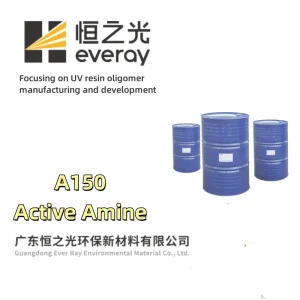
| Cosmetic Valley (Chartres, Orléans) | Perfume Bottles, Luxury Cosmetics Packaging | High gloss, zero yellowing, low odor, alcohol-rub resistance | A150 Active Amine + 6271 Low-Yellowing UV Adhesive |
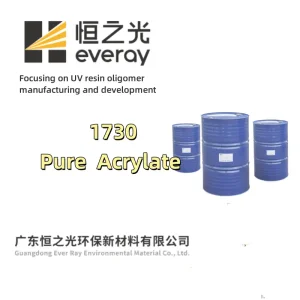
| Auvergne-Rhône-Alpes (Lyon, Plastics Valley) | Automotive Interior Trim, Structural Plastics | Extreme scratch/abrasion resistance, low shrinkage, PC/ABS adhesion | 1730 Vacuum Plating Resin + 7162 Aromatic PA UV Resin |
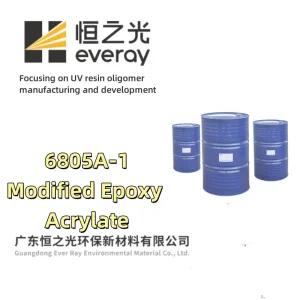
| Île-de-France & Grand Est | Food & Pharmaceutical Packaging Printing | Low migration compliance, high line speeds, Nestlé/Swiss Ordinance standards | 6805A-1 Low-Migration Resin + Acrylated Polymeric Amines |
| Occitanie (Toulouse) | Aerospace Components & Industrial Glass | Thermal stability, optical clarity, shadowless structural bonding | 6200D Shadowless Glue System + 1762 High Bonding Resin |
The global UV/EB curable resins market is undergoing a structural paradigm shift. Valued at over USD 5.8 Billion globally, the sector is experiencing a Compound Annual Growth Rate (CAGR) of 6.8%, driven by strict carbon neutrality targets, rapid automation, and the global phase-out of solvent-based thermal coatings. Active amine synergists represent one of the fastest-growing sub-segments within radiation curing additives due to their pivotal role in enabling energy-efficient LED curing and ultra-high-speed production lines.
Traditional medium-pressure mercury lamps emit broad-spectrum UV radiation (200nm–400nm), generating high heat and ozone gas while consuming vast electrical energy. LED-UV systems deliver monochromatic output (typically 385nm or 395nm), reducing energy expenditure by up to 75%. However, the lack of shortwave UVC output requires active amines to catalyze radical generation at the surface layer.
To prevent migration and odor issues in food-contact materials and sensitive medical devices, chemical manufacturers are moving away from monomeric tertiary amines toward acrylated amine oligomers. These polyfunctional amine acrylates chemically copolymerize into the polymer backbone, guaranteeing zero extractables and compliance with international food contact guidelines.
Post-pandemic supply volatility has highlighted the necessity for stable, fully audited raw material pipelines. Advanced chemical manufacturers with fully integrated synthesis plants—covering everything from amine precursor synthesis to final oligomer functionalization—provide European formulators with batch-to-batch consistency and complete REACH registration dossiers.
Our R&D roadmap focuses on pushing the boundaries of photopolymerization efficiency, environmental safety, and material performance to match the next decade of European manufacturing requirements.
Developing hyperbranched amine acrylates featuring high nitrogen density per molecule. These structures reduce formulation viscosity while delivering multiple active reaction sites, accelerating cure speed with minimal impact on film glass transition temperature ($T_g$).
Synthesizing active amine synergists derived from renewable bio-based feedstocks (such as plant-based polyols and amino acids) to assist French brands in achieving 50%+ bio-carbon content in their finished UV coatings and inks without compromising technical performance.
Engineering specialized amine synergists optimized for deep-penetration 405nm LED light and dual-cure (UV + Moisture/Thermal) mechanism systems, tailored for thick automotive structural adhesives and opaque 3D printing resins.
Achieving optimal crosslinking efficiency requires precise balancing of the active amine content against oligomer functionality, photoinitiator concentration, and lamp spectral output. The following formulation matrix outlines starting point guidelines for key industrial applications in France:
| Application Target | Recommended Active Amine | Synergist Dosage (%) | Key Oligomer Base | Formulation Benefit |
|---|---|---|---|---|
| High-Speed Flexo Inks | A150 Active Amine | 5.0% - 8.0% | 5377A Polyester Acrylate | Instant surface tack-free cure, excellent pigment wetting, low odor |
| Cosmetic Packaging Varnish | Acrylated Amine Synergist | 3.0% - 5.0% | 6231 Modified Epoxy Acrylate | High gloss (>95 GE), non-yellowing, chemical resistance to essential oils |
| Automotive Plastic Primers | 1730 Active Resin System | 4.0% - 6.0% | 7162 Aromatic PA UV Resin | Superior adhesion to untreated PP/ABS/PC, passes 100-grid cross-hatch test |
| Food Packaging Overprint Varnish | Low-Migration Polymeric Amine | 2.0% - 4.0% | 6805A-1 UV Resin | Meets Nestlé Guidance & Swiss Ordinance migration thresholds (<10 ppb) |
Explore our broader catalog of high-purity acrylate oligomers, anti-yellowing modified resins, and precision bonding systems available for direct export to France and the European Union.
Partner with a world-class photopolymer manufacturer. Request customized sample formulations, REACH technical dossiers, and direct factory pricing tailored for French industrial buyers.