Engineered to eliminate oxygen inhibition, accelerate surface tack-free speed, and optimize chemical durability across industrial printing and protective coatings.
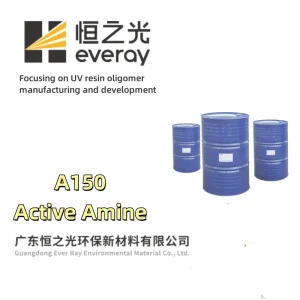
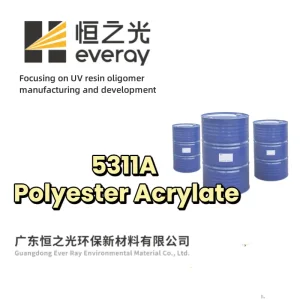
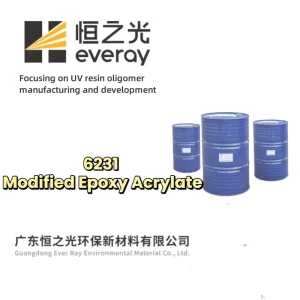
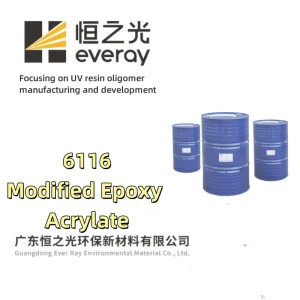
Strategic analysis of import substitution, regional industrial growth, and supply chain transformation across the Russian Federation.
The chemical and manufacturing sectors within the Russian Federation have undergone a significant structural shift. As domestic processing capacity expands in key industrial regions—such as the Moscow Oblast, Saint Petersburg manufacturing hubs, the Volga Economic Region (including Nizhny Novgorod and Tatarstan), and the timber-rich Ural and Siberian clusters—industrial formulators are increasingly upgrading to high-speed Radiation Curing (UV/EB) technology. This transition is driven by the imperative for eco-friendly compliance, energy efficiency, and high-throughput production lines capable of supporting Russia’s growing packaging, automotive, construction material, and consumer electronics industries.
At the center of high-performance UV-curable formulations are Active Amines (Amine Synergists). In photochemical crosslinking systems, active amines function as essential hydrogen donors for Type II photoinitiators (such as Benzophenone, ITX, and TPO formulations), dramatically overcoming the severe chemical bottleneck of atmospheric oxygen inhibition. In Russian manufacturing facilities, where low ambient factory temperatures during extended winter months can exacerbate surface tackiness and incomplete polymer conversion, the integration of high-purity active amine oligomers ensures rapid, tack-free surface curing, superior chemical resistance, and minimized yellowing.
Strategic Growth Driver: Import substitution policies across Russia have catalyzed massive demand for reliable, high-grade specialty acrylates and amine co-initiators. Direct manufacturing partnerships between Chinese chemistry leaders like EVER RAY and Russian formulators provide stable raw material flows, bypassing western supply chain bottlenecks while preserving international performance standards.
In-depth reaction kinetics of active amine synergists in acrylic oligomer crosslinking networks.
Type II photoinitiators (such as Benzophenone) absorb UV photons to reach an excited triplet state ($PI^*$). However, they cannot form free radicals by homolytic cleavage alone. Active amines possess reactive $\alpha$-hydrogen atoms situated adjacent to nitrogen atoms. The excited photoinitiator abstracts an $\alpha$-hydrogen from the amine, producing an alkylamino radical ($R_2N-\dot{C}H-R'$) and a ketyl radical.
The resulting carbon-centered alkylamino radical is extraordinarily reactive toward acrylate double bonds ($C=C$), initiating chain polymerisation rapidly even at lower UV irradiation doses.
Atmospheric oxygen penetrates the top layer of liquid coatings, reacting with propagating radical chains to form unreactive peroxyl radicals ($ROO^\bullet$), leading to sticky surface films. Active amine co-initiators resolve this via a secondary scavenging reaction:
This process consumes inhibitory oxygen molecules at the surface while regenerating active radicals, guaranteeing complete surface curing in high-speed Russian flexographic, offset, and roller coating lines.
| Amine Synergist Category | Reactivity & Cure Speed | Migration / Odor Risk | Yellowing Index ($\Delta YI$) | Target Industrial Application in Russia |
|---|---|---|---|---|
| Acrylated Amine Oligomers | Very High (Polyfunctional) | Extremely Low (Copolymerized) | Low - Excellent Stability | Food Packaging Inks, 3C Electronics, Luxury Cosmetic Varnishes |
| Low-Viscosity Tertiary Amines | High (Fast Abstraction) | Moderate to High | Moderate (Slight Drift) | Wood Sanding Sealers, Industrial Pipe Coatings |
| Aliphatic Amino Acrylates | High (Low Oxygen Inhibition) | Very Low | Minimal Yellowing | Clear Automotive Topcoats, Optical Adhesives |
| Aromatic Amine Synergists | Maximum Initial Speed | Moderate | Higher (Aromatic Drift) | Heavy-Duty Dark Wood Inks & Industrial Metal Primers |
Targeted chemical architectures optimized for specific climatic, regulatory, and mechanical demands.
Serving the major timber mills of Irkutsk, Krasnoyarsk, and Karelia. Our epoxy acrylate and active amine blends provide exceptional chemical protection against moisture, thermal expansion down to -40°C, and heavy wear resistance for parquet and PVC flooring.
Custom polyester acrylates and amino amine synergists designed for high-speed flexible film printing in Moscow and Nizhny Novgorod hubs. Meets rigorous low-odor, low-migration criteria for food outer packaging.
Polyurethane acrylates formulated with active amines to maximize adhesion on ABS, PC, and metal substrates. Ideal for automotive interior trims and cosmetic metallized caps requiring deep gloss and adhesion resilience.
Securing sustainable chemical supply and compliance for formulators in the Russian Federation and EAEU countries.
As Russian factories upgrade legacy medium-pressure mercury lamps to energy-efficient UV LED systems, surface cure issues can arise due to narrow spectral outputs. Active amine synergists are mandatory in LED formulations to amplify Type II photoinitiator efficiency at 385nm and 395nm wavelengths.
All EVER RAY active amines and acrylic oligomers supplied to Russia comply with Eurasian Economic Union (EAEU) technical regulations (TR CU 030/2012, TR EAEU 041/2017). Full Safety Data Sheets (SDS in Russian) and Technical Data Sheets (TDS) accompany every export shipment.
Operating from our major synthesis base in Yunfu, Guangdong, EVER RAY supports direct multi-modal freight routes: ocean shipments via Vladivostok, Saint Petersburg, and Novorossiysk, as well as direct rail cargo through Manzhouli/Zabaikalsk. All transactions support direct RMB payment structures, eliminating currency friction.
40,000+ m² modern facility equipped with 10+ continuous reaction lines, maintaining over 2,000 metric tons of monthly production capacity to guarantee delivery continuity.
Nearly two decades of innovation in specialty acrylic oligomers and photo-curing chemical engineering.
Driven by an experienced R&D team specializing in hyperbranched acrylates, amino oligomers, and low-viscosity reactive amine diluents.
Rigorous testing of amine value, viscosity, color index, and solid content guarantees identical batch-to-batch performance in every drum shipped.
Capabilities to modify functionality, glass transition temperature ($Tg$), or viscosity to match specific Russian factory application lines.
Explore our complete range of epoxy acrylates, hyperbranched polymers, and adhesion-promoting resins for Russian industry.
Addressing core technical questions from Russian chemical formulators, procurement leaders, and plant engineers.
In cold environments or unheated warehouse factories, liquid UV coatings experience higher viscosity and slower polymerization kinetics. Oxygen inhibition becomes more severe at lower temperatures because oxygen solubility in liquid monomers increases. Active amines supply highly reactive alkylamino radicals via hydrogen abstraction, dramatically lowering the activation energy for surface tack-free conversion and ensuring rapid curing under standard UV mercury or UV LED lamps.
Standard tertiary amines (like triethylamine or TEDA) can migrate to the surface post-cure, causing odor, blooming, poor intercoat adhesion, and yellowing over time. Acrylated amine oligomers incorporate acrylic double bonds directly into the backbone. During UV irradiation, the amine chemically crosslinks into the polymer matrix, eliminating extractables, odor, and migration risks while offering excellent chemical durability.
For most UV offset, flexo, and clear wood topcoat formulations, an active amine concentration of 2.0 wt% to 6.0 wt% is ideal when paired with 2.0 wt% - 4.0 wt% of a Type II photoinitiator (e.g., Benzophenone or ITX). In thin-film flexo printing inks, up to 8.0 wt% of an acrylated amino oligomer can be integrated to maximize line speed without yellowing.
Yes. As Russian printing and coating operations convert to UV LED systems, active amines play a vital role when combined with acylphosphine oxide initiators (such as TPO or 819). The amine co-initiator drastically reduces surface tackiness under 385nm and 395nm LED radiation, enabling high line speeds while reducing energy consumption by up to 50% compared to traditional mercury lamps.
We provide comprehensive export documentation including Russian-translated Safety Data Sheets (SDS), Technical Data Sheets (TDS), Certificates of Analysis (COA) per batch, and full chemical compliance declarations aligned with EAEU technical standards. Shipments are packaged in heavy-duty steel drums or IBC totes certified for international dangerous goods transport.
Request customized resin samples, technical data sheets, or direct factory quotation quotes from our senior chemical formulation engineering team.
