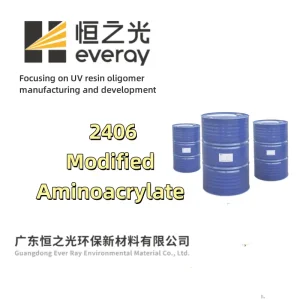
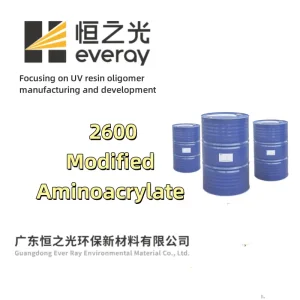
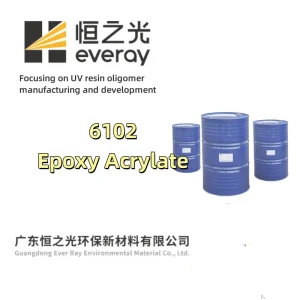
High-Reactivity UV Curable Amino Acrylate Technology Engineered for Advanced Manufacturing, Precision Coatings, and Low-VOC Printing Inks Across the Kansai Industrial Zone.
Specially curated UV resins tailored to satisfy the precise chemical requirements of electronics, packaging, and high-speed coating lines in Osaka.
Understanding the mechanism of amine-modified acrylates in overcoming atmospheric oxygen inhibition during high-speed radiation curing.
In modern industrial radiation curing chemistry, Amino Acrylate Oligomers represent a critical class of specialty resins designed to address one of the most persistent physical challenges in radical polymerization: oxygen inhibition at the surface layer. By chemically incorporating secondary or tertiary amine functionalities into the backbone of acrylic oligomers via Michael Addition reactions or modified prepolymer polycondensation, resin architects create a built-in amine synergist effect. This molecular configuration facilitates rapid hydrogen transfer during photolysis, dramatically accelerating surface cure speeds without demanding excessive photoinitiator loadings or inert gas purges (such as nitrogen blanketing).
Key Technical Insight for Osaka Formulators: Unlike physical blends of liquid amine synergists (e.g., BDMEA, TEAO) which are prone to migration, phase separation, and post-cure yellowing, chemically bound amino acrylate oligomers permanently integrate into the polymer network upon crosslinking. This guarantees zero extractable amines, minimal residual odor, and superior long-term gloss retention under stringent Japanese regulatory environments (such as CSCL and PRTR compliance).
The tertiary amine groups undergo immediate hydrogen abstraction when reacting with alkylperoxy radicals (ROO•), forming reactive α-aminoalkyl radicals that re-initiate acrylate polymerization even under ambient atmosphere.
Because the amine functionality is copolymerized directly onto the oligomer structure, it achieves 100% network participation, eliminating blooming, fogging, or surface exudation on delicate optical substrates.
Amino acrylate oligomers exhibit exceptionally high reactivity under long-wavelength UV LED light sources (365nm, 385nm, 395nm, and 405nm), compensating for lower photon energy in modern energy-efficient curing lines.
Aligning raw material supply with Osaka's advanced precision manufacturing, printed electronics, and high-end consumer packaging clusters.
The Greater Osaka Metropolitan Area—encompassing Sakai, Higashiosaka, Yodogawa, and Kadoma—serves as one of the world's premier innovation hubs for optoelectronics, flexible display panels, automotive interior modules, and advanced industrial packaging. As Japanese OEMs accelerate the shift toward sustainable manufacturing under Japan's Green Growth Strategy, chemical formulators across Kansai face rigorous demands for ultra-low VOC coatings, solvent-free UV curing inks, and ultra-durable hard coats.
Amino Acrylate Oligomers play a indispensable role in this ecosystem. High-speed offset package printing facilities in Higashiosaka rely on amino acrylates to achieve instantaneous surface tack-free drying at line speeds exceeding 400 m/min. Concurrently, precision electronic film coaters in Sakai leverage these oligomers to eliminate oxygen inhibition in thin-film micro-coatings applied over heat-sensitive PET, TAC, and PC films.
Navigating the global transition from traditional medium-pressure mercury lamps to energy-efficient LED-UV curing systems.
The global UV curing material market is experiencing a profound technological transformation driven by environmental mandates, carbon neutrality commitments, and volatile raw material pricing. Crucial regulatory developments—such as the European Union's REACH restrictions on low-molecular-weight photoinitiators (e.g., TPO reclassification) and Japan's stringent indoor air quality guidelines—are forcing coating formulators to drastically reduce photoinitiator dosages while preserving high-speed line productivity.
In this context, Amino Acrylate Oligomers serve as a foundational chemistry for next-generation formulations. By operating as an intramolecular photoactivator and radical donor, amino acrylates reduce the required loading of traditional Type II photoinitiators (such as Benzophenone or ITX) by up to 50–70%. This not only substantially lowers overall raw material costs for chemical plants in Osaka but also mitigates photo-yellowing, residual photoinitiator odor, and migration concerns in sensitive packaging applications.
A rigorous engineering comparison highlighting structural stability, reactivity, and performance metrics.
| Performance Parameter | Polymerized Amino Acrylate Oligomer | Monomeric/Physical Amine Synergist Blend | Industrial Impact for Osaka End-Users |
|---|---|---|---|
| Surface Curing Reactivity | Ultra-High (Direct hydrogen radical transfer) | Moderate to High (Diffusion dependent) | Enables tack-free curing at 300+ m/min line speeds under ambient air. |
| Amine Migration / Blooming | Zero Migration (100% Network Crosslinked) | High Risk (Migrates to substrate/surface) | Prevents haze on optical films and contamination in food packaging. |
| Discoloration & Yellowing | Low to Excellent Yellowing Resistance | High (Severe post-cure yellowing under UV/heat) | Crucial for high-clarity electronics clearcoats and white printing inks. |
| Viscosity Stability @ 25°C | Stable (200 – 1,500 mPa.s depending on grade) | Low, but prone to phase separation in storage | Ensures consistent viscosity during continuous roll-to-roll coater runs. |
| Odor Profile (Cured Film) | Virtually Odorless | Strong Amine / Fishy Residual Odor | Meets strict Japanese consumer standards for indoor and personal goods. |
| Photoinitiator Dosage Savings | 40% – 65% Reduction | 15% – 30% Reduction | Direct reduction in batch costs and regulatory compliance hurdles. |
Tailored UV formulations designed to address specific substrate and process challenges in local industrial hubs.
Location Focus: Higashiosaka Packaging & Printing Cluster.
In high-speed sheet-fed offset and flexographic printing on non-porous paperboard and synthetic plastics, amino acrylate oligomers provide superb pigment wetting, outstanding water-ink balance, and rapid surface drying under 395nm LED lamps, preventing ink offset and blocking in stacked sheets.
Location Focus: Sakai Optoelectronics & Display Zone.
Formulated into hard protective coatings for PMMA, Polycarbonate, and PET screens, low-viscosity amino acrylates deliver high crosslinking density, pencil hardness up to 3H-4H, and exceptional clarity without inducing film curl or brittleness.
Location Focus: Yodogawa Specialty Chemical Parks.
For low-viscosity digital inkjet inks, specialized low-molecular-weight amino acrylates provide the required surface reactivity to stop jet drop spreading (feathering) while maintaining jetted viscosity under 15 cPs at printing temperature (45°C) without clogging piezo printheads.
Pioneering advancements in sustainable, bio-based, and multi-functional amine oligomers for future industrial requirements.
As global supply chains transition toward circular carbon economies, our synthesis lab is integrating bio-derived polyols (e.g., soybean oil epoxides, bio-succinic acid, cardanol derivatives) into amino acrylate oligomer backbones. These green oligomers achieve carbon bio-content levels of 35% to 60% while matching petroleum-based performance in cure speed and film toughness.
To overcome shadow-curing limitations in complex 3D industrial components fabricated in Osaka's automotive and robotics plants, new dual-cure amino acrylates combine UV-radical amine synergism with secondary moisture or thermal epoxy curing, ensuring 100% conversion in unexposed shaded zones.
Traditional tertiary amines turn yellow upon UV exposure due to the formation of quinoid and conjugated chromophore structures. Next-generation sterically hindered amino acrylates restrict chromophore formation, enabling non-yellowing performance (ΔE < 1.0 after 500h QUV exposure) even in optical clearcoats.
Summary of R&D Targets (2025–2030):
Recommended starting formulations for coating engineers developing high-performance UV systems.
| Component | Chemical Type | Wt % |
|---|---|---|
| Core Oligomer | Epoxy Acrylate (e.g., Grade 6102) | 35% – 45% |
| Amine Accelerator | Amino Acrylate Oligomer (2406) | 15% – 25% |
| Reactive Diluent | TMPTA / TPGDA | 25% – 35% |
| Photoinitiator | TPO / 184 Blend | 3% – 5% |
| Additives | Silicone Flow & Leveling Agent | 0.5% – 1% |
Result: Complete surface cure at 250 m/min under 395nm LED lamp, high gloss (>90 GU), zero surface tack.
| Component | Chemical Type | Wt % |
|---|---|---|
| Core Oligomer | Aliphatic Urethane Acrylate (7911) | 40% – 50% |
| Synergist Resin | Amino Acrylate Oligomer | 10% – 20% |
| Monomer | HDDA / DPHA | 25% – 35% |
| Photoinitiator | 1173 / TPO-L | 2% – 4% |
| UV Stabilizer | HALS / Benzotriazole | 1% – 2% |
Result: Pencil hardness 3H on PC sheet, ΔE < 0.8 after UV aging, superior steel wool resistance.
In-depth technical answers addressing chemical compatibility, shelf life, regulatory compliance, and formulation adjustments.
Explore our full portfolio of high-grade epoxy, polyurethane, polyester, and modified acrylate oligomers for industrial buyers in Osaka.