Engineered for optimal reactivity, non-yellowing performance, and strict EU REACH compliance across Hungarian industrial automotive and flexographic packaging sectors.
As Hungary solidifies its status as a premier hub for automotive manufacturing, electronics assembly, and high-speed industrial packaging in Central Eastern Europe (CEE), the demand for high-efficiency UV-curable formulations has grown exponentially. At the core of high-speed UV radiation curing lies the strategic selection of Active Amines (Amine Synergists) and co-reactants.
Active amines act as crucial hydrogen donors when paired with Type II photoinitiators (such as Benzophenone or ITX). They drastically suppress surface oxygen inhibition, increase crosslinking density, reduce post-cure surface tackiness, and minimize overall photoinitiator costs. However, chemical procurement teams in Hungary face complex hurdles: balancing photo-yellowing risks in high-clarity clear coats, maintaining regulatory alignment with ECHA (European Chemicals Agency) REACH mandates, and ensuring reliable cross-border logistics without supply chain disruptions.
This comprehensive industrial whitepaper provides formulators, process engineers, and chemical procurement officers across Hungary—from Budapest and Győr to Debrecen and Kecskemét—with a detailed evaluation framework for sourcing high-performance active amines and acrylate oligomers directly from world-class manufacturing facilities.
The global UV radiation curing technology market is undergoing a structural paradigm shift, driven by strict VOC (Volatile Organic Compound) restrictions, energy reduction mandates, and the widespread adoption of high-efficiency LED-UV curing systems.
In atmospheric free-radical photopolymerization, triplet-state atmospheric oxygen rapidly scavenges propagating acrylate radicals ($R^\bullet$), forming unreactive peroxy radicals ($ROO^\bullet$). Active amines contain labile hydrogen atoms alpha to the nitrogen atom ($\alpha$-H). These hydrogen atoms are rapidly abstracted by peroxy radicals, generating highly reactive alkylamino radicals ($R-\dot{C}H-NR'_2$) that re-initiate polymerization and cure sticky surface layers instantly.
With traditional medium-pressure mercury lamps being phased out under global environmental protocols, long-wavelength LED-UV curing (365nm, 385nm, 395nm, 405nm) has become the dominant technology. However, LED emitters deliver narrow-spectrum emission with zero UVC radiation, leading to surface cure challenges. Active amine synergists bridges this gap by boosting free radical generation density without requiring excessive energy input.
Traditional low-molecular-weight tertiary amines (e.g., MDEA, EHA) suffer from volatile organic emissions, strong amine odors, and high migration potential, making them unsuitable for sensitive applications. Modern chemical synthesis focuses on amino-functional acrylate oligomers and polyether-modified active amines that copolymerize directly into the UV matrix, achieving near-zero extraction rates.
Hungary’s industrial sector is heavily integrated into the Western European automotive and consumer supply chains. Local chemical formulators and coating applicators require active amine solutions optimized for specific regional sub-sectors:
Centered around industrial nodes like Győr, Kecskemét, and Debrecen, Hungarian automotive manufacturers require ultra-durable clear coats for interior trims, dashboards, and exterior headlight lenses. Active amines utilized here must offer outstanding non-yellowing characteristics (QUV weatherability), thermal stability, and exceptional scratch resistance when formulated with aliphatic polyurethane acrylates.
Hungary hosts major Central European packaging print houses supplying food, pharmaceuticals, and fast-moving consumer goods (FMCG). Formulations used in overprint varnishes (OPV) and offset flexo inks must strictly adhere to the European Printing Ink Association (EuPIA) guidelines and Swiss Ordinance standards. Low-odor, polymeric amino acrylates are required to eliminate off-tasting volatiles and extractable chemicals.
Industrial wood finishing and SPC/PVC flooring production in Hungary demand fast-curing sanding sealers and topcoats capable of running on automated roller-coating lines at speeds exceeding 40 meters/minute. High-reactivity active amines enable complete cure in thick pigmented coatings while preventing edge curl and surface micro-cracking.
Choosing the correct active amine grade depends heavily on formulation viscosity, target UV wavelength, pigment loading, and substrate sensitivity. Below is a comprehensive chemical classification matrix designed for chemical lab engineers and formulators in Hungary.
| Active Amine Category | Chemical Mechanism | Viscosity (mPa.s @ 25°C) | Reactivity Index | Yellowing Tendency | Primary Industrial Application in Hungary |
|---|---|---|---|---|---|
| Monomeric Tertiary Amines | Hydrogen donor, non-bound liquid additive | 15 – 50 | Very High | Moderate to High | General industrial wood primers, paper varnishes |
| Oligomeric Polyether Amines | Multi-functional hydrogen transfer polymer | 150 – 400 | High | Low | UV offset inks, plastic coatings, screen inks |
| Amino-Functional Acrylates | Copolymerizable acrylate backbone with tertiary amine | 300 – 1,200 | High | Very Low (Non-Yellowing) | Automotive clear coats, 3C electronics, low-odor packaging |
| Hyperbranched Active Amines | High-density dendritic amine architecture | 800 – 2,500 | Ultra-High | Negligible | High-speed LED-UV inks, scratch-resistant hardcoats |
To achieve maximum curing efficiency under 395nm LED-UV radiation, pair a Polymeric Active Amine (12-18% w/w) with a Type II Photoinitiator (e.g., ITX or DETX @ 2-4% w/w) and an Acylphosphine Oxide (e.g., TPO or TPO-L @ 3-5% w/w). This tri-component reaction system achieves complete through-cure and surface-tack elimination at conveyor speeds of up to 60 m/min with minimal thermal dissipation on heat-sensitive filmic substrates.
Importing specialty active amines and UV curable resins into Hungary requires strict adherence to European Union chemical mandates, safety protocols, and supply chain transparency.
All active amine chemicals and acrylate monomers supplied to Hungarian partners comply with ECHA (European Chemicals Agency) REACH regulations. Fully registered substances guarantee smooth customs clearance at Hungarian entry points (such as Budapest Ferenc Liszt Logistics Hubs) without administrative delays.
Our UV resin chemical portfolios are free from Substances of Very High Concern (SVHC), organotin catalysts, persistent organic pollutants, and heavy metals. Certificates of Analysis (COA), Safety Data Sheets (SDS in Hungarian and English), and Technical Data Sheets (TDS) are generated for every production batch.
Chemical shipments are packaged in heavy-duty UV-shielded steel drums (200kg net) or intermediate bulk containers (1000kg IBC tanks). Controlled nitrogen-blanketed synthesis ensures long storage stability (minimum 12 months shelf life) under standard warehouse conditions in Central Europe.
As industrial photopolymerization moves toward total sustainability, active amine research focuses on three major technological frontiers:
Self-emulsifying or water-dispersible amino acrylates designed for low-VOC waterborne UV wood finishes. They eliminate organic solvents entirely while retaining the rapid surface cure provided by amine chemistry.
Utilizing plant-derived fatty acid derivatives and renewable polyols to synthesize bio-based amine synergists, reducing reliance on fossil-based raw materials and lowering carbon footprint metrics for ESG-conscious manufacturers in Hungary.
Synthesizing novel molecules that combine both chromophore photoinitiator moieties and tertiary amine hydrogen donors into a single polymer chain, optimizing photon absorption at 395nm while suppressing oxygen inhibition simultaneously.
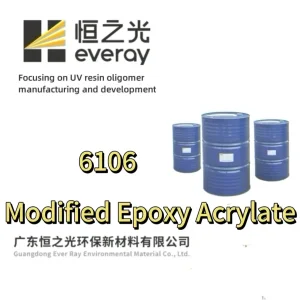
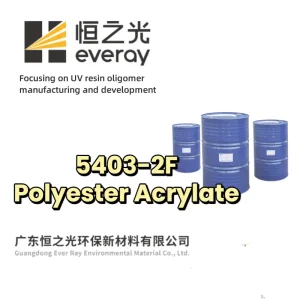
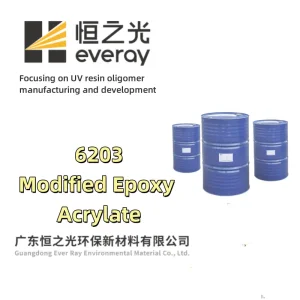
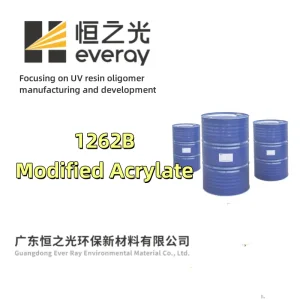
Select from our comprehensive list of high-purity UV resins, reactive diluents, and active amine formulations.
Detailed answers to technical, regulatory, and procurement questions regarding active amine supply in Hungary and the wider European Union.
Partner directly with a world-class active amine manufacturer. Request custom technical data sheets, REACH documentation, starting formulations, and free laboratory samples for evaluation.
