Engineered for high speed, low micro-toxicity, and compliance with stringent European industrial frameworks.
The Republic of Ireland has firmly established itself as a preeminent hub for global high-technology manufacturing, life sciences, medical technology (MedTech), and sustainable industrial packaging within the European Single Market. Industrial regions such as the Galway Medical Device Corridor, the Cork Bio-Pharmaceutical Cluster, and the Greater Dublin Electronics & Digital Hardware Zone require chemical inputs that adhere strictly to international quality metrics, zero-defect standards, and fast cycle times.
As Irish manufacturers pivot rapidly toward net-zero manufacturing targets and decarbonized production lines, traditional solvent-borne thermal-curing chemical systems are being systematically replaced by Ultraviolet (UV) and Electron Beam (EB) curable polymer chemistries. UV curation eliminates volatile organic compound (VOC) emissions, reduces energy footprint by up to 75% compared to thermal ovens, and enables instantaneous inline handling of sensitive substrates such as medical-grade thermoplastics, optical films, and micro-electronic assemblies.
Specialized light-curing adhesives and primers providing bio-compatibility, autoclave resistance, and instant bond strength for catheters, diagnostic cartridges, and surgical equipment made in Galway and Limerick.
Conformal coatings and vacuum-plating UV topcoats engineered to protect PCB assemblies, sensors, and display units against thermal shock, salt fog, and chemical abrasion across Irish supply chains.
Ultra-low odor, fast-cure modified epoxy acrylates and polyester acrylates for high-speed flexographic and offset overprint varnishes serving Ireland's agricultural and food export industries.
To successfully serve Irish original equipment manufacturers (OEMs) and contract formulators, chemical factories must deliver comprehensive analytical data, chemical stability across shipping routes, and complete regulatory compliance under European Chemicals Agency (ECHA) guidelines, including REACH registration and SVHC clearance.
Procurement directors and supply chain managers in Ireland face dual pressures: maintaining razor-thin operational tolerances while insulating their supply pipelines against global logistics volatility. Buying UV curable resins directly from primary synthesis factories provides distinct commercial and technical advantages over traditional tier-3 distribution networks.
1. Batch-to-Batch Molecular Consistency: Variations in molecular weight distribution ($M_w/M_n$), acid value, or residual monomer content can lead to line shutdown in automated UV coating facilities. Direct factory control ensures that every drum shipped to the Ports of Dublin or Cork adheres strictly to narrow viscosity and reactivity bands.
2. Custom Viscosity & Functionality Tailoring: Standard commercial resins often compromise between hardness and flexibility. Factory-direct synthesis allows formulators in Shannon or Cork to request tailored acrylic oligomers with customized backbone structures—such as modified aliphatic polyurethanes or low-shrinkage epoxy acrylates.
3. Seamless EU REACH Compliance & Regulatory Transparency: Chemical entry into Ireland requires rigorous documentation. Direct manufacturer relationships grant immediate access to detailed Technical Data Sheets (TDS), Safety Data Sheets (SDS compliant with EU Regulation 2020/878), and Certificates of Analysis (COA) per batch.
Selecting the optimal UV resin oligomer requires a thorough understanding of polymer chemistry, photopolymerization kinetics, and crosslink density. The three primary chemical families utilized across Irish manufacturing sectors include Epoxy Acrylates, Polyurethane Acrylates (PUA), and Polyester Acrylates.
| Chemical Class | Core Structural Features | Cure Speed & Hardness | Flexibility & Toughness | Target Irish Applications |
|---|---|---|---|---|
| Bisphenol A Epoxy Acrylates | Rigid aromatic backbone, high hydroxyl concentration | Ultra-Fast / High (4H-6H) | Low / Brittle | Paper OPV, Wood Primers, Metal Can Coatings |
| Aliphatic Polyurethane Acrylates | Isocyanurate / IPDI backbone, flexible polyether/polyester soft segments | Moderate / Medium-High (2H-4H) | Exceptional / Non-Yellowing | 3C Electronic Housings, Medical Device Adhesives, Automotive Topcoats |
| Aromatic Polyurethane Acrylates | TDI/MDI backbone with polyester polyols | Fast / High (3H-5H) | High Impact & Abrasion Resistance | Industrial Flooring, SPC Tile Coatings, Heavy Equipment Varnishes |
| Polyester Acrylates | Multi-functional ester linkages, low viscosity profile | Fast / Moderate (2H-3H) | Moderate / Excellent Pigment Wetting | UV Flexo Inks, Lithographic Packaging Inks, Screen Printing |
With Irish manufacturing facilities upgrading from conventional medium-pressure mercury lamps to energy-efficient 365nm and 395nm UV-LED curing systems, overcoming atmospheric oxygen inhibition at the coating surface is critical. Oxygen radicals react with propagating acrylate radicals to form unreactive peroxy radicals, resulting in surface tackiness.
Factory-engineered solutions include the addition of amino acrylate oligomers and active amine synergists. The tertiary amine structures donate hydrogen atoms to peroxy radicals, generating active alkylamino radicals that re-initiate polymerization, thereby ensuring complete surface tack-free cure even under high-speed line conditions.
Transporting specialty chemicals across international maritime corridors to Ireland requires strict adherence to international dangerous goods shipping regulations (IMDG Code) and local port entry protocols. Our manufacturing facilities employ standardized ISO 9001:2015 quality control systems alongside specialized export packaging protocols.
All imported substances comply fully with ECHA guidelines. Detailed Safety Data Sheets featuring CLP classification and REACH registration status are supplied prior to shipment.
Available in 20kg steel pails, 200kg UN-certified steel drums, and 1000kg IBC totes, engineered to maintain thermal stability during maritime transport to Dublin Port.
Formulation labs in Cork and Dublin can request accelerated 1kg–5kg evaluation samples delivered via air courier alongside initial starting formulation guidelines.
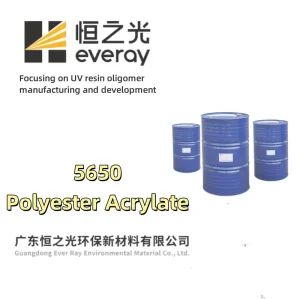
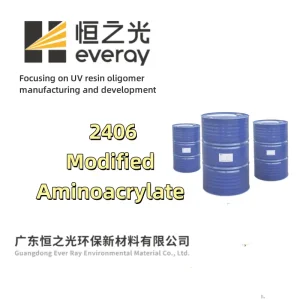
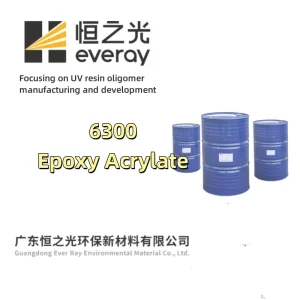
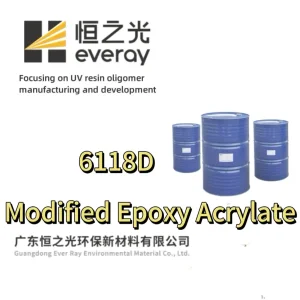
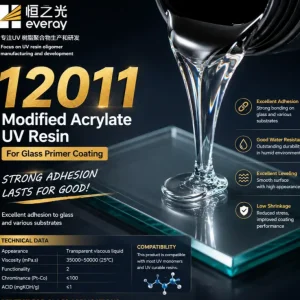
Explore our extended series of factory-direct UV resins serving industrial coaters, ink manufacturers, and adhesive formulators across Ireland.
In-depth responses curated by our senior chemical applications engineers for formulators and buyers serving the Irish market.
Aliphatic polyurethane acrylates (PUAs) feature non-yellowing, light-stable aliphatic isocyanate backbones (such as IPDI or HDI). Unlike aromatic resins, aliphatic PUAs do not absorb UV radiation over time, preserving optical clarity and preventing yellowing under outdoor sunlight or high-intensity LED display environments. Furthermore, they offer exceptional elongation and impact resistance, safeguarding delicate electronic housings manufactured in regions like Dublin or Shannon against physical drop stress and thermal cycling.
Standard epoxy acrylates contain polar hydroxyl (-OH) groups that promote initial hydrogen bonding with glass or metal surfaces. However, exposure to moisture or boiling water breaks these bonds, leading to delamination. Modified epoxy acrylates incorporate hydrophobic fatty acid chains or silane-functional moieties into the polymer backbone. This dual mechanism delivers dense crosslinking and hydrophobic protection, allowing glass coatings (such as bottle primers or decorative glass) to withstand 100°C boiling water testing for extended durations without loss of cross-hatch adhesion.
Transitioning to 395nm UV-LED sources requires matching the absorption spectra of the photoinitiator system (e.g., using TPO, TPO-L, or DETX) with high-reactivity oligomers. Because UV-LED sources emit a narrow monochromatic band without deep UV-C wavelengths, surface cure can suffer from oxygen inhibition. We recommend blending 10%–20% amino acrylate oligomers or active amine synergists into the resin matrix alongside hyperbranched acrylates to accelerate surface radical generation and ensure tack-free cure at lower energy doses.
Factory-direct procurement bypasses intermediary trading markups, yielding direct unit-cost savings of 15% to 30%. More importantly, it creates a direct technical conduit between your R&D chemists and our chemical synthesis engineers. Whether you require customized viscosity adjustments for automated spray lines, non-migratory oligomers for food-contact packaging overprint varnishes, or rapid container shipments to Irish ports, direct factory partnership ensures full technical transparency, lot traceability, and priority manufacturing scheduling.
