Engineered to deliver exceptional reactivity, precise viscosity control, low volume shrinkage, and superior adhesion to challenging substrates.
Understanding regional demand drivers, strict regulatory mandates, and supply chain shifts defining North American radiation curing chemistry.
The market for Modified Acrylate Monomers in the United States represents one of the most technologically advanced and highly regulated sectors in global specialty chemicals. Driven by stringent environmental guidelines established by the U.S. Environmental Protection Agency (EPA) and regional air quality management districts—such as California's South Coast Air Quality Management District (SCAQMD Rules 1113 and 1151)—American industrial manufacturing is aggressively phasing out traditional solvent-based systems in favor of 100% solids, energy-curable (UV/EB) systems.
Modified acrylate monomers serve as crucial reactive diluents and property modifiers within radiation-curable coatings, inks, adhesives, and 3D printing resin matrices. Unlike standard monofunctional or polyfunctional monomers, chemically modified acrylates (such as ethoxylated, propoxylated, or caprolactone-modified variants) offer tailored viscosity reduction without compromising crosslink density, mechanical toughness, or skin comfort profiles.
Centering around Detroit, Michigan, and the broader Midwest industrial corridor, demand is surging for dual-cure and scratch-resistant modified acrylate monomers capable of adhering to engineering plastics (PC/ABS, TPO) and metal substrates.
Pacific Northwest and Silicon Valley tech hubs require high-purity, low-yellowing monomers for display optical clear adhesives (OCA), hardcoats for consumer electronics, and semiconductor packaging encapsulants.
East Coast and Midwest conversion plants require low-migration, ultra-low odor monomers complying with FDA 21 CFR 175.105 and Nestlé Guidance for flexible packaging UV flexo and offset inks.
How precise ethoxylation (EO), propoxylation (PO), and organic modification solve historical trade-offs in free-radical and cationic UV curing systems.
Standard acrylate monomers like Trimethylolpropane Triacrylate (TMPTA) or Hexanediol Diacrylate (HDDA) offer exceptional cure speed and high hardness. However, their industrial application in high-volume U.S. manufacturing lines is frequently restricted by high volume shrinkage (leading to substrate curling or delamination) and elevated skin irritation levels (Primary Irritation Index, PII > 5.0).
Chemical Modification Strategies: By introducing controlled ethylene oxide (EO) or propylene oxide (PO) repeat units between the core polyol backbone and the reactive acrylate ester caps, polymer chemists modify the spatial flexibility and hydrophilicity of the monomer molecule.
Key Insight (Information Gain): Ethoxylation increases monomer reactivity under long-wavelength LED-UV light (365nm - 395nm) by increasing ethylene chain mobility, which delays the onset of vitrification during free-radical polymerization. This allows final double-bond conversions to exceed 92%, drastically lowering residual monomer migration.
| Monomer Class | Modification Type | Viscosity @ 25°C (cPs) | Tg (°C) | PII Rating | Primary U.S. Application |
|---|---|---|---|---|---|
| Ethoxylated TMPTA (3EO) | Alkoxylated Triacrylate | 60 – 90 | 27 | 1.5 (Low) | Packaging Inks, Plastic Overprint Varnishes |
| Propoxylated NPGDA (2PO) | Alkoxylated Diacrylate | 12 – 25 | 32 | 0.8 (Very Low) | Flexo Inks, LED Surface Coatings |
| Special Modified Epoxy Acrylate | Amine/Fatty Acid Modified | 500 – 1,500 | 45 | 1.2 (Low) | Glass, Metal Primers & Water-Resistant Inks |
| Caprolactone Modified Acrylate | Ring-Opening Extension | 150 – 300 | -15 | 0.5 (Minimal) | Flexible Plastics, TPU Thermoforming Coatings |
| Polycarbonate Modified Acrylate | Aliphatic Chain Insert | 2,000 – 4,500 | 18 | 0.2 (Minimal) | Automotive Soft-Touch Coatings, Tactile Film |
Navigating global chemical sourcing with domestic reliability, batch-to-batch consistency, and guaranteed compliance.
Full compliance with US EPA TSCA Active Inventory listings. Every shipment is accompanied by OSHA HazCom 2012 compliant 16-section Safety Data Sheets (SDS) with accurate CAS tracking.
Precise MEHQ inhibitor level management ensures 12+ months of shelf stability in US temperature-controlled warehouses without hindering low-energy LED UV curing sensitivity.
Factory-direct pricing models eliminate intermediate chemical distribution markups, giving U.S. formulators a 15–25% cost advantage on premium oligomer and monomer inputs.
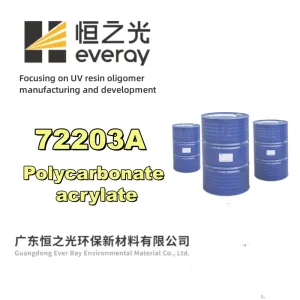
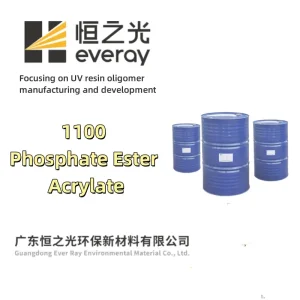
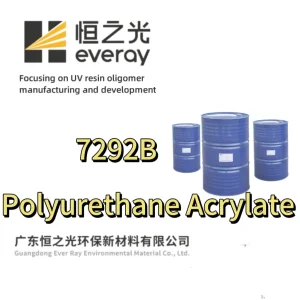
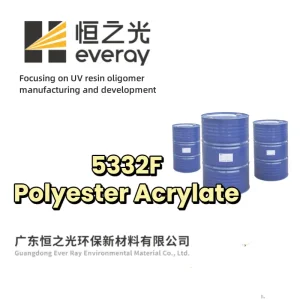
Explore our complete range of high-performance modified acrylates, photo-thermal dual-curing resins, and specialty functional additives.
Strategic directions shaping future chemical formulations in American high-tech and sustainable manufacturing.
Synthesizing acrylate monomers from renewably sourced bio-succinic acid, cardanol, and glycerol, targeting carbon footprint reductions >40% for US ESG compliance.
Developing hyper-reactive monomers optimized for long-wave 395nm/405nm LED lamps paired with secondary moisture or thermal shadow curing mechanisms.
Designing monomer chemistries with viscosity <10 cPs at 25°C specifically for high-speed SLA/DLP 3D printing resins with high heat deflection temperatures (HDT > 150°C).
Polymeric and self-initiating acrylate monomers that eliminate residual photoinitiator fragments in food and pharmaceutical primary packaging.
Expert answers addressing regulatory approvals, chemical compatibility, sample dispatch, and performance evaluation.
Connect with our senior technical specialists to request comprehensive Technical Data Sheets (TDS), Safety Data Sheets (SDS), certificates of analysis (COA), and complimentary 500g evaluation samples shipped directly to your R&D facility.
