
Engineering-grade oligomers and modified acrylate monomers engineered to provide high water resistance, superior leveling, low shrinkage, and non-yellowing durability across glass, offset inks, and protective UV coatings.
India's manufacturing sector is undergoing an unprecedented structural transition driven by government-led initiatives such as "Make in India", National Logistics Policies, and expanding urban consumption. As industrial hubs across Gujarat (Hazira, Ankleshwar, Vapi), Maharashtra (Thane-Belapur, Pune), Tamil Nadu (Sriperumbudur), and Telangana expand, the chemical coating and ink processing industries are rapidly shifting from solvent-borne formulations toward high-efficiency, environmentally compliant Ultra-Violet (UV) and Electron-Beam (EB) radiation-cured resin systems.
Central to this revolution is the adoption of advanced Modified Acrylate Monomers. These functional monomers serve dual roles: acting as precision reactive diluents to replace toxic volatile organic solvents (VOCs) and functioning as molecular architects that dictate the glass transition temperature ($T_g$), crosslink density, surface tension, substrate adhesion, and curing kinetics of final coatings, 3D printing photopolymers, structural adhesives, and graphics inks.
India’s booming automotive OEM and EV sector requires high-scratch-resistance exterior clear coats and interior plastic coatings that tolerate extreme solar irradiance, high thermal cycles, and harsh monsoon exposure without yellowing or micro-cracking.
With stringent Food Safety and Standards Authority of India (FSSAI) guidelines, packaging converters demand ultra-low migration modified monomers with minimal residual odor, zero heavy metals, and high reactivity under high-speed offset and flexographic printing lines.
As global electronic manufacturing services (EMS) scale up in South India, specialized modified acrylate monomers are essential for PCB conformal coatings, optical clear adhesives (OCA), display potting, and vacuum electroplating topcoats.
Standard acrylate monomers, such as trimethylolpropane triacrylate (TMPTA) or tripropylene glycol diacrylate (TPGDA), often suffer from key performance bottlenecks: high skin irritation indices (Primary Irritation Index > 3.0), significant volumetric cure shrinkage (leading to inter-coat adhesion failure), and oxygen inhibition during surface curing. To overcome these limitations, modern polymer chemistry utilizes chemical modification techniques to engineer custom monomers tailored for demanding industrial environments.
By introducing specific backbone architectures, functional groups, and alkoxylation degrees, monomer synthesis yields distinct chemical profiles tailored for performance optimization:
| Monomer Modification Type | Chemical Backbone Structure | Viscosity Reduction Power | Refractive Index ($n_D^{20}$) | Primary Benefit in India Context |
|---|---|---|---|---|
| Alkoxylated (EO/PO) Monomers | Ethoxylated / Propoxylated Polyols | High (15 – 45 mPa.s) | 1.445 – 1.460 | Drastically lowers skin irritation (PII < 1.0) and boosts water flexibility in humid tropical storage. |
| Isobornyl Acrylate (IBOA) Derivatives | Bicyclic Aliphatic Hydrocarbon Structure | Moderate (5 – 15 mPa.s) | 1.472 – 1.476 | Provides high $T_g$ (> 90°C), extreme scratch resistance, and low volumetric shrinkage for plastics. |
| Caprolactone Modified Acrylates | Extended Polyester Chain Links | Moderate (40 – 90 mPa.s) | 1.455 – 1.470 | Imparts superior flexibility, deep draw impact strength, and stress-relaxation properties on metal substrates. |
| Cyclic Trimethylolpropane Formal (CTFA) | Heterocyclic Dioxane Ring Monomer | High (10 – 25 mPa.s) | 1.462 – 1.465 | Outstanding adhesion to difficult plastic films (PET, PC, PMMA, untreated Polyolefins) and rapid LED curing response. |
| Phenoxyethyl Acrylate (PEA) Modified | Aromatic Ether Monomer | High (8 – 15 mPa.s) | 1.512 – 1.516 | High refractive index for optical coatings, high solvency for photoinitiators, and exceptional flexibility. |
In tropical industrial environments like India, atmospheric oxygen diffuses into the liquid monomer resin film during UV exposure, reacting with free radicals to form inactive peroxyl radicals. This leads to sticky surface tack and poor chemical resistance. Special modified acrylates incorporate amine-modified structures or ether-ester sequences that promote rapid hydrogen abstraction, competing effectively against oxygen quenching and achieving complete surface double-bond conversion under standard mercury arc or 365–395nm LED-UV lamps.
Custom formulation of UV-curable coatings, adhesives, and inks requires matching modified acrylate monomers with specific industrial performance demands. Below are customized solution matrix architectures implemented across major Indian manufacturing clusters:
Challenge: Hydrophilic glass surfaces cause moisture delamination and yellowing in humid environments.
Solution: Formulations utilizing modified monomers like 17730A-2 Special Modified Acrylate combined with silane coupling agents achieve interpenetrating polymer networks (IPN), offering boil-water resistance exceeding 2 hours and 5B cross-hatch adhesion retention.
Challenge: Misting, poor pigment wetting, and water-ink imbalance under high-speed commercial presses.
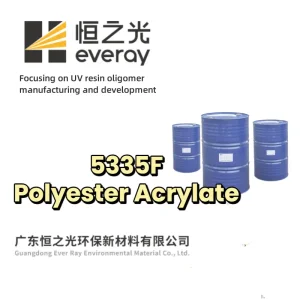
Solution: Incorporating Polyester Acrylate 5332F and 5335F provides optimized rheological control, Newtonian flow behavior, low ink emulsification, and fast cure response on non-porous substrates.
Challenge: Delamination on metallized plastic components (ABS/PC) after thermal shock testing.
Solution: 7620 UV-Curing Resin combined with low-shrinkage mono-functional modified acrylates reduces internal curing stress, preventing substrate warping and ensuring brilliant mirror-like reflectivity.
The radiation curing industry in South Asia is rapidly advancing towards sustainable, energy-efficient chemistry. Our R&D engineering matrix focuses on four critical technological breakthroughs over the next decade:
Indian industrial coaters are replacing traditional mercury vapor lamps with 365nm/395nm LED-UV systems to trim energy costs by up to 70%. Modified acrylate monomers are optimized with tailored absorption windows to prevent surface tackiness under narrow LED emission spectra.
Synthesizing monomers from renewable feedstocks—including cardanol (cashew nut shell liquid derivative abundant in India), soybean oil, and bio-succinic acid—enables low-carbon footprints without sacrificing mechanical hardness or curing speed.
For complex 3D geometries and shaded automotive parts where UV light cannot penetrate, hybrid modified monomers carrying dual functional groups (e.g., acrylate-alkoxysilane or acrylate-isocyanate) cure rapidly via light and complete crosslinking via ambient humidity.
Managing chemical procurement across international borders requires rigorous supply chain logistics, lot-to-lot batch consistency, and complete regulatory alignment with Indian safety standards.
All products comply with international REACH standards, RoHS 3.0, and specific Bureau of Indian Standards (BIS) chemical guidelines. Complete Safety Data Sheets (SDS) according to GHS Rev. 8 and Certificates of Analysis (COA) accompany every shipment.
Specialized inhibitor packages (MEHQ / BHT stabilization) ensure modified acrylate monomers remain chemically stable at elevated ambient temperatures (up to 40°C) during ocean transit and long-term storage in Indian port warehouses.
Supplied in 20kg polycans, 200kg steel drums, or 1000kg IBC totes, sealed under an oxygen-rich blanketing atmosphere to prevent spontaneous thermal polymerization during maritime logistics.
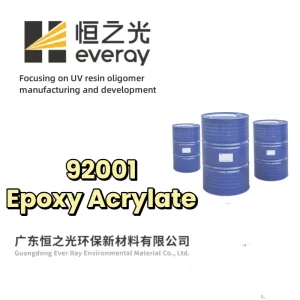
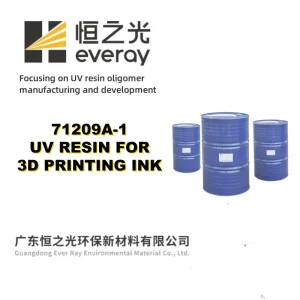
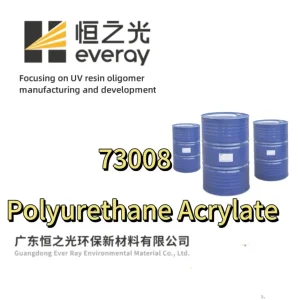
Explore our complete range of high-performance epoxy acrylates, polyurethane acrylates, polyester oligomers, and specialty engineering resins serving Indian manufacturing enterprises.
Addressing core engineering inquiries from formulation chemists, quality assurance managers, and procurement leads in India.
Partner with our technical application specialists to receive custom monomer recommendations, technical data sheets (TDS), safety data sheets (SDS), and complimentary evaluation samples.
Send Inquiry Now