Provides rapid surface reaction speeds and high gloss stability under regional tropical conditions.
View Technical Specs
Delivers unmatched chemical resistance and surface hardness for industrial wood and metal finishes.
View Technical Specs
Superior pigment wetting capacity designed for offset lithographic and flexographic printing applications.
View Technical Specs
Formulated for flexible plastic substrates, providing exceptional adhesion and anti-scratch properties.
View Technical SpecsIn ultra-violet (UV) and electron beam (EB) curable chemical formulations, Active Amines (also referred to as Amino Acrylates or Amine Synergists) serve an indispensable dual role: accelerating reaction kinetics and effectively overcoming atmospheric oxygen inhibition.
Free radical polymerization initiated by Type II photoinitiators (such as Benzophenone or Isopropylthioxanthone - ITX) relies on a bimolecular reaction step. The photoinitiator absorbs UV radiation to reach a triplet excited state, requiring a secondary molecule—a hydrogen donor—to generate the active free radicals that propagate polymer chain growth. Active Amines contain tertiary amine groups with alpha-hydrogens, acting as extraordinary hydrogen donors that dramatically increase quantum yield.
Furthermore, atmospheric oxygen rapidly quenches free radicals at the coating surface, forming unreactive peroxy radicals that cause persistent surface tackiness. Active Amines scavenge dissolved and surface oxygen via rapid hydrogen abstraction pathways, enabling flawless, high-speed surface curing even under high-speed industrial coating lines in ambient conditions.
Comparative physical chemistry metrics for formulators selecting precise amine synergist grades for industrial applications:
| Amine Synergist Class | Viscosity (mPa.s @ 25°C) | Amine Value (mg KOH/g) | Reactivity Profile | Primary Application Compatibility |
|---|---|---|---|---|
| Ethanolamine-Modified Acrylates | 100 - 300 | 120 - 160 | Ultra-Fast Surface Cure | Paper OPVs, Offset Packaging Inks, Flexo Inks |
| Aliphatic Amino Acrylates | 200 - 500 | 80 - 120 | High Flexibility / Non-Yellowing | 3C Electronics, Clear Wood Topcoats, Plastic Coatings |
| Polymeric Tertiary Amines | 1,000 - 3,500 | 150 - 210 | Low Migration / Low Odor | Food Packaging Inks, Medical Disposables, Low-VOC Coatings |
| Aromatic Amine Co-Initiators | 50 - 150 | 200 - 260 | Extreme Reactivity / Depth Cure | Pigmented Screen Inks, Dark Wood Primers, Heavy Adhesives |
Ethiopia stands as one of Africa's fastest-growing industrial hubs, driven by the government's Homegrown Economic Reform Agenda (HGER 2.0) and massive capital investments into state-of-the-art industrial parks such as Hawassa, Bole Lemi, Kilinto, Adama, and Kombolcha.
With domestic construction expanding in Addis Ababa and regional capitals, automated wood coating lines in Hawassa and Dukem require high-efficiency UV cure systems. Active amines ensure quick turnaround times, scratch resistance, and zero surface tackiness on local bamboo and hardwood timber.
Ethiopia's pharmaceutical, beverage, and fast-moving consumer goods (FMCG) packaging sectors are transitioning from solvent-based printing to UV-curable offset and flexographic inks. Active amine co-initiators eliminate print transfer and speed up folding carton production.
Modjo Leather City and nearby industrial centers are adopting UV-curable topcoats for synthetic leather and resilient vinyl flooring. Amine synergists provide superior flexibility, chemical resistance against domestic cleaners, and long-term anti-yellowing performance.
Importing specialty chemical raw materials into Ethiopia requires navigating complex customs logistics, foreign exchange allocation (NBE rules), and multi-modal transport corridors. As a dedicated manufacturer and wholesale chemical exporter, we offer end-to-end operational assurance:
Direct ocean container shipment from our manufacturing bases to Djibouti Port, with seamless land transit via the Ethio-Djibouti Railway and heavy trucking routes directly to Modjo Dry Port or Dire Dawa Free Trade Zone.
We work closely with major Ethiopian commercial banks (e.g., Commercial Bank of Ethiopia, Dashen Bank, Awash Bank) to facilitate smooth Letter of Credit transactions, CAD documentation, and foreign exchange compliance.
All active amine compounds and specialty monomers are sealed in UV-opaque, nitrogen-blanketed HDPE drums or steel drums (200kg) with thermal barrier wraps to prevent premature thermal polymerization during tropical transit.
Our chemical products are fully documented under international Harmonized System (HS) codes, facilitating swift import clearance with the Ethiopian Customs Commission (ECC) and the Ethiopian Food and Drug Authority (EFDA) where industrial hygiene standards apply:
How our Active Amine product line solves technical formulation challenges across domestic manufacturing sectors.
Challenge: At elevations above 2,300 meters (Addis Ababa), lower barometric pressure and atmospheric conditions can alter heat dissipation and oxygen diffusion rates during UV lamp curing, leading to surface stickiness on high-speed offset print presses.
Active Amine Solution: Incorporating 5% - 8% of our ethanolamine-modified amino acrylate drastically enhances surface radical density, neutralising oxygen quenching effect. Ink formulators achieve complete surface dry status at web speeds exceeding 150 meters/minute under standard medium-pressure mercury lamps.
Challenge: Export-grade furniture manufacturers operating in the Hawassa Industrial Park require clear UV topcoats that maintain zero yellowing over natural wood grain while emitting minimal volatile organic compounds (VOCs) to satisfy international buyer audits.
Active Amine Solution: Our aliphatic acrylated amine oligomers copolymerize directly into the polymer network. Unlike liquid tertiary amine additives (e.g., Triethylamine), our active amines become permanently bound, eliminating odor, residual migration, and yellowing over extended UV light exposure.
As energy costs fluctuate and environmental regulations tighten across the African Continent, the industrial curing sector is undergoing two major technological shifts: LED-UV Curing Transition and Bio-Based Carbon Integration.
365nm and 395nm LED lamps emit long-wave UV radiation, which generates less heat but often struggles with surface cure. Our newly synthesized active amines are specifically tuned for pairing with phosphine oxide photoinitiators (TPO / BAPO), unlocking instantaneous LED surface curing with up to 70% energy savings for local factories.
Aligned with global carbon reduction targets, our R&D pipeline integrates plant-derived polyols into amino acrylate backbones. Formulators in Ethiopia can now formulate coatings containing up to 30% renewable bio-based content without compromising reactivity or scratch resistance.
Eliminating toxic organic solvents entirely requires reactive diluents that reduce formulation viscosity without degrading final polymer hardness. Our active amine diluents offer viscosity levels as low as 15 mPa.s @ 25°C, functioning as both solvent replacement and cure accelerator.
Explore our comprehensive range of high-performance resins and active amines engineered for industrial formulators.
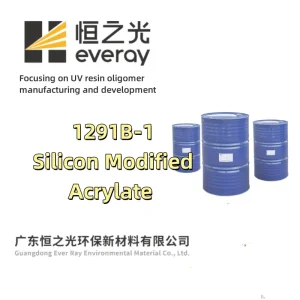
Imparts hydrophobic and anti-stain characteristics for consumer plastic surfaces.
View Technical Specs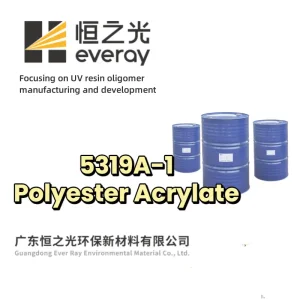
Exceptional pigment wetting capacity, ideal for high-density colored UV inks and coatings.
View Technical Specs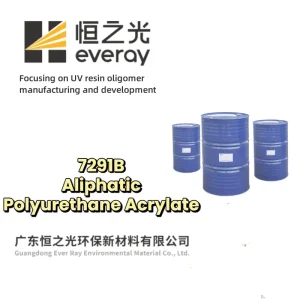
Aliphatic polyurethane backbone offering flexible film elongation and impact resistance.
View Technical Specs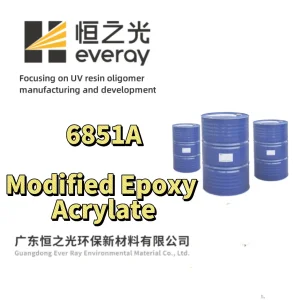
High transparency and non-yellowing traits optimized for nail gels and optical coatings.
View Technical Specs
Tough, fast-setting resin tailored for electrical encapsulation and protective overprint varnishes.
View Technical Specs
Optimized for low-energy LED light source reaction profiles and rapid stackability in wood factories.
View Technical Specs
Maintains lithographic stability without emulsification during high-speed printing runs.
View Technical Specs
Exhibits high abrasion resistance, flexible levelling, and superior chemical stain resistance.
View Technical SpecsTypically, acrylated active amine synergists are loaded between 5% and 15% by weight of the total formulation. When paired with Type II photoinitiators (such as Benzophenone or ITX) at 2% - 4%, this ratio delivers optimal surface curing speed without compromising final film glass transition temperature ($T_g$).
Standard monomeric tertiary amines (like MDEA or TEDA) are non-reactive additives that remain unbonded in the cured matrix. Over time, they evaporate, causing unpleasant odor, surface blooming, yellowing, and potential skin irritation. Acrylated Active Amines possess active double bonds that chemically copolymerize into the polymer network, providing permanent incorporation with zero migration and minimal odor.
Stored in original, unopened UV-opaque containers away from direct sunlight at temperatures between 10°C and 30°C, our active amine resins maintain full stability for 12 months. Products should be stored in ventilated industrial chemical warehouses in dry ambient humidity.
Yes. Our senior polymer formulation engineers provide comprehensive technical support, including lab-scale sample matching, viscosity adjustment, photoinitiator pairing advice, and on-site troubleshooting for ink and coating factories in Ethiopia.
We regularly quote FOB, CIF Djibouti Port, or CIP Modjo Dry Port / Addis Ababa. We support irrevocable Letters of Credit (L/C at sight) issued by Ethiopian commercial banks, as well as Telegraphic Transfer (T/T) terms.
Request technical data sheets (TDS), safety data sheets (SDS), free air-courier sample kits, or commercial container quotes tailored specifically for the Ethiopian industrial market.
