Explore our verified industrial formulations manufactured under rigorous ISO standards for high-adhesion, weatherable, and non-yellowing industrial applications.
In modern material science, selecting high-performance protective coatings hinges on understanding chemical degradation mechanisms at the molecular level. Aliphatic Polyurethane Coatings represent the pinnacle of outdoor durability, chemical resistance, and yellowing resistance. Unlike aromatic polyurethanes derived from Toluene Diisocyanate (TDI) or Methylene Diphenyl Diisocyanate (MDI)—which contain aromatic ring chromophores susceptible to photo-oxidation under ultra-violet (UV) solar radiation—aliphatic polyurethanes are built upon cycloaliphatic or linear aliphatic diisocyanates. The most prevalent building blocks include Isophorone Diisocyanate (IPDI), Hexamethylene Diisocyanate (HDI), and Dicyclohexylmethane Diisocyanate (HMDI).
The absence of conjugated benzene rings prevents the formation of quinoid structures when exposed to UV-A and UV-B spectra (290–400 nm). Test data demonstrates a color shift (ΔE) < 1.0 after 3,000 hours of continuous QUV-accelerated weathering.
Combining soft polyester/polyether polyol segments with rigid urethane linkages provides an optimal balance between pencil hardness (up to 4H-5H) and elongation at break (15% to 120%), preventing thermal cracking across -40°C to +120°C.
Incorporating acrylate functionality enables dual-cure (UV photo-polymerization + thermal/moisture secondary curing) mechanisms, yielding complete film conversion without sticky surface air inhibition.
When B2B procurement teams evaluate options to buy aliphatic polyurethane coating factory-direct solutions, analyzing the balance of urethane oligomers, reactive diluent monomers, photoinitiators, and light stabilizers (HALS) becomes paramount. Our factory synthesis facility utilizes custom reaction vessels where stoichiometric control over NCO/OH ratios guarantees narrow molecular weight distribution, yielding ultra-low batch viscosity without sacrificing final film mechanical strength.
The international coatings market is undergoing a structural transition driven by stringent environmental mandates and rising quality thresholds. Regulatory frameworks such as the European Union's REACH and VOC Solvents Emissions Directive, North America's EPA TSCA regulations, and China's strict GB/T 38597-2020 standards are phasing out traditional high-VOC solvent-borne polyurethane paints. As a result, industrial formulators are rapidly transitioning toward high-solid aliphatic polyurethane coatings, waterborne polyurethane dispersions (PUDs), and 100% solid solvent-free UV-curable aliphatic polyurethane acrylate oligomers.
High demand for heavy-duty OEM machinery, aerospace clearcoats, and commercial automotive refinishing. Focus lies heavily on low-temperature fast curing and extreme anti-corrosion performance over aluminum and composite substrates.
European formulators mandate strict monomer purity, total absence of hazardous organotin catalysts (e.g., DBTDL replacements), zero monomer migration for food packaging UV inks, and bio-based aliphatic resin content.
Asia represents over 55% of global coating consumption. Electronics (3C), solar panel encapsulation, high-speed rail coatings, and luxury vinyl tile (LVT/PVC) flooring require massive industrial-scale supply with rapid lead times.
Navigating international raw material volatility requires a supply chain partner capable of offering guaranteed output, competitive pricing, and rigorous quality assurance. Situated in Guangdong's primary chemical industrial manufacturing corridor, our synthesis complex leverages complete backward integration into basic petrochemical feedstocks, specialized acrylate monomers, and functional polyols.
In-house production of prepolymers and esterification allows us to insulate global clients from upstream Isocyanate (IPDI/HDI) market fluctuations while maintaining stable tier-1 factory pricing.
Automated, continuous reactor lines over 40,000 square meters reduce thermal energy waste and labor expenditure, passing a 15–25% direct cost advantage directly to wholesale buyers.
Every drum undergoes rigorous high-performance liquid chromatography (HPLC), gel permeation chromatography (GPC), and rheological testing to enforce viscosity variance under ±3% per lot.
Full compliance with dangerous goods packaging, steel drum / IBC tote sealing, customs clearance support, and expedited shipping to major sea hubs worldwide within 7–14 days.
Tailored formulation strategies for demanding industrial end-use markets.
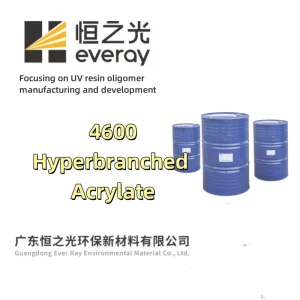
Smartphones, laptops, and wearable housing surfaces composed of PC, ABS, or PMMA require ultra-scratch-resistant protective clearcoats. Formulations incorporating aliphatic polyurethane acrylates (such as our 7296-1 or hyperbranched 4600) provide 4H pencil hardness alongside excellent resistance to human sweat, cosmetic oils, and artificial solar exposure.
From exterior bumper clearcoats to soft-touch interior dashboards, aliphatic polyurethane coatings prevent gloss loss and film cracking under thermal stress tests (-40°C cycling to +85°C). High-hydroxyl polyester acrylate resins paired with aliphatic isocyanates provide superior gloss retention and stone-chip protection.
Offshore wind turbine blades, structural steel, and chemical storage tanks located in ISO 12944 C4/C5 marine environments utilize aliphatic 2K polyurethane topcoats over epoxy zinc-rich primers. They block moisture permeability and prevent yellowing degradation caused by intense UV exposure.
High-traffic commercial floor finishes require rapid curing and extreme abrasion resistance. Applying high-functionality aliphatic urethane acrylate oligomers via roller coaters yields wear-layers capable of surviving >10,000 Taber abrasion cycles (CS-10 wheels) with zero gloss reduction.
DLP/SLA photopolymer resins formulated with dual-cure aliphatic urethane acrylates (such as 72017A-8) enable 3D printed midsoles featuring high rebound resilience (>60%), low tensile set, and long-term yellowing resistance under sunlight exposure.
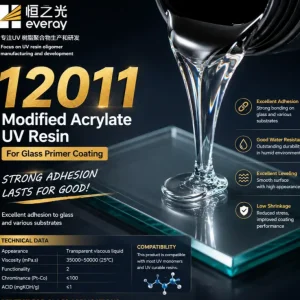
Difficult substrates like inorganic glass and vacuum electroplated plastic layers suffer from poor interlayer adhesion. Incorporating modified acrylates (like 12011 or 7620) delivers chemical bonding with zero peeling during 100°C boiling water immersion tests.
Pioneering tomorrow's sustainable, smart, and ultra-durable polymer chemistries.
Replacing petroleum-derived polyols with monomeric building blocks derived from bio-succinic acid, castor oil, and cardanol derivatives. These bio-based aliphatic polyurethane acrylates reduce net carbon footprints while preserving mechanical toughness and weatherability.
Integrating dynamic reversible hydrogen bonding and functionalized nano-silica sols directly into aliphatic polyurethanes. Scratches on automotive clearcoats or 3C touchscreens automatically repair under low ambient thermal stimulus (40°C–60°C) within minutes.
Engineered oligomer backbones optimized for long-wave LED-UV lamps (365nm, 385nm, 395nm). Eliminating traditional high-power mercury lamps reduces plant power consumption by up to 70% while mitigating substrate thermal deformation.
Combining zero-VOC waterborne polyurethane dispersions (PUD) with secondary UV acrylate crosslinking. Delivers solvent-free application safety alongside instantaneous stackability and resistance to aggressive industrial solvents (MEK, IPA, toluene).
Our technical service team works directly with client chemists to adjust viscosity profiles, optimize monomer diluent packages (HDDA, TPGDA, TMPTA, or low-irritation monomers like IBOA), and match curing speeds with line conditions.
Every bulk order ships with standardized GHS-compliant Safety Data Sheets (SDS), Technical Data Sheets (TDS), and Certificates of Analysis (COA). Fully compliant with RoHS 3.0, REACH SVHC candidate list screening, and halogen-free standards.
Need tailored refractive index values, specific hydroxyl values, targeted glass transition temperatures (Tg), or low skin irritation profiles? Our factory R&D laboratory provides rapid lab sampling and pilot reactor scale-ups.
Explore our full range of specialty oligomers designed for inks, wood finishes, vacuum metallization, and floor coatings.