Explore our high-performance acrylate oligomers engineered specifically to withstand extreme boiling water immersion, steam pressure, and severe environmental degradation.
Standard UV coatings frequently suffer from catastrophic interfacial failure when subjected to boiling water immersion tests (100°C for 60 to 120 minutes). Moisture vapor penetrates the crosslinked matrix, initiating ester bond hydrolysis and disrupting hydrogen bonding at the substrate boundary.
Achieving boiling water resistance requires a carefully tuned glass transition temperature (Tg), dense crosslinking network, and hydrophobic polymer backbone. Advanced aliphatic polyurethane acrylates and modified epoxy acrylates form impenetrable barriers against steam diffusion.
Substrates like glass, vacuum-metallized plastics, and anodized aluminum demand specialized functional monomers containing carboxyl, phosphoric acid, or silane coupling groups to maintain 100% cross-hatch adhesion following prolonged thermal-moisture stress.
Information Gain Insight: Unlike conventional UV curing resins designed merely for dry surface hardness, authentic boil-water resistant UV coatings must maintain structural integrity, dimensional stability, optical clarity, and zero delamination when subjected to boiling water stress, pressure cooker tests (PCT), and thermal shock cycling.
To formulate coatings capable of surviving 100°C boiling water testing for several hours without blistering, loss of gloss, or adhesion failure, chemical formulators must look beyond off-the-shelf standard oligomers. Hydrolytic failure occurs primarily through two mechanisms: resin chemical degradation and interfacial moisture displacement.
Standard aromatic polyurethane acrylates and unmodified epoxy acrylates contain ester or ether linkages susceptible to nucleophilic attack by water molecules at elevated temperatures. By introducing bulky aliphatic structures (such as IPDI or H12MDI) and long-chain hydrophobic polyols, water penetration is sterically blocked, maintaining network integrity.
On inorganic substrates like glass, cosmetics packaging, and metals, physical anchor points are disrupted by hot water. Incorporating reactive organofunctional silanes or acrylates modified with phosphoric acid ester monomers creates covalent Si-O-Substrate bonds that remain immune to boiling-water cleavage.
Excessive crosslinking causes high film stress and brittleness, whereas under-crosslinked films permit rapid moisture diffusion. Our proprietary resin formulations achieve an optimized glass transition temperature (Tg > 65°C) and controlled molecular weight distribution to prevent micro-fissure propagation.
| Resin Chemistry Type | Boil Water Resistance (100°C / 2h) | Adhesion on Glass / Metal | Yellowing Resistance | Recommended Application |
|---|---|---|---|---|
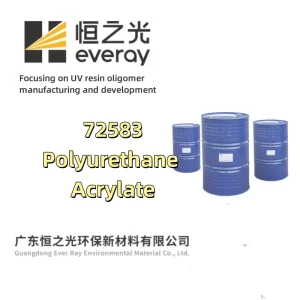
| Aliphatic Polyurethane Acrylate (e.g., 72583 / 72021E) | ★ ★ ★ ★ ★ (Excellent) | ★ ★ ★ ★ ☆ (Very High) | ★ ★ ★ ★ ★ (Non-Yellowing) | 3C Consumer Electronics, Optical Glass, Automotive Trim |
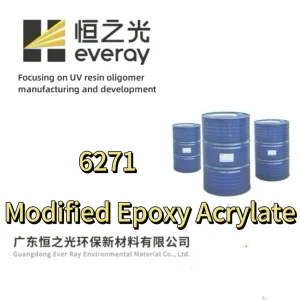
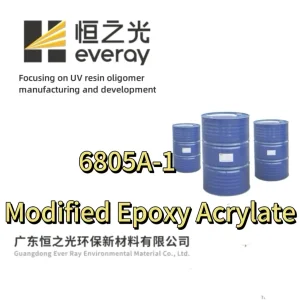
| Modified Epoxy Acrylate (e.g., 6271 / 6805A-1) | ★ ★ ★ ★ ☆ (High) | ★ ★ ★ ★ ★ (Superior) | ★ ★ ★ ☆ ☆ (Moderate) | Vacuum Metallization Basecoat, Industrial Metal Coatings |
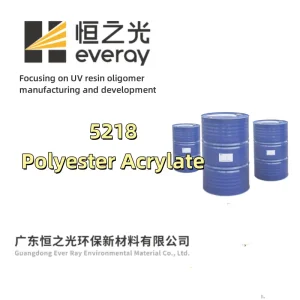
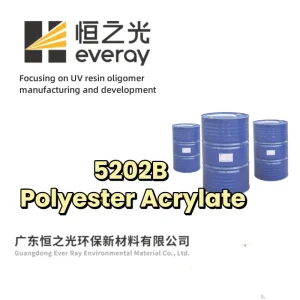
| Polyester Acrylate Oligomer (e.g., 5218 / 5202B) | ★ ★ ★ ☆ ☆ (Moderate) | ★ ★ ★ ★ ☆ (High) | ★ ★ ★ ★ ☆ (Good) | High-Gloss UV Inks, Overprint Varnishes, Plastics |
| Pure Acrylate / Special Functional Oligomer | ★ ★ ★ ★ ★ (Excellent) | ★ ★ ★ ★ ★ (Covalent Bond) | ★ ★ ★ ★ ☆ (High) | Specialty Glass Primers, Heavy-Duty Industrial Adhesives |
The global demand for high-durability UV curable coatings is experiencing rapid growth, driven by stringent environmental regulations (VOC reductions) and escalating consumer expectations for device longevity. Procurement directors and coating formulators across North America, Europe, and Asia-Pacific are systematically transitioning from thermal-cure solvent coatings to eco-friendly 100% solid content UV systems.
Smartphones, smartwatches, and wireless earbuds require protective clearcoats that survive human sweat, alcohol wipe testing, tropical humidity, and dishwashing/boiling water sterilization cycles without dulling or peeling.
Premium perfume bottles and cosmetic containers utilize UV vacuum metallization coatings. These coatings must withstand pasteurization processes, boiling water baths, and chemical fragrance immersion.
Next-generation automotive displays, sensor covers, and interior trim demand weatherable, non-yellowing aliphatic UV resins capable of passing extreme thermal cycling and high-pressure steam cleaning.
Formulators require resins that achieve deep curing and maximum crosslink density under longer wavelength LED-UV curing lamps (365nm-395nm) while retaining maximum boiling water resistance.
As a leading China-based UV resin manufacturer since 2006, Guangdong Ever Ray Environmental Material Co., Ltd. offers global buyers an unbeatable combination of technological innovation, massive scale, and batch-to-batch consistency. Located in the Dawan Industrial Park (Yunfu, Guangdong) with headquarters in Jiangmen, our 40,000+ square meter state-of-the-art chemical synthesizing facility sets the benchmark for modern UV material production.
By synthesizing core polyols, modified acrylic monomers, and custom prepolymers in-house, we eliminate raw material volatility, offering global customers stable factory-direct pricing without distributor markups.
Our 10+ automated production lines utilize DCS smart process control. Key indicators such as viscosity, color (Fe-Co), acid value, and double-bond conversion rates are rigorously monitored to ensure drum-to-drum uniformity.
Backed by over 10 national invention and utility patents, our doctoral-led R&D team works directly with international procurement teams to tailor resin viscosity, flexibility, adhesion, and cure speed to your line setup.
Boil water resistant UV coatings are mandatory across several critical high-performance manufacturing sectors. Below are field-tested formulation recommendations for global chemical formulators:
Challenge: Glass containers exposed to hot-fill beverage lines or boiling water sterilization suffer complete adhesion breakdown.
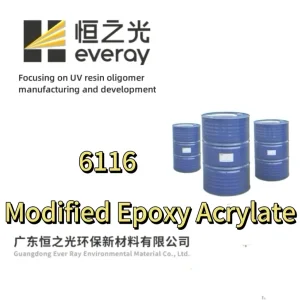
Formulation Strategy: Combine 35-50% Modified Epoxy Acrylate (Grade 6271/6231) with 10-15% Special Functional Adhesion Monomer (contain silane/acid group) and 3-5% active photoinitiators. Cured film survives 100°C boiling water for > 2 hours with 0% peeling (ISO 2409 Cross-hatch Class 0).
Challenge: Delamination of aluminum vapor layer from plastic (ABS/PC) substrates during hot steam exposure.
Formulation Strategy: Utilize 40-60% Aliphatic Polyurethane Acrylate (Grade 7230E / 7113A) for elastic response and high thermal stability. Incorporate active amine synergists to eliminate surface oxygen inhibition, achieving crystal clarity and zero fogging.
Challenge: Additively manufactured functional parts requiring steam resistance, high elasticity, and low volume shrinkage.
Formulation Strategy: Deploy Dual-Curing Resin 72017A-8 blended with low-viscosity modified acrylate monomers. Delivers exceptional flexural fatigue resistance, dynamic resilience, and hydro-thermal durability.
Browse our technical portfolio of specialty acrylate resins engineered for multi-substrate bonding, vacuum metallization, and high-durability coatings.
High-Quality A150 UV-resin for UV-ink and UV-coatings Supplier, Factory
Wholesale Polyester Acrylate 5501 — A Core Resin for LED-UV Wood Coating Systems Suppliers, Product
Buy 6203F UV resin for UV metal coating and printing ink Suppliers, Products
Wholesale 72021E UV-resin for Multi-Substrate Bonding Manufacturers, Supplier
Our standard quality assurance protocol involves applying the UV coating to clean glass or aluminum panels, curing under a standard 365nm UV lamp at 300-500 mJ/cm², and fully immersing the coated specimen in boiling distilled water (100°C) for 60 to 120 minutes. Immediately after removal and cooling, the film is inspected for whitening, blistering, gloss reduction, and subjected to the ISO 2409 cross-hatch tape test. Passing grades maintain 100% adhesion (5B/Class 0) without surface clouding.
Unmodified bisphenol-A epoxy acrylates have strong initial adhesion due to polar hydroxyl groups. However, when exposed to boiling water, moisture molecules rapidly penetrate the film matrix and hydrolyze the physical hydrogen bonds formed at the glass surface. Without organosilane coupling agents or hydrophobic steric protection, the water layer mechanically lifts the film off the glass surface, causing complete delamination.
We recommend our Aliphatic Polyurethane Acrylate Series (such as Grade 7230E, 72583, or 7200F). Aliphatic urethane structures contain zero aromatic rings, rendering them immune to UV-induced photodegradation and yellowing. Furthermore, their flexible polyurethane backbone withstands severe thermal expansion stress during boil-water and weatherometer testing.
Yes. With over 10 national patents and an in-house synthesis R&D laboratory in Guangdong, our chemical engineers can custom-adjust oligomer molecular weight, acrylate functionality, viscosity, and curing speed. We routinely modify resins to match specific UV-LED wavelength outputs (365nm, 385nm, 395nm), dual-cure thermal mechanisms, or low-VOC waterborne systems.
We ship globally in standard 20kg plastic drums, 200kg steel drums, and 1000kg IBC totes. Technical Data Sheets (TDS), Safety Data Sheets (SDS compliant with GHS/REACH), and Certificates of Analysis (COA) are provided with every batch. Standard lead time from our Yunfu factory is 7-12 days following order confirmation.
Partner directly with Guangdong Ever Ray Environmental Material Co., Ltd. for high-performance UV curable oligomers. Our technical support team is ready to assist with formulation optimization, TDS/SDS requests, and custom batch synthesis.
