Understanding the macromolecular architecture of polyester and epoxy acrylates is critical for chemical procurement managers, formulators, and R&D engineers seeking optimal surface hardness, pigment wetting, and rapid photopolymerization kinetics.
In modern energy-curable industrial chemistry, Epoxy Acrylates and Polyester Acrylates represent the foundational oligomeric backbones for ultra-violet (UV) and electron-beam (EB) curable coatings, inks, adhesives, and 3D printing resins. Epoxy acrylate oligomer synthesis typically involves the nucleophilic ring-opening esterification reaction of bisphenol-A diglycidyl ether (BADGE) or novolac epoxy resins with acrylic acid. The resulting backbone delivers exceptional mechanical strength, chemical resistance to MEK and acids, high glass transition temperatures ($T_g > 60^\circ\text{C}$), and extraordinary cure speeds due to dense acrylic double-bond concentration.
Conversely, Polyester Acrylates are synthesized via the condensation polyesterification of polyfunctional alcohols (such as trimethylolpropane, pentaerythritol, or neopentyl glycol) with dicarboxylic acids (such as phthalic anhydride or adipic acid), subsequently acrylated with acrylic acid. By adjusting the ester linkage length, branching degree, and hydroxyl end-group functionalization, polyester acrylates provide superior pigment wetting, controlled viscosity reduction, high flexibility, and excellent lithographic water-ink balance—making them indispensible in UV offset, flexographic, and gravure printing inks.
Directly sourced from state-of-the-art Chinese manufacturing facilities. Verified quality standards for high-gloss, fast-curing, weather-resistant, and low-viscosity applications.
Engineered for high-gloss UV coatings and inks. Offers rapid free-radical polymerization response, excellent scratch resistance, and minimal surface tackiness.
Specialized for UV paper varnishes and packaging coatings. Reduces reactive monomer monomer usage while maintaining high reactivity and leveling.
Designed for outdoor adhesive tapes and labels. Features non-yellowing aliphatic structures, high tack, and permanent pressure-sensitive adhesive performance.
Premium polyester acrylate providing high flexibility, tensile strength, and exceptional compatibility with photoinitiators and pigments.
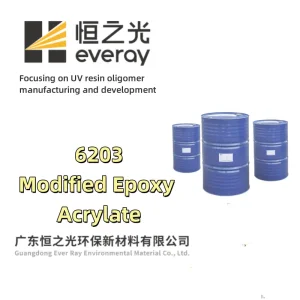
Formulated with polar anchoring groups to ensure superior direct adhesion to tinplate, aluminum, and electroplated metal substrates.
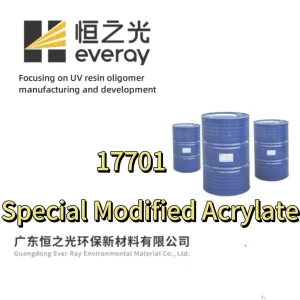
Prevents film curling and substrate distortion on flexible plastic films (BOPP, PET) and premium offset printing applications.
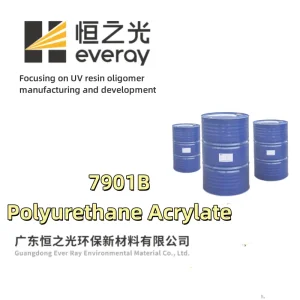
Designed for heavy-duty industrial finishes, machine equipment topcoats, and rigid wood primers requiring high chemical impact resistance.
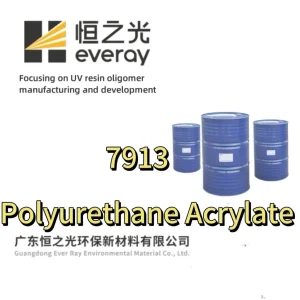
Features surface anti-fouling property, stain resistance, and high abrasion protection for premium floor finishes and electronic touchscreens.
China’s chemical manufacturing sector has evolved into a global epicenter for UV radiation curing materials. Sourcing directly from Guangdong industrial parks offers distinct structural, technical, and commercial advantages.
China manufactures over 60% of global basic petrochemical feedstocks, including Bisphenol A (BPA), Epichlorohydrin (ECH), Acrylic Acid (AA), Phthalic Anhydride (PA), and specialty monomers (HDDA, TPGDA, TMPTA). Direct vertical integration eliminates middleman margins and secures uninterrupted production schedules even during global raw material shortages.
Leading Chinese chemical facilities operate automated 10,000-ton synthesis reactors with real-time DCS process control. Analytical laboratories are equipped with Gel Permeation Chromatography (GPC), Gas Chromatography-Mass Spectrometry (GC-MS), and Rotational Viscometers, guaranteeing batch-to-batch consistency with acid values strictly controlled under $1.0\text{ mg KOH/g}$.
Export-focused Chinese suppliers ensure full compliance with EU REACH registration, SVHC screening, TSCA, and RoHS standards. Resin grades are specifically designed to meet low VOC emission limits and zero heavy-metal requirements for multinational chemical brands operating across North America and Europe.
As environmental regulations tighten and energy efficiency becomes paramount, the radiation curing industry is undergoing several paradigm shifts in resin design and application.
Traditional mercury vapor lamps generate excessive heat and ozone. Modern production lines are shifting to LED-UV curing units. This transition requires epoxy and polyester acrylates with tailored photo-response curves, higher double-bond conversion efficiencies, and reduced oxygen inhibition susceptibility under long-wavelength UV-A light.
Waterborne polyester acrylates and modified polyurethane acrylate dispersions eliminate volatile organic solvents entirely. They combine the rapid drying performance of physical evaporation with the cross-linking toughness of UV radiation, ideal for eco-friendly wood finishes and automotive leather topcoats.
Procurement teams are actively prioritizing green chemistry. Advanced chemical factories now synthesize polyester acrylates incorporating up to 35% bio-based carbon content derived from renewable plant oils (castor oil, soybean oil dimer acids) and chemically recycled PET polyols without compromising mechanical film performance.
Compare key chemical parameters to select the optimum resin oligomer grade for your specific formulation parameters.
| Oligomer Class | Typical Viscosity (25°C, mPa.s) | Functionality Range | Film Hardness (Pencil) | Primary Advantages | Target Localized Applications |
|---|---|---|---|---|---|
| Standard Bisphenol A Epoxy Acrylate | 15,000 – 45,000 (with 20% TPGDA) | 2.0 | 4H – 5H | Ultra-fast cure speed, exceptional tensile strength, chemical & MEK rub resistance. | UV wood primers, rigid plastic coatings, PCB solder masks, high-gloss paper OPVs. |
| Modified Epoxy Acrylate (e.g., 6231, 6300) | 3,000 – 12,000 | 2.0 – 3.0 | 3H – 4H | Lower viscosity, improved flexibility, reduced cure shrinkage, enhanced substrate wetting. | Flexographic inks, UV vacuum metallizing topcoats, packaging varnishes. |
| Hyperbranched Polyester Acrylate (e.g., 5202B, 5501) | 500 – 4,000 | 4.0 – 6.0 | 2H – 4H | Low viscosity, high reactivity without monomer dilution, rapid surface cure, outstanding pigment wetting. | UV offset lithographic inks, screen inks, 3D printing SLA/DLP resins, LED-UV wood topcoats. |
| Weather-Resistant Polyurethane Acrylate (e.g., 72027, 7913) | 8,000 – 25,000 | 2.0 – 4.0 | HB – 3H | Non-yellowing aliphatic backbone, outdoor UV stability, high impact elongation, anti-scratch. | 3C electronics (PC/ABS), automotive interior components, optical PSA tapes, exterior film labels. |
1. 3C Electronics & Smart Devices: Consumer electronics housings made of PC, ABS, or PMMA require ultra-hard, scratch-resistant topcoats that survive sweat, cosmetic oils, and drop tests. Formulators combine modified aliphatic urethane acrylates with 15-25% epoxy acrylate 6203F to maximize substrate adhesion while avoiding brittle micro-cracking.
2. High-Speed UV Offset Packaging Inks: In commercial printing, inks must wet pigments rapidly and achieve stable water-ink balance on press at speeds exceeding 15,000 sheets per hour. Polyester acrylates like Model 5403-3F provide low acid values and ideal rheological thixotropy, preventing emulsification and misting.
Complete your formulation architecture with specialized grades engineered for glass, metals, 3D printing photopolymers, and high-adhesion primers.
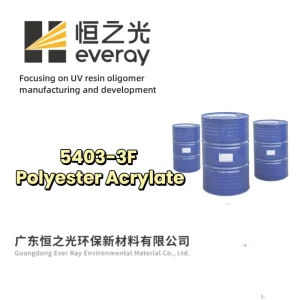
Achieves optimal water-ink balance, preventing emulsification in high-speed offset printing presses. Outstanding pigment dispersion property.
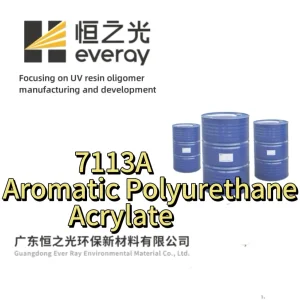
High-adhesion acrylic resin for UV vacuum metallizing topcoats and basecoats on ABS and PC plastics. Superior mirror gloss retention.
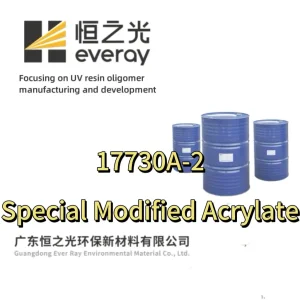
High water resistance, exceptional leveling, and anti-yellowing performance engineered for glass UV decorative coatings and screen printing inks.
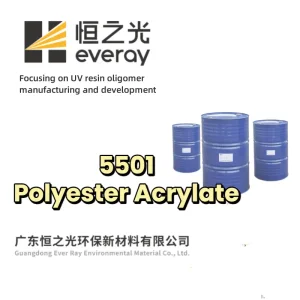
A core oligomer designed specifically for LED-UV wood coating lines. High reactivity under 395nm wavelength with low oxygen inhibition.
Multifunctional UV resin tailored for 3D printing LCD/SLA resins, UV screen inks, and protective wood coatings with high dimensional stability.
Specially modified epoxy acrylate diluted in HDDA. Delivers outstanding adhesion to dense wood substrates, particleboards, and primers.
Premium choice for high-speed lithographic UV offset printing inks. Excellent pigment grinding capability, high gloss, and low tack buildup.
Designed for difficult-to-bond substrates including medium-density fiberboard (MDF) primers and aluminum/steel sheets. Excellent inter-coat adhesion.
Step-by-step guidance for overseas procurement directors, supply chain managers, and chemical distributors auditing Chinese polymer factories.
Before issuing a purchase order, request batch-specific Certificate of Analysis (COA) documents covering critical chemical parameters: Brookfield Viscosity at $25^\circ\text{C}$, Gardner Color Scale ($\le 1.0$), Acid Value ($\le 1.0\text{ mg KOH/g}$), and NVM (Non-Volatile Matter \% $\ge 99.5\%$).
Standard industrial export packaging includes 200kg steel drums, 1000kg IBC totes, or ISO tanks. Polyester and epoxy acrylates must be stored below $30^\circ\text{C}$ away from direct sunlight to prevent premature thermally induced polymerization. Ensure suppliers provide GHS-compliant Safety Data Sheets (SDS) in your local language.
Always execute a 3-stage validation process: (A) Lab-bench drawdown testing for pencil hardness and cross-hatch adhesion (ASTM D3359), (B) Pilot-scale line trial (50kg drum sample) under actual UV lamp speed, and (C) Accelerated stability testing at $60^\circ\text{C}$ for 14 days to confirm shelf life.
Direct technical solutions from senior UV resin formulation engineers addressing common processing challenges and procurement queries.
Epoxy acrylates (derived from bisphenol-A or novolac epoxides) feature rigid aromatic backbones and secondary hydroxyl groups, imparting ultra-fast cure speed, extreme hardness (4H-5H), and high chemical resistance, but higher viscosity and brittleness. Polyester acrylates feature ester linkages with adjustable polyol backbones, offering superior flexibility, low viscosity, excellent pigment wetting properties for printing inks, and lower cure shrinkage.
Advanced Chinese chemical plants utilize modified synthesis routes—such as internal chain extensions using polyether glycol modifers or caprolactone lactone ring-opening reactions during epoxy esterification. Grades like 6300 and 6231 maintain an ideal viscosity profile (3,000 to 12,000 mPa.s) while retaining high double-bond functionality, reducing the reliance on volatile reactive diluents such as TPGDA or HDDA.
Polyester Acrylate 5501 and Modified Epoxy Acrylate 6100D-85 are engineered specifically for LED-UV curing wavelengths (365nm-395nm). They feature enhanced photopolymerization reactivity, ensuring rapid surface dry and through-cure under lower UV irradiance without sticky surface oxygen inhibition.
Standard bisphenol A epoxy acrylates yellow under outdoor solar UV exposure due to photo-oxidation of the aromatic bisphenol core. For outdoor tapes, labels, and exterior finishes, specify aliphatic polyurethane acrylates such as Model 72027 or high-purity non-aromatic polyester acrylates which maintain a low yellowing index ($\Delta E < 1.5$) over extended QUV weatherometer testing.
When kept in unopened original steel drums, stored in a dry, ventilated warehouse at temperatures between $15^\circ\text{C}$ and $25^\circ\text{C}$, epoxy and polyester acrylates have a certified shelf life of 12 months. Drums should be kept away from direct heat sources and strong oxidizers, as exposure to light or temperatures above $45^\circ\text{C}$ can trigger localized gelation.
