Explore engineered polyester acrylate oligomers, weather-resistant polyurethane acrylates, and modified epoxy matrices formulated for high-speed UV coatings, industrial inks, and high-tack adhesive systems.
A comprehensive strategic review of global production capacities, raw material polycondensation dynamics, and the commercial shift toward energy-efficient UV-curable polyester acrylate systems.
The global synthetic resin market is undergoing a profound structural evolution. Unsaturated Polyester Resins (UPR) and radical-curable Polyester Acrylate Oligomers represent a cornerstone of modern industrial chemistry, driving advancements across automotive lightweighting, marine composites, architectural surface treatments, electronic encapsulation, and high-speed graphic arts printing.
Valued at over USD 12.4 Billion in 2024, the international polyester resin market is projected to expand at a compound annual growth rate (CAGR) of 6.2% through 2032. This sustained expansion is spurred by strict global decarbonization frameworks, increasing adoption of ultra-low VOC (Volatile Organic Compound) formulations, and the rapid technological transition from solvent-borne thermal coatings to instant radiation-cured (UV/EB) resin platforms.
Understanding the synthetic pathways, functional ester groups, crosslinking kinetics, and performance trade-offs across unsaturated polyester and acrylate-functionalized resins.
Synthesized via polycondensation of saturated and unsaturated dicarboxylic acids (such as phthalic anhydride or maleic anhydride) with polyhydric alcohols (propylene glycol, diethylene glycol). Crosslinked via free-radical copolymerization with styrene monomers for cost-effective structural composite matrices.
Formed by reacting hydroxyl-terminated polyester backbones with acrylic acid. Available in difunctional to hexafunctional acrylate architectures. They combine fast radiation curing speeds, high crosslink density, robust mechanical toughness, and excellent pigment dispersion capabilities without volatile emissions.
Incorporating amine synergists, silicones, or fatty acid modifiers into the polyester backbone. These modifications mitigate oxygen inhibition during atmospheric UV curing, enhance surface slip, improve substrate adhesion to inert plastics (PC, PET, PE), and optimize soft-touch tactile qualities.
The table below provides industrial formulators and chemical buyers with a comparative evaluation of primary oligomer structures when formulating modern industrial coatings, inks, and structural adhesives.
| Chemistry Category | Cure Mechanism | Typical Viscosity (mPa.s @ 25°C) | Tensile Strength (MPa) | Flexibility & Elongation | Pigment Wetting | Primary Application Focus |
|---|---|---|---|---|---|---|
| Polyester Acrylate (Tetrafunctional) | UV / EB Radical | 500 - 2,500 | 45 - 65 | Medium (15 - 35%) | Exceptional | UV Offset Inks, Screen Inks, OPV |
| Amine-Modified Polyester Acrylate | UV Radical (Low O2 Inhibition) | 200 - 1,200 | 35 - 50 | High (30 - 50%) | High | High-Speed Flexo Printing, Plastic Varnishes |
| Standard Epoxy Acrylate | UV Radical | 15,000 - 45,000 | 65 - 85 | Low (2 - 8%) | Moderate | Rigid Wood Sealers, PCB Solder Masks |
| Aliphatic Urethane Acrylate | UV Radical | 2,000 - 15,000 | 40 - 75 | Very High (50 - 200%) | Moderate | Outdoor Automotive, 3C Electronics, Nail Gels |
| Unsaturated Polyester (Isophthalic) | Thermal Peroxide / Cobalt | 400 - 800 (Styrene Cut) | 50 - 70 | Medium (5 - 12%) | High | Marine Gelcoats, Chemical Storage Tanks |
Bridging chemical synthesis and industrial process requirements through custom esterification index control, tailored molecular weight distribution, and rigorous quality assurance protocols.
Navigating global chemical procurement requires balancing raw material cost, technical innovation, and supply chain security. As international regulatory frameworks (such as EU REACH, TSCA, and RoHS) tighten, chemical buyers need direct manufacturing partners who provide full transparent traceability from monomer feedstock to finished drum packaging.
Our state-of-the-art production complex in Guangdong integrates multi-stage stainless steel reactor kettles, continuous vacuum distillation systems, and automated thin-film evaporator systems. This ensures zero cross-contamination and precise control over color numbers (Gardner ≤ 1.0) and acid values (≤ 2.0 mg KOH/g).
Engineered polyester resin formulations solving extreme operational challenges in high-throughput manufacturing, printing graphics, 3C electronics, and structural composite manufacturing.
Challenge: High-speed offset and flexographic printing presses operate at speeds exceeding 400 m/min, requiring instant drying, low misting, and excellent water-ink balance.
Polyester Solution: Tetrafunctional polyester acrylates (e.g., Grade 5336B) deliver exceptional pigment wetting for carbon black and organic pigments, reducing milling viscosity while ensuring rapid surface cure under high-speed UV lamps.
Challenge: Mobile device housings, laptop chassis, and automotive displays require high scratch resistance (pencil hardness ≥ 3H) and tactile skin-feel without yellowing over time.
Polyester Solution: Excimer-curable polyester acrylate systems (e.g., Grade 53036) allow 172nm micro-folding surface texturing, producing ultra-matte, soft-touch coatings with superior chemical resistance to skin oils and alcohol wipes.
Challenge: Parquet wood floors and high-density fiberboards (HDF) demand heavy-duty wear resistance, impact durability, and resistance to household chemicals.
Polyester Solution: Blending low-viscosity polyester acrylates with modified epoxy acrylates yields tough, abrasion-resistant primers and sanding sealers that preserve the natural wood grain aesthetics while boosting line speed.
Pioneering next-generation sustainable bio-polyols, LED-LED long-wave photoinitiating efficiency, and low-volatility waterborne UV polyester dispersions.
The chemical industry is entering a epochal transition toward circular economy principles. Traditional petro-based phthalic anhydrides and glycols are increasingly being replaced by bio-derived building blocks derived from agricultural waste, recycled PET streams, bio-succinic acid, and 1,3-propanediol (PDO).
Our research and development team is leading the industry in synthesizing high-bio-content polyester acrylate oligomers (bio-content > 40%) that match or exceed the mechanical performance, color purity, and crosslink density of classic petroleum-based resins.
Energy costs and mercury lamp phase-outs (under the Minamata Convention) have accelerated the switch to UV LED curing. Standard polyester resins often suffer from surface tackiness under LED wavelengths due to spectral mismatch and oxygen inhibition.
Our latest 5000-series polyester acrylates incorporate active amine synergists directly into the polymer chain backbone, lowering surface energy, eliminating surface oxygen inhibition, and enabling complete surface cure at lower UV LED light energy doses (≤ 150 mJ/cm²).
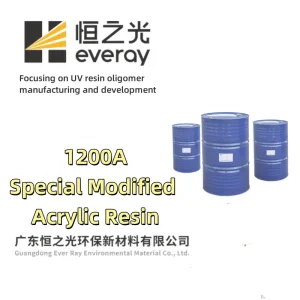
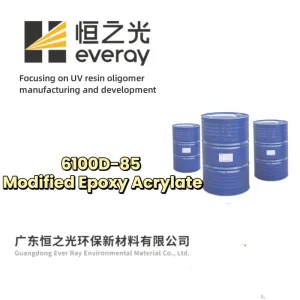
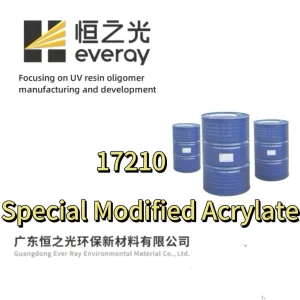
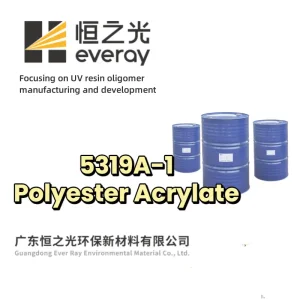
Explore our targeted formulations engineered for plastic substrates, excimer matte finishes, high-speed flexographic inks, density board primers, and flexible UV acrylic adhesives.
Ensuring frictionless international trade through comprehensive certifications, multi-language technical documentation, and dangerous goods logistics management.
Every product grade is supported by GHS-compliant Safety Data Sheets (SDS in 15 languages), Technical Data Sheets (TDS), Certificates of Analysis (COA), and REACH pre-registration documentation for European Union buyers.
Supplied in UN-certified 200kg steel drums, 1,000kg IBC totes, or temperature-monitored ISO tank containers. Standard anti-gel stabilization ensures a guaranteed shelf life of 12 months under warehouse storage conditions.
Our experienced application engineering team offers formulation troubleshooting, cure line parameter optimizations, monomer selection advice, and custom synthesis support across North America, Europe, and Asia-Pacific.
Comprehensive technical and commercial guidance compiled by senior resin synthesis experts and global supply chain managers.
