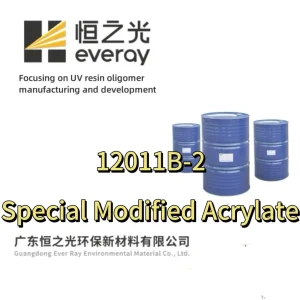
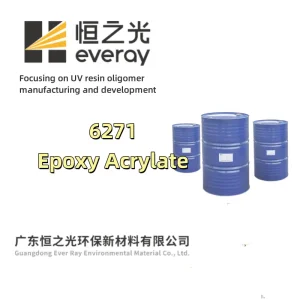
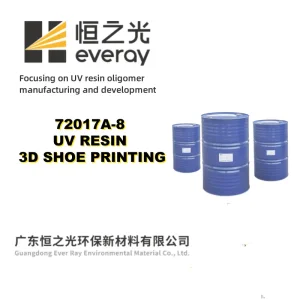
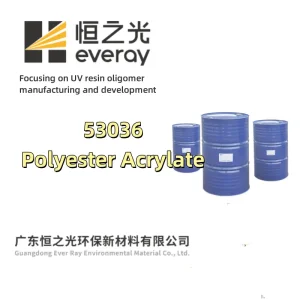
Explore our elite selection of waterborne and UV-curable modified epoxy acrylate resins tailored for zero-VOC compliance, superior substrate adhesion, and rapid industrial processing.
An authoritative analysis of global regulatory shifts, decarbonization mandates, and technical advancements driving the market transition toward waterborne and UV-curable Acqua Epoxy chemistry.
The global coatings, adhesives, and functional polymers market is currently undergoing a structural paradigm shift. Driven by stringent global environmental protocols—such as the European Union’s REACH regulations, China’s GB/T 38597-2020 (Limits of Harmful Substances in Waterborne Coatings), and US EPA Clean Air Act Title V mandates—chemical formulators and industrial OEMs are rapidly phasing out traditional solvent-borne epoxy systems in favor of advanced Acqua Epoxy (Waterborne Epoxy & Water-Dilutable UV Epoxy Acrylate) platforms.
Historically, waterborne epoxies suffered from key chemical drawbacks: extended dry times in high humidity, particle coalescence difficulties, and reduced resistance to harsh solvents such as methyl ethyl ketone (MEK) and concentrated alkalis. However, the introduction of hyperbranched Acqua Epoxy acrylates and amine-adduct functionalized nanodispersions has redefined industrial expectations.
| Performance Metric | Legacy Solvent-Borne Epoxy | Standard Waterborne Epoxy | Advanced UV-Acqua Epoxy Hybrid |
|---|---|---|---|
| VOC Content (g/L) | 400 – 650 g/L (High Emissions) | 50 – 150 g/L (Moderate) | < 15 g/L (Ultra-Low / Eco) |
| Cure Mechanism | Thermal Polyaddition (Slow) | Amine Co-reaction (Ambient) | Dual-Cure: Water Evaporation + UV Radical |
| Cure Speed / Line Velocity | 12 – 24 Hours | 2 – 6 Hours | 3 – 10 Seconds (Instant Curing) |
| MEK Double Rub Resistance | > 200 Rubs | 100 – 150 Rubs | > 250 Rubs (Fully Crosslinked) |
| Substrate Adhesion (Glass/Metal/PET) | Excellent (5B) | Moderate (3B-4B) | Exceptional (5B with Silane Coupling) |
A technical deep-dive into self-emulsifying polyglycidyl ether chains, hydrophilic acrylate modification, and the technology expansion path for high-performance resins.
Unlike externally emulsified epoxies requiring physical surfactants (which leach over time and degrade water resistance), modern Acqua Epoxy resins incorporate non-ionic polyoxyethylene chain segments directly onto the Diglycidyl Ether of Bisphenol-A (DGEBA) prepolymer. This guarantees nanoscale emulsion stability (50–120 nm particle size) with indefinite freeze-thaw stability.
By reacting acrylic acid with terminal epoxy groups under tertiary amine catalysis, formulators generate epoxy acrylate oligomers possessing both hydroxyl groups (for secondary hydrogen bonding) and vinyl unsaturation. Upon exposure to 365–395 nm LED UV light, photoinitiators instantly trigger 3D crosslinking, delivering extreme hardness in seconds.
In thick-film or shadow-zone applications where UV penetration is blocked, secondary moisture-cure or cycloaliphatic amine curing agents ensure full through-cure. This dual-action pathway eliminates unreacted resin pockets, providing uniform chemical and corrosion protection across complex geometries.
Looking ahead, manufacturers are prioritizing three key innovation pillars to meet industrial sustainability objectives:
Real-world deployment case studies demonstrating how Acqua Epoxy and modified UV resins overcome environmental and structural challenges in specific operational markets.
Challenge: Solvent-borne epoxies applied on green concrete or damp underground parking decks in tropical regions suffer from severe osmotic blistering and adhesion failure.
Acqua Epoxy Solution: Waterborne Acqua Epoxy primers allow trapped moisture vapor to escape during cure without sacrificing substrate bonding (> 3.5 MPa concrete cohesive failure). The zero-VOC nature allows seamless application in active hospital and food-processing environments without shutting down HVAC systems.
Challenge: Consumer smartphone housings and automotive dashboard trim demand scratch resistance (pencil hardness 3H+) alongside tactile soft-feel or high-gloss aesthetics, without solvent swelling on delicate ABS/PC plastics.
UV Acqua Epoxy Solution: Water-dilutable modified epoxy acrylate oligomers allow formulators to spray thin, uniform coatings (10–15 μm) using pure water as a viscosity reducer. Post-water-flash and UV curing, the coating achieves glass-like clarity and zero stress warping.
Challenge: Flexible packaging and water-transfer films require high flexibility during printing and film stretch, followed by rigid chemical resistance once applied to target items.
Modified Acrylate Solution: Utilizing hyperbranched and polyester-modified epoxy acrylates balances elongation at break (> 35%) with rapid pigment wetting, ensuring vibrant image transfer onto glass, ceramic, and sports equipment.
How upstream chemical cluster integration, advanced automation, and scale economies deliver unmatched quality control, cost efficiency, and global delivery reliability.
In the global specialty chemicals domain, supply chain stability and batch-to-batch repeatability are non-negotiable requirements for multinational paint manufacturers, ink compounders, and industrial glue formulators. Operating from the chemical manufacturing hubs of Guangdong, China, our manufacturing infrastructure harnesses the world's most robust industrial ecosystem.
Our production facilities are located within 50 kilometers of major primary chemical refiners producing Epichlorohydrin (ECH), Bisphenol-A (BPA), Acrylic Acid, and Isophorone Diisocyanate (IPDI). Direct pipeline and bulk tanker integration eliminates raw material lead times and insulates international buyers from global shipping shocks.
Featuring over 10 automated reactor lines with capacities ranging from 5 to 30 metric tons per batch, our synthesis process is governed by Distributed Control Systems (DCS). Reaction temperature, acid value titrations, and viscosity build-up are monitored in real time, ensuring a 99.8% pass rate across strict QC parameters.
Whether processing a 1-ton trial order for specialized formula validation or delivering 200-ton monthly drum shipments for multinational OEM supply, our factory scales seamlessly. Custom modification of viscosity, solid content, or inhibitor packages can be completed within 5–7 business days.
Full E-E-A-T verification: International certifications, regulatory documentation, and dedicated formulation engineering support for seamless operational import.
When sourcing chemical raw materials internationally, regulatory compliance and technical documentation are just as vital as resin performance. Every drum of Acqua Epoxy and UV acrylate oligomer leaving our facility undergoes rigorous multi-stage laboratory verification.
We provide comprehensive GHS-compliant Safety Data Sheets (SDS) in over 15 languages, full Technical Data Sheets (TDS), and batch-specific Certificates of Analysis (COA). All products comply with EU REACH, US TSCA, and RoHS/SVHC standards.
Chemicals are packaged in heavy-duty UN-rated steel drums (200 kg net weight), 1,000 kg IBC totes, or custom ISO-tanks. Moisture-barrier vacuum sealing and palletized nitrogen blanket purging prevent oxidation and yellowing during overseas ocean transit.
Our senior application engineers provide full client assistance—including starting point formulations (SPF), photoinitiator selection advice, foam suppression strategies, and rheology modifier matching to ensure smooth line integration.
Discover specialized resin options formulated for dual-curing photopolymers, glass/metal adhesion promotion, high water resistance, and excimer laser matte coatings.
Expert answers to key engineering, chemical compatibility, and logistics questions asked by industrial formulators and purchasing directors.