Engineered for UV offset inks, peelable adhesives, high-boiling water-resistant glass primers, and advanced surface coatings.
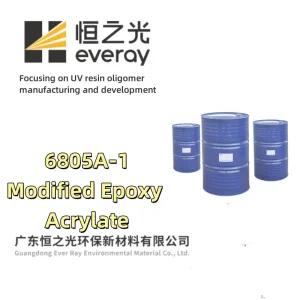
Formulated for high lithographic speed, superior water-ink balance, and immediate UV response under high-intensity lamps.
Explore Specification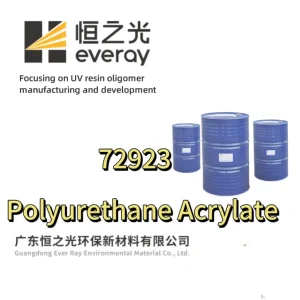
Aliphatic polyurethane acrylate providing outstanding elasticity, zero-yellowing optical clarity, and clean peelability.
Explore Specification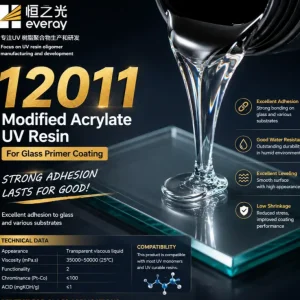
Exceptional chemical adhesion to non-porous glass substrates with boiling water immersion resistance.
Explore Specification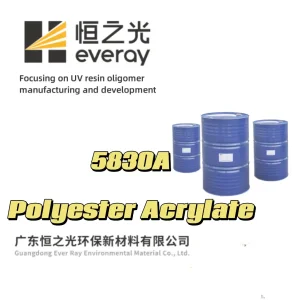
Designed for dual-cure polyurethane/UV systems, offering superior film fullness, high gloss, and thermal stability.
Explore Specification
Delivers high pigment wetting capability, low misting on high-speed rollers, and rapid surface reactivity.
Explore Specification
Engineered for high-throughput UV flexo and offset packaging printing with minimal radical oxygen inhibition.
Explore Specification
Optimal oligomer for UV gravure varnishes and specialty snow-effect tactile surface coatings.
Explore Specification
Multifunctional PUA providing intense surface hardness, anti-scratch performance, and chemical resistance.
Explore SpecificationAnalyzing molecular architecture, thermosetting mechanisms, and cross-industrial adoption of clear epoxy systems.
In modern polymer engineering, the demand for high-clarity, non-yellowing thermosetting resins has expanded beyond traditional encapsulation into optical adhesives, micro-electronics, 3D additive photopolymers, and ultra-durable protective coatings. As a premier clear epoxy resin manufacturer, our technical mission centers on resolving the historical compromise between mechanical toughness, cure velocity, glass transition temperature ($T_g$), and long-term optical transparency.
Conventional bisphenol-A diglycidyl ether (DGEBA) resins provide outstanding tensile strength and chemical resistance; however, their aromatic backbone renders them prone to photochemical degradation under solar ultraviolet irradiation. Modern industrial buyers require specialized chemistry—specifically modified epoxy acrylates, cycloaliphatic epoxy hybrids, and aliphatic polyurethane acrylate (PUA) systems—to deliver pristine clarity ($\Delta E < 1.0$ after 1000h QUV testing) alongside minimal cure shrinkage.
Selecting the appropriate resin matrix requires a granular understanding of functional groups, curing mechanisms, and environmental durability profiles. Below is an engineering evaluation comparing primary industrial resin classes:
| Resin Category | Core Chemistry | Key Advantages | Limitation Profile | Primary Application |
|---|---|---|---|---|
| Bisphenol-A Epoxy Acrylate | Aromatic Epoxy Oligomer | Fastest Cure Velocity, Exceptional Hardness (85-90D), High Tensile Strength | Prone to UV yellowing over time, higher cure shrinkage | Wood topcoats, paper OPV, high-speed offset inks |
| Aliphatic Urethane Acrylate | Isocyanurate / Polyether Backbone | Zero-yellowing ($\Delta E < 0.5$), Extreme Flexibility, Weather Resistance | Higher raw material cost, moderate conversion speed | 3C Electronics housing, outdoor coatings, nail gels |
| Cycloaliphatic Clear Epoxy | Saturated Ring Structure | High dielectric strength, zero aromatic yellowing, minimal exotherm heat | Requires thermal amine or cationic photo-initiator cure | LED encapsulation, optoelectronic bonding, composite casting |
| Modified Polyester Acrylate | Hyperbranched Polyester | Superior pigment wetting, low viscosity, high flexibility balance | Moderate chemical immersion resistance | Flexographic inks, screen printing, plastic primers |
Key Procurement Indicators (KPIs) for evaluating chemical manufacturers and securing consistent polymer supply.
Strict batch-to-batch viscosity tolerances (±50 mPa.s at 25°C) ensure predictable flow dynamics in automated robotic dispensing, curtain coating, and high-speed flexo printing presses.
Custom-formulated resin systems control the peak exotherm curve during thick-section casting or high-intensity UV exposure, eliminating micro-cracking and thermal substrate warping.
Optical clarity starts at the raw material synthesis phase. Our clear epoxy and acrylate lines guarantee initial APHA color values < 30, essential for optical display and clear-coat applications.
Resolving bubble entrapment, oxygen inhibition, moisture sensitivity, and adhesive failure at the molecular level.
A primary failure mode in high-clarity epoxy and UV casting is air entrapment. The rate of bubble rise in a liquid polymer matrix is governed by Stokes' Law:
v = (2 · g · r² · (ρ_p - ρ_a)) / (9 · η)
Where v represents terminal rise velocity, r is bubble radius, ρ denotes density, and η is dynamic viscosity. As a professional clear epoxy resin manufacturer, we incorporate active reactive diluents and surface-tension modifiers that lower system viscosity without compromising final mechanical properties, allowing micro-bubbles to escape within minutes prior to network gelation.
In free-radical UV curing, atmospheric oxygen scavenges photo-induced radicals, forming stable peroxyl radicals that terminate polymerization at the coating surface. This leads to residual tackiness and poor scratch resistance. To counteract this phenomenon, our formulation team integrates amino acrylate oligomers and active amine synergists (such as our 56031 and 7913 product lines). The tertiary amine structures donate hydrogen atoms to peroxyl radicals, regenerating active alkyl radicals that drive crosslinking to 100% surface conversion.
Adhesion to inert or non-polar substrates (plastics like ABS, PC, PMMA, as well as glass and metals) requires functional monomers with low surface tension and specific polar interactions. By grafting carboxyl, hydroxyl, or silane-functional groups onto our modified epoxy acrylates (e.g., Grade 12011 and 6100D-85), we achieve strong chemical hydrogen bonding and covalent interfacial coupling, demonstrating zero tape-peel failure (5B score via ASTM D3359) even after extended boiling water immersion.
Tailored resin systems engineered to meet rigid processing windows and environmental stress constraints.
Liquid optically clear adhesives (LOCA) require ultra-low yellowing, refractive index matching ($n_D \approx 1.49 - 1.52$), and zero thermal strain on sensitive OLED/LCD display layers.
Offset and flexographic printing require rapid pigment dispersion, low misting at 500 m/min press speeds, and sharp ink-water balance for precise color transfer on non-porous foils.
Multi-layer UV lines use our bisphenol-A and modified epoxy acrylates for high-build sanding sealers and scratch-resistant topcoats (Pencil Hardness 4H-6H) on engineered hardwood and SPC flooring.
Photocurable engineering resins formulated with ABS-like impact resistance, low volumetric shrinkage, and high dimensional stability for SLA, DLP, and LCD industrial 3D printers.
Ensuring your chemical supply chain meets stringent international environmental directives and quality control standards.
Navigating global chemical regulations is critical for multinational manufacturers. As an established export-oriented clear epoxy resin manufacturer, our entire product catalog complies with major international environmental standards, safeguarding your downstream products against regulatory barriers.
Pioneering sustainable, bio-based oligomers and dual-cure hybrid polymer chemistry for advanced industrial applications.
Synthesizing epoxy resins using plant-derived epoxidized oils and isosorbide building blocks, achieving over 40% renewable carbon content without diminishing mechanical performance.
Incorporating reversible dynamic covalent bonds (Diels-Alder chemistry) into clear coats, enabling ambient or thermal self-healing of micro-scratches in high-touch electronics.
Combining instant UV surface pinning with deep-section thermal amine curing to completely eliminate shadow-zone un-cured areas in complex 3D assemblies.
Explore high-hardness, low-odor, modified epoxy, and engineering-grade photopolymer solutions.
Fast curing reactivity, elevated surface hardness, low volatility odor, and exceptional thermal resistance.
Explore Specification
Balanced flexibility and toughness, providing superior adhesion to plastic substrates such as PC, ABS, and PET.
Explore Specification
High adhesion modified epoxy oligomer featuring enhanced flexibility and anti-yellowing optical characteristics.
Explore Specification
Formulated for superior anchorage on porous density boards (MDF/HDF) and untreated metallic substrates.
Explore Specification
Designed for additive manufacturing of functional industrial prototypes requiring high tensile strength and impact durability.
Explore Specification
High-reactivity oligomer optimized for UV printing varnishes, plastic overcoats, and clear lacquers.
Explore Specification
Versatile oligomer balancing fast cure speed, solvent resistance, and excellent leveling performance.
Explore Specification
Specially synthesized for matte wood finishes, flexographic inks, and coatings requiring high film flexibility.
Explore SpecificationExpert insights addressing key formulation challenges, batch consistency, and OEM polymer synthesis.
